Leading with Empathy: Building High-Performing Healthcare Teams
Golden Hook & Introduction
SECTION
Nova: You know, Atlas, there’s a myth out there, especially in high-stakes fields like healthcare, that to be a strong leader, you have to be unflappable, a rock, completely invulnerable.
Atlas: Oh, I know that feeling. It’s like if you show even a flicker of doubt, the whole ship sinks. For a lot of our listeners, the pressure to maintain that perfect facade is immense. So, what are you saying? That’s… wrong?
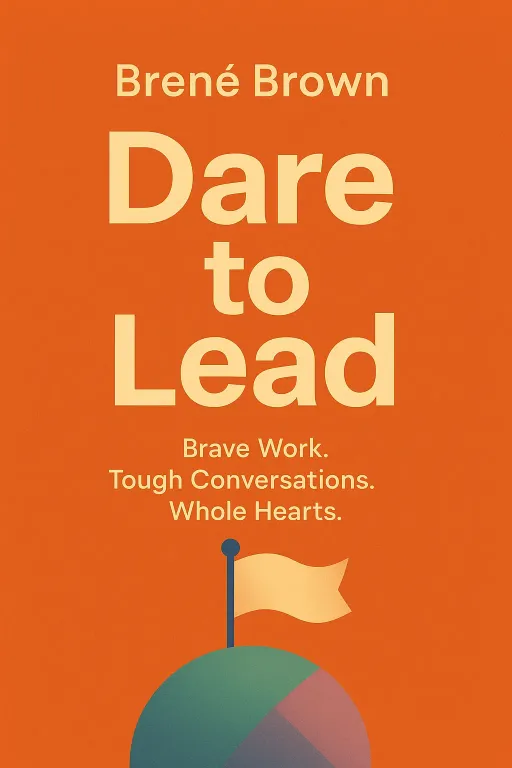
Nova: It’s not just wrong; it's actively detrimental. Today, we’re diving into the counter-intuitive power of leading with empathy, dissecting how vulnerability and directness, far from being weaknesses, are the absolute bedrock of high-performing healthcare teams. We're drawing insights from giants like Brené Brown’s “Dare to Lead,” Kim Scott’s “Radical Candor,” and Daniel Coyle’s “The Culture Code.”
Atlas: Oh, I love Brené Brown. Her work on shame and vulnerability really resonates.
Nova: Exactly! What’s so fascinating about Brown is that she didn't set out to write a leadership book. She was a research professor, deep in the trenches of human emotion, studying shame and courage. And what she found, almost by accident, was that the very things that make us feel most human – our vulnerabilities – are also our greatest strengths, especially in leadership. It completely upended traditional notions, making her research not just academically rigorous, but profoundly revolutionary for anyone in a position of influence. She transformed our understanding of what it means to be a truly courageous leader.
Atlas: So, it’s not just touchy-feely stuff. It’s backed by serious research.
Nova: Absolutely. And that leads us perfectly into our first big idea: the counter-intuitive strength of vulnerable leadership and the profound impact of psychological safety.
The Counter-Intuitive Strength of Vulnerable Leadership & Psychological Safety
SECTION
Nova: We've all seen the archetypal leader in healthcare: stoic, authoritative, never showing a crack in their armor. But Brown's work, echoed by Daniel Coyle's research in "The Culture Code," tells us this is precisely the wrong approach. True courage in leadership, especially in healthcare where lives are literally on the line, isn't about being invulnerable. It's about having the courage to be vulnerable.
Atlas: Wait, hold on. Courageous vulnerability? In a surgical theater, or an emergency room? For a lot of our listeners, who are trying to lead complex teams and build more efficient systems, that sounds… risky. Like, doesn't admitting a mistake or saying "I don't know" erode trust, especially if you're the one in charge of making critical decisions?
Nova: It's a natural fear, right? We're conditioned to believe that leaders must project absolute certainty. But let me paint a picture. Imagine a seasoned chief surgeon, Dr. Eleanor Vance, leading a complex, unprecedented cardiac procedure. During the pre-op briefing, she pauses, looks at her team – the anesthesiologist, the scrub nurses, the junior residents – and says, "Team, this is new territory for all of us. I've studied every angle, but I want every single one of you to speak up immediately if you see that gives you pause, no matter how small. My ego is not in this room; only the patient's well-being matters."
Atlas: Wow. That's a powerful statement.
Nova: It is. And it's an act of vulnerable leadership. She's not admitting incompetence; she's demonstrating profound self-awareness and a commitment to the best possible outcome. Daniel Coyle, in "The Culture Code," talks about how highly successful groups, from Pixar to Navy SEALs, all share three key skills: building safety, sharing vulnerability, and establishing purpose. Dr. Vance, in that moment, built safety and shared vulnerability. She explicitly signaled that it was safe to speak up, even to challenge the lead surgeon.
Atlas: I can see how that would change the dynamic. Instead of people holding back, worried about looking foolish or stepping on toes, they’re actively engaged in problem-solving. For a strategic healer, for someone trying to improve patient outcomes, that's incredibly valuable. It’s not just about one person’s performance, it’s about the entire system being more robust.
Nova: Exactly. Contrast that with a scenario where a leader projects absolute infallibility. What happens when a junior resident spots a subtle anomaly on a monitor but is too intimidated to speak up? Or a nurse notices a medication dosage error but fears reprisal for questioning a senior doctor? Those are the "silent mistakes" that Coyle warns about – the ones born from a lack of psychological safety, where the fear of embarrassment or punishment outweighs the desire to do the right thing.
Atlas: That’s chilling. So, vulnerability isn't about being weak; it’s about creating a space where the can be strong, where challenges are surfaced and solved collaboratively, for the ultimate good of the patient. It’s a systemic improvement through human connection.
Nova: Precisely. It’s about understanding that the strength of a team isn't in its individual parts performing flawlessly in isolation, but in its collective ability to identify and correct errors, to innovate, and to adapt. And that only happens in an environment of deep trust.
Radical Candor: Balancing Kindness with Clarity for Team Growth
SECTION
Nova: Once you've established that foundation of trust and psychological safety, the next crucial step is how you actually that trust to drive performance and growth. This is where Kim Scott's concept of “Radical Candor” becomes incredibly powerful. She developed this framework while working at places like Google and Apple, and it's all about how to give feedback that is both kind and clear.
Atlas: Okay, “radical candor” sounds... well, radical. Especially in healthcare, where there's so much emphasis on sensitivity and professionalism. How do you deliver feedback that's radically candid without coming across as cold or even cruel, especially when you're dealing with performance issues that could impact patient care? For leaders who deeply care about their teams, this feels like walking a tightrope. What does it like to receive that kind of feedback?
Nova: That’s a brilliant question, Atlas, and it gets to the heart of why Scott's framework is so nuanced. Radical Candor isn't about being brutally honest; it's about while also. Imagine a two-by-two matrix: one axis is how much you care personally, the other is how directly you challenge. Most people fall into what Scott calls "ruinous empathy," where they care but don't challenge, avoiding tough conversations to spare feelings. Or worse, "manipulative insincerity" or "obnoxious aggression."
Atlas: So, the sweet spot is high on both: caring personally and challenging directly. But what does that look like in practice in a healthcare setting? Let's say we have a nurse manager, Sarah, who has a team member, Mark, who's consistently struggling with a new electronic health record system. It's causing delays and impacting patient flow. How does Sarah approach Mark with radical candor without making him feel incompetent or belittled?
Nova: That's a perfect scenario. Sarah's instinct might be to just keep fixing Mark's errors herself or subtly reassign his tasks, which is ruinous empathy – it spares his feelings in the short term but harms his growth and the team's efficiency in the long run. Instead, Sarah, practicing radical candor, would first approach Mark from a place of genuine care. She might say, "Mark, I really value your dedication and how much you care about our patients. You're a vital part of this team." That's the "care personally" part.
Atlas: Establishing that connection first.
Nova: Exactly. Then comes the "challenge directly." She’d continue: "And because I value you, I need to be direct about something. I've noticed you're consistently having trouble with the new EHR system, specifically with the medication reconciliation module. This is creating delays, and more importantly, it introduces a risk of errors that could impact patient safety."
Atlas: Oof, that's direct. But the "care personally" part makes it land differently. It’s not an attack; it’s a focused observation delivered with an underlying message of support. It’s not just about pointing out the mistake, but about the team member’s growth and the purpose of their work.
Nova: Precisely. Sarah then needs to offer solutions and support: "I want to help you master this. What resources do you need? Would you like some one-on-one training, or perhaps a mentorship with someone who's already proficient?" This approach fosters growth, builds Mark's competence, and ultimately protects patient outcomes. It aligns with Coyle's "establishing purpose" – everyone is working towards the same high-quality patient care. It turns a difficult conversation into an opportunity for profound growth, transforming the team's ability to perform.
Atlas: So, it's not just about managing people; it's about developing them, creating a culture where honest feedback is seen as a gift, not a threat. And that, for a system architect, sounds like a pathway to genuine operational efficiency and continuous improvement.
Synthesis & Takeaways
SECTION
Nova: So, what we've really been talking about today, Atlas, is how empathy isn't some soft, optional skill in leadership. It's a strategic imperative, especially in healthcare. Vulnerable leadership creates the psychological safety for teams to innovate and speak up, and radical candor ensures that feedback, delivered with genuine care, drives continuous improvement.
Atlas: It's a profound shift in perspective. It's not just about feeling good, it's about actually good — building systems where everyone can thrive, where challenges are met head-on, and where patient care is genuinely optimized because the human element is prioritized and leveraged. It’s about using human connection for systemic improvement and better outcomes.
Nova: Absolutely. And for our listeners who are leading teams in healthcare, we want to leave you with a challenge: Try implementing one 'vulnerability check-in' with your team this week. It could be as simple as starting a meeting by asking everyone to share one professional challenge they're facing and one small win. Or, identify one instance where you can practice radical candor, balancing genuine care with direct challenge, focusing on growth and a shared purpose.
Atlas: It sounds like a journey, but one worth taking for anyone serious about elevating their leadership and making a real impact in healthcare.
Nova: It truly is. Because at the end of the day, leading with empathy isn't just about being a better boss; it's about building a better future for healthcare.
Nova: This is Aibrary. Congratulations on your growth!