How to Build a 'Magnetic' Culture Without Burnout.
Golden Hook & Introduction
SECTION
Nova: What if the very thing you think is making your team 'nice' is actually slowly poisoning its potential? We're talking about the silent killer of organizational culture: a lack of direct, honest feedback.
Atlas: Hold on, Nova. Are you saying being 'nice' is bad for my team? Because I think a lot of our listeners, especially those building foundational cultures, strive for a genuinely positive and, well, environment.
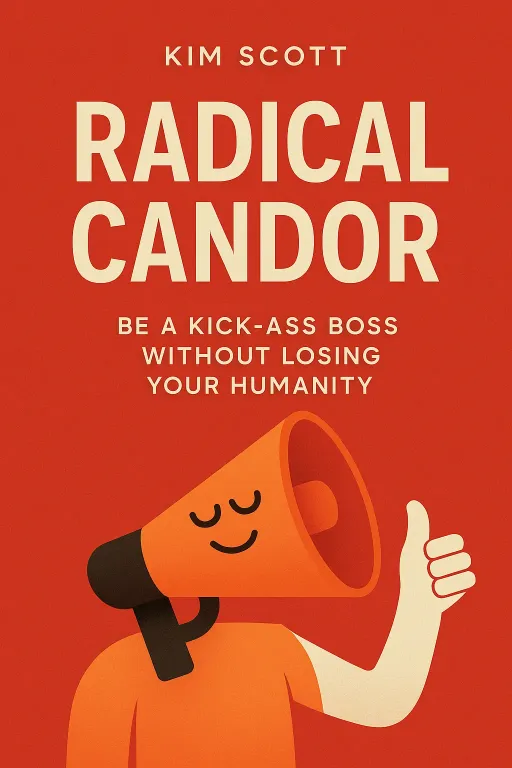
Nova: Exactly, Atlas! And that's the counter-intuitive twist we're diving into today. Our first deep dive takes us into the world of Kim Scott and her groundbreaking book,. What's fascinating about Scott is she didn't just theorize about this; she developed these ideas leading highly successful teams at Google and Apple, giving her a truly battle-tested perspective on feedback and leadership. Her core premise? Caring personally while challenging directly.
Atlas: So it's not about being brutal or just 'telling it like it is' without any thought? It's about being genuinely invested in someone's success, even if that means having a tough conversation?
Nova: Precisely. It’s about building a culture where people thrive, not just survive, and where talent is attracted and retained because of genuine connection. We'll unpack that, and then we’ll leap into Daniel Coyle’s, exploring how successful groups generate trust, foster belonging, and establish a shared purpose. The core of our podcast today is really an exploration of how to intentionally design an organizational culture that isn't just productive, but truly magnetic, attracting and retaining top talent by fostering deep trust, honest communication, and a profound sense of belonging, all while avoiding the pitfalls of burnout.
Atlas: Right, so today we'll dive deep into this from two perspectives. First, we'll explore the often counter-intuitive power of direct, caring feedback through 'Radical Candor'. Then, we'll discuss how to weave a stronger fabric of trust and shared purpose into your team, inspired by 'The Culture Code'. And finally, we'll connect these powerful ideas to give you a tiny but mighty step to take this week.
Radical Candor: The Art of Caring Personally and Challenging Directly
SECTION
Nova: Let's start with Kim Scott's Radical Candor. She gives us this brilliant two-by-two matrix, a compass really, for feedback. On one axis, you have 'Care Personally,' and on the other, 'Challenge Directly.'
Atlas: Okay, so 'care personally' means you actually give a darn about the person, not just their output. What about 'challenge directly'?
Nova: That's where it gets interesting. Scott labels four quadrants. There's 'Radical Candor,' which is high on both care and challenge. Then you have 'Ruinous Empathy,' which is high care but low challenge—think of it as being 'nice' to a fault. Next, 'Manipulative Insincerity,' which is low care, low challenge—the passive-aggressive, gossip zone. And finally, 'Obnoxious Aggression,' high challenge but low care—the outright jerk boss.
Atlas: That sounds rough. But for a lot of our listeners who are building complex teams and want to cultivate a strong culture, what does 'Radical Candor' actually like in a real meeting? Because the idea of 'challenging directly' can feel pretty intimidating.
Nova: That’s a perfect question, Atlas. Let's imagine a scenario. You have Sarah, a manager, and Mark, a brilliant software engineer. Mark is incredibly talented, but he's been missing deadlines on a critical project for weeks, and his code is buggy. Sarah, caring for Mark, has been hesitant to give him direct, tough feedback because she likes him, she respects his talent, and she doesn't want to upset him. This is 'Ruinous Empathy' in action. She gives vague hints, asks if he's 'doing okay,' but never directly addresses the performance issue.
Atlas: I know that feeling. It's like you're trying to be supportive, but you're actually doing a disservice.
Nova: Exactly. Mark, meanwhile, is frustrated, sensing something is off but not knowing what. He starts to disengage. Now, imagine Sarah uses Radical Candor. She pulls Mark aside, saying something like, "Mark, I care about your success here, and I know you're capable of incredible work. But lately, your code quality on Project Phoenix has dipped, and you've missed two deadlines. That's impacting the team's ability to deliver. What's going on, and how can I help you get back on track?"
Atlas: Whoa. That's direct. That's a lot to take in, but also, it's clear.
Nova: It is. She's not saying "You're a bad engineer." She's saying, "Your in this specific area is falling short, and I believe in your potential enough to tell you directly, and I want to help." The crucial difference is the 'care personally' component makes the 'challenge directly' land as an act of help, not an attack. It builds trust because Mark knows she's invested in his growth.
Atlas: That example makes it so clear. But for our listeners who are building high-performing teams, isn't there a risk of alienating people or just coming across as harsh, especially if they’re not used to this style of feedback? I mean, it goes against a lot of conventional workplace norms.
Nova: That's a really important point. The key is in the and the. Radical Candor is about focusing on observable behavior and its impact, not making it personal. And it requires a culture where people understand that feedback, even tough feedback, is a gift designed to help them improve. If you're building a culture, you need to model this. It's about building a deeper, more resilient trust by being truly honest, not just superficially nice. This isn't about being mean; it's about being clear and caring.
The Culture Code: Building Safety, Belonging, and Shared Purpose
SECTION
Nova: And connecting to that idea of trust, Atlas, it's not just about what we say, but the very fabric of how we interact and the environment we create. That brings us to Daniel Coyle and his phenomenal book,. Coyle, a New York Times bestselling author, spent years studying highly successful groups, from the San Antonio Spurs to Pixar, dissecting the often unseen dynamics that make them cohesive and effective.
Atlas: Okay, so is about how we speak and give feedback. is more about the environment itself, right? What are the core ingredients Coyle found that make these groups so magnetic?
Nova: Absolutely. Coyle distills it down to three key skills: Build Safety, Share Vulnerability, and Establish Purpose. Think of them as the invisible forces that truly bind successful teams. Let's focus on "Build Safety" first. It's not about beanbag chairs or free snacks. It's about creating an environment where people feel psychologically safe enough to take risks, make mistakes, and be themselves.
Atlas: So it’s not just policies, it’s about the subtle cues and interactions that signal, "You belong here, and it's safe to be you"?
Nova: Exactly! Coyle found that highly cohesive groups send out constant, subtle signals of belonging and psychological safety: things like eye contact, active listening, taking turns in conversation, shared laughter, even small physical gestures. These aren't just polite behaviors; they're primal signals that say, "We are safe here, we are connected."
Atlas: Can you give an example of how a team leader might actively build that kind of safety, especially for our listeners who are culture cultivators and are looking to build that foundational trust?
Nova: Of course. Consider a team at Pixar, a place famous for its culture of creative collaboration. The leader of a new project might start by openly sharing a challenge or a mistake made recently, asking the team for their unfiltered thoughts, or even admitting they don't have all the answers. They model vulnerability first, saying, "My first draft of this scene was terrible, and I need your brutal honesty to make it better."
Atlas: That's impactful. So it’s not just about having a 'no-blame' policy, it's about actively demonstrating that it's safe to be imperfect or even wrong. How does that translate to establishing a shared purpose? Because you can have safety, but if everyone's pulling in different directions, it's still chaos.
Nova: That's the beauty of the connection. When you have safety, people feel comfortable sharing ideas, challenging assumptions, and even admitting when they're confused or disagree. This open dialogue, fueled by shared vulnerability, allows a clearer, more deeply owned collective purpose to emerge. It's not just a mission statement on a wall; it's a living, breathing understanding of we do what we do, and how each person contributes. It creates a sense of meaning that goes beyond individual tasks.
Atlas: I see. So the safety allows for the honest conversations, which then clarifies the purpose, making everyone feel more connected to the overall mission. It's a virtuous cycle. It sounds like both books are saying that a magnetic culture isn't about flashy perks or endless pizza parties, but about the bedrock of human connection and psychological safety. And for listeners who are talent magnets and culture cultivators, this is about building a legacy, not just a company.
Synthesis & Takeaways
SECTION
Nova: Precisely, Atlas. These aren't just abstract ideas; they are daily practices. Radical Candor builds individual trust and accelerates growth through honest, caring feedback. The Culture Code builds collective psychological safety and purpose through consistent signals of belonging and shared vulnerability. Together, they create an environment where people don't just survive; they truly thrive and innovate. Our take is simple: a thriving culture attracts and retains talent by prioritizing genuine connection and direct, supportive communication. It's the ultimate magnet.
Atlas: That's a profound insight. It reframes culture from something you to something you through your interactions. So, if someone's listening right now, feeling that pull to cultivate a truly magnetic team, what's a tiny, actionable step they can take this week to start this process?
Nova: I love that. Here's your tiny step, fresh from the pages of these insights: Identify one team member you've been hesitant to give direct feedback to, and schedule a candid, caring conversation this week. Approach it as an act of genuine support for their growth, not a critique. It's about starting small, but thinking big about the kind of culture you want to build.
Atlas: That's a powerful and practical challenge. It's about starting small, but thinking big about the kind of culture we want to build. It's about trust, intention, and showing up for your people, not just managing them. That's a legacy worth building.
Nova: Exactly. It's about trust, intention, and showing up for your people, not just managing them.