Cultivating High-Performance: The Team Building Playbook
Golden Hook & Introduction
SECTION
Nova: Alright, Atlas, quick game. I'll give you a common team-building cliché, and you tell me the real-world impact. Ready?
Atlas: Oh, I like this. Hit me. Let's see if my cynicism can be outmatched.
Nova: "Teamwork makes the dream work."
Atlas: Oh, man. Real-world impact? Often, it means "teamwork makes people do the work while others just nod along." Or, "teamwork makes meetings last forever without decisions."
Nova: Exactly! It’s this idea that just 'teamwork' makes it happen. But what if there was a deeper code, an actual blueprint for building teams that thrive, not just survive? A code that makes the dream work, for real, and not just in a cheesy poster way?
Atlas: You’re talking about going beyond the platitudes, aren’t you? Because for anyone who's ever tried to get a group of smart, driven individuals to actually coalesce and each other, it feels less like a dream and more like trying to herd cats through a laser maze.
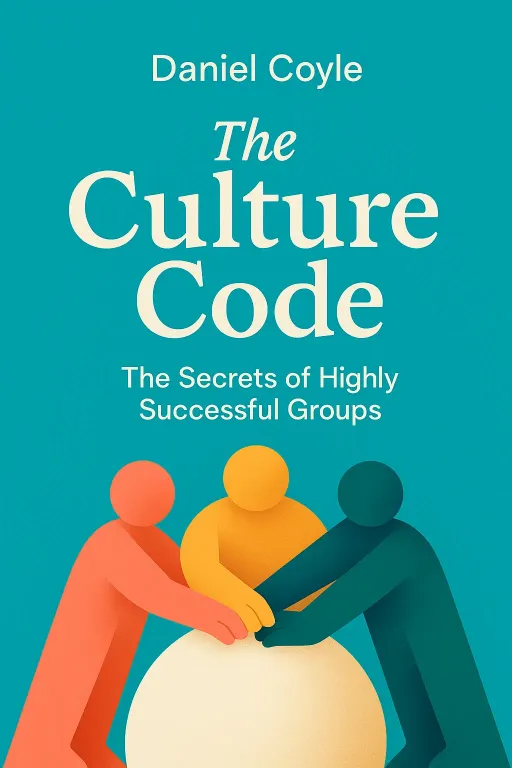
Nova: Precisely. And that's exactly what we're dissecting today, drawing powerful insights from two incredibly impactful books: Daniel Coyle's "The Culture Code: The Secrets of Highly Successful Groups" and Brené Brown's "Dare to Lead: Brave Work. Tough Conversations. Whole Hearts." Coyle, a journalist who's always been fascinated by group dynamics, spent years embedded with diverse, high-performing teams—from Pixar to the Navy SEALs—to uncover the invisible forces that bind them. His work reveals an almost scientific approach to cultivating belonging.
Atlas: That’s fascinating. Because Brown, on the other hand, comes from a research background, spending decades studying vulnerability, courage, shame, and empathy. Her work, especially "Dare to Lead," is less about the 'how-to' of team structure and more about the 'who-to-be' as a leader, the internal work required to foster those environments.
Nova: And it’s that dual approach that makes these books a powerhouse when you put them together. Coyle gives us the structural elements, the 'what' to build, and Brown gives us the emotional intelligence, the 'how' to lead that build. We’re talking about engineering trust and resilience in teams, not just wishing for it.
Engineering Trust and Resilience through Culture Code
SECTION
Atlas: So, where do we even begin with Coyle's 'Culture Code'? Because 'culture' feels so intangible, almost spiritual. How do you 'engineer' that?
Nova: Coyle breaks it down into three core skills, three almost invisible signals that truly successful groups send. The first is building safety. It’s not about being 'nice'; it’s about creating a sense of belonging, a clear signal that 'we are safe here.' Think about a team that’s constantly innovating, like the creative powerhouse of Pixar. Coyle observed how they cultivate this.
Atlas: Oh, I’ve heard stories about Pixar’s 'braintrust' meetings. The idea that everything can be critiqued, even by interns, without fear of reprisal. But how do you actually that safety? Is it just saying, "Hey, be safe"?
Nova: Not at all. It's in the small, consistent signals. Coyle describes a process at Pixar where, when a film is being developed, they hold these intense peer reviews. Directors bring their incomplete, vulnerable work, often months or even years of effort, to a room full of their sharpest critics, including other directors, writers, and animators. The feedback is blunt, direct, and often brutally honest.
Atlas: Sounds terrifying, honestly. Like a creative firing squad. Where’s the safety in that?
Nova: That’s the magic. The safety isn't in critique; it's in the of it. The unwritten rule, the 'code,' is that the feedback is always about the, never about the. It’s about making the project better, not tearing down the person. There’s also a deep understanding that everyone in the room has been through the same process, so there's empathy built into the rigor. They what it feels like to have your creative baby picked apart.
Atlas: So, it's a shared vulnerability, almost. That sounds like Coyle's second skill.
Nova: Exactly! Sharing vulnerability. It's the counter-intuitive idea that showing weakness actually the group. It signals to others that it's okay to make mistakes, to not have all the answers. Coyle tells this incredible story about a Navy SEAL team. In their training, they intentionally put leaders in situations where they ask for help, where they succeed alone.
Atlas: That's a huge departure from the stereotypical image of the stoic, unshakeable leader. I imagine a lot of our listeners, especially those managing high-pressure teams, might find this concept difficult to implement. The idea of a leader admitting they don't know something, or that they’re struggling, can feel risky.
Nova: It absolutely is risky, but that’s where the power lies. Coyle observed that when a SEAL team leader admits, "I messed up," or "I don't know the answer, who has an idea?" it doesn't diminish their authority. Instead, it creates a ripple effect. Others feel empowered to speak up, to offer solutions, to admit their own uncertainties. It’s a loop of mutual reliance. One of the most striking examples Coyle gave was of a Navy SEAL commander who, after a mission that went sideways, stood up in front of his entire team and explicitly took responsibility for every single error, detailing his own misjudgments. He didn't just say 'we failed'; he said 'I failed, and here's how.'
Atlas: Wow. That's a profound act of leadership. It’s not just about saying 'I'm vulnerable,' but demonstrating it in a way that builds a bridge, not a wall. It sounds like it cultivates a sense that 'we're all in this together, and it's safe to be imperfect.'
Nova: Precisely. And that leads to Coyle’s third skill: establishing purpose. It’s about creating a clear, shared vision that transcends individual tasks. It’s the 'why' behind the 'what.' When a group clearly understands their collective mission, it acts as a powerful adhesive, especially when things get tough. Think of the legendary basketball coach John Wooden. He wasn't just about winning games; he was about building character, about striving for individual and collective excellence not just on the court, but in life. His teams had a higher purpose.
Atlas: So, it's not just about the metrics or the quarterly reports, but a deeper, almost philosophical alignment?
Nova: Exactly. It's the difference between a team that's just performing tasks and a team that's on a mission. Coyle notes that high-purpose environments often feature constant repetition of the mission, symbols that reinforce it, and stories that illustrate it. They make the purpose palpable. It’s not just a mission statement on a wall; it’s woven into the daily fabric of interaction.
Leading with Courage and Vulnerability for Psychological Safety
SECTION
Nova: Now, while Coyle gives us the framework—safety, vulnerability, purpose—it’s Brené Brown who truly illuminates the needed to activate and sustain that framework. Her work in "Dare to Lead" is all about courage, and what it truly means to lead with your whole heart.
Atlas: That makes me wonder, how does Brown’s concept of vulnerability, which is so central to her work, differ or complement Coyle’s idea of sharing vulnerability? Because Coyle focuses on it as a group skill, but Brown seems to put it squarely on the leader's shoulders.
Nova: That’s a brilliant distinction. Coyle shows us how vulnerability creates connection the team. Brown dives into how a vulnerability is the catalyst for psychological safety. She argues that you cannot have courage without vulnerability. It’s not about oversharing every personal detail, but about showing up fully, authentically, and being willing to have tough conversations, to give and receive feedback, and to risk failure.
Atlas: So, it’s about modeling the behavior you want to see. If a leader expects their team to be open, to take risks, to admit mistakes, then the leader has to go first?
Nova: Absolutely. She calls it 'rumbling with vulnerability.' It's about leaning into discomfort, not away from it. Brown recounts a powerful story of a CEO who reached out to her after reading her work. This CEO admitted that despite leading a massive company, he was terrified of looking weak. He micromanaged, avoided difficult conversations, and fostered a culture where mistakes were hidden. After working with Brown, he started small. His first courageous act was admitting to his leadership team that he was struggling to connect with them, that he felt a disconnect. He shared his fear of failure, not as an excuse, but as an honest reflection.
Atlas: Wow. That’s kind of heartbreaking. To be at the top and feel so isolated. What happened then?
Nova: It was a game-changer. His team, seeing his genuine vulnerability, started to open up. They shared their own struggles, their own fears of disappointing him. The floodgates opened. It wasn’t a sudden fix, but it was the beginning of transforming their culture from one of fear and perfectionism to one of genuine trust and innovative problem-solving. Brown emphasizes that vulnerability isn't weakness; it's our most accurate measure of courage.
Atlas: So, for a leader who’s driven by impact, who wants to build something significant, this isn't just touchy-feely stuff. This is strategic. Because if your team isn't psychologically safe, they're not going to innovate. They're not going to take the risks necessary for truly significant impact.
Nova: Exactly. Brown connects it directly to innovation and resilience. She argues that psychological safety, which is born from courage and vulnerability, is the bedrock of a truly innovative team. If people are afraid to speak up, to challenge the status quo, to admit when they don't know, you lose out on so much collective intelligence and potential. She gives the example of a tech company she worked with, where the culture was so focused on 'always being right,' that engineers would spend weeks trying to secretly fix errors rather than admitting them early, costing the company millions.
Atlas: That makes a lot of sense. It brings us back to Coyle's point about building safety. Brown is saying that the leader’s willingness to be vulnerable is the most powerful signal that creates that safety. It’s the intentional integration of those moments of shared vulnerability within a team's routine.
Nova: It’s the leader setting the tone. If the leader shows up wholehearted, willing to be seen, willing to rumble with discomfort, then the team feels empowered to do the same. It's about cultivating a culture where questions are encouraged, mistakes are learning opportunities, and empathy is a core value, not just a buzzword.
Synthesis & Takeaways
SECTION
Nova: So, when we look at Coyle’s structural elements of building safety, sharing vulnerability, and establishing purpose, and then overlay Brown’s emphasis on courageous, vulnerable leadership, we see a complete playbook for cultivating high-performance. It’s not just about processes; it’s about people.
Atlas: It’s a powerful synergy. Coyle gives you the nuts and bolts of what a high-trust culture looks like, and Brown gives you the human operating system, the leadership mindset, to actually build and maintain it. It really highlights that trust isn't a given; it's actively engineered through consistent, courageous acts.
Nova: And it makes you rethink what 'strong' leadership truly means. It's not about being the toughest or the smartest in the room, but about being the most courageous in vulnerability, the most committed to creating a safe space for everyone to contribute their best. It's about embracing the journey of building that culture, not just the destination of a high-performing team.
Atlas: That’s actually really inspiring. Because it means that every leader, regardless of their position, has the power to start shifting their team's culture today, just by choosing courage and embracing vulnerability. It's not about grand gestures, but those small, consistent signals.
Nova: Exactly. So, for our listeners, we want to leave you with this: How can you intentionally integrate moments of shared vulnerability within your team's routine to strengthen trust and psychological safety? What’s one small, courageous act you can take this week to model the culture you want to see?
Atlas: Because trust isn't built in a day, but it is built every single day, in every interaction.
Nova: This is Aibrary. Congratulations on your growth!