Crafting a Culture of Trust & High Performance
Golden Hook & Introduction
SECTION
Nova: Atlas, I want you to imagine two teams. One, a group of Navy SEALs planning a high-stakes mission. The other, a kindergarten class collaborating on a puppet show. What’s the single most surprising thing they might have in common when it comes to peak performance?
Atlas: Huh. Okay, this sounds like a trick question. My first thought is discipline, but that feels too obvious for SEALs, and maybe too… structured for kindergarteners. Is it… a secret handshake? A shared snack time?
Nova: Closer than you think with the shared snack time, actually! It’s something far more fundamental than discipline or strategy alone. It’s their ability to create a deep, almost instinctual sense of psychological safety and belonging. It’s what allows them to fail, learn, and ultimately, excel together.
Atlas: Wow. That’s actually really inspiring. I imagine a lot of our listeners, especially those building innovative projects or leading growing teams, are constantly chasing that elusive 'it factor' for their groups. They want that kind of seamless collaboration.
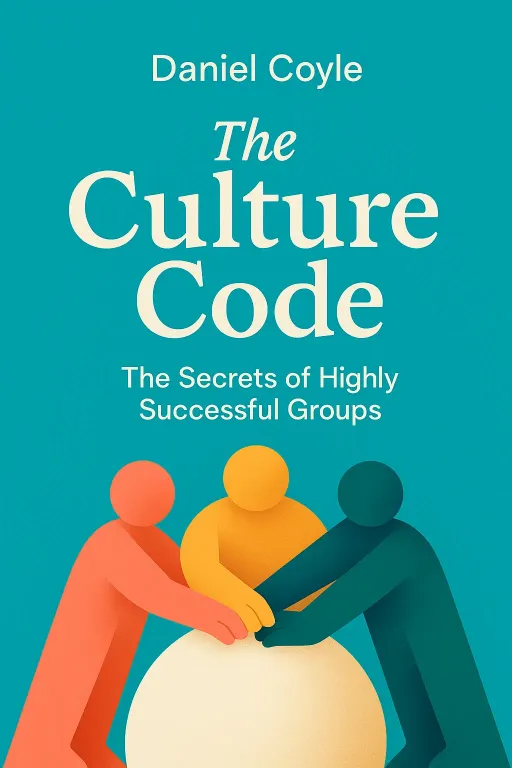
Nova: Exactly! And that's what we're unpacking today, drawing heavily from two truly groundbreaking books: Daniel Coyle’s “The Culture Code” and Brené Brown’s “Dare to Lead.” Coyle, a former editor for Outside magazine, spent years embedded with some of the world's most successful groups, from Pixar to the San Antonio Spurs, to uncover the hidden dynamics that make them tick. Brown, of course, is the research professor whose work on vulnerability and courage has transformed our understanding of leadership.
Atlas: Oh, I love that pairing. It’s like Coyle gives us the "what" – the observable patterns of high-performing cultures – and Brown delivers the "how" – the inner work and courageous leadership required to build them.
Nova: Absolutely. And the core of our podcast today is really an exploration of how the most impactful and innovative teams aren't just built on strategy, but on an intentional, deeply human culture of trust and belonging. Today we'll dive deep into this from two key perspectives. First, we'll explore the foundational 'blueprint' that allows groups to thrive, then we'll discuss how visionary leaders can actively cultivate this environment through courageous vulnerability.
The Blueprint for Belonging: Safety, Vulnerability, and Purpose
SECTION
Nova: So, let’s start with Coyle’s insights from "The Culture Code." He argues that world-class cultures aren't built on innate talent or even brilliant strategy, but on three specific skills: building safety, sharing vulnerability, and establishing purpose.
Atlas: Okay, so you’re saying it’s less about who’s on the team, and more about how the team? Like, the emotional architecture of the group?
Nova: Precisely. Think of it like this: our brains are constantly scanning for threat or safety. In a high-threat environment, we instinctively protect ourselves, which shuts down collaboration and creativity. Coyle describes 'belonging cues' – signals that tell our brains we’re safe, we’re connected, and there’s a shared future. Things like close physical proximity, intense eye contact, short, energetic exchanges, even laughter.
Atlas: That makes me wonder about remote teams, then. How do you send those belonging cues when you’re not physically together? It feels like we're constantly fighting against natural human wiring.
Nova: That’s a brilliant question, and a challenge many leaders face. Coyle actually highlights how some of the most effective remote teams are hyper-intentional about creating digital belonging cues. They over-communicate, they use video constantly, they create rituals for check-ins that mimic in-person interaction. It’s about being explicit where implicit cues are missing. He talks about a tiny design firm that, despite being fully remote, felt incredibly cohesive because they started every day with a quick video call where everyone shared one personal win and one professional challenge. It built shared context and vulnerability without being in the same room.
Atlas: So basically you’re saying, if you can’t be physically close, you need to turn up the dial on intentional communication and shared humanity. That’s a great way to put it. But vulnerability, that’s a tough one for a lot of people, especially in professional settings. It often gets mistaken for weakness.
Nova: Absolutely. And that’s where Brené Brown’s work in "Dare to Lead" really amplifies Coyle’s observations. Brown defines vulnerability not as weakness, but as courage. It’s the willingness to show up and be seen when you have no control over the outcome. She argues that true trust isn't built on perfection, but on shared struggle and the willingness to be imperfect together.
Atlas: That’s a great analogy. It’s like… you don’t trust someone because they’re flawless, you trust them because you’ve seen them stumble and get back up. Or because they admit they don’t have all the answers.
Nova: Exactly! Coyle gives a fantastic example of Pixar's "Braintrust" meetings. These are legendary for their brutal honesty. Directors bring their incomplete, often messy films to a room full of other directors and animators, knowing they're going to get torn apart – constructively, of course. Ed Catmull, one of Pixar's founders, fostered this environment by being incredibly vulnerable himself, admitting mistakes, and openly seeking help. This wasn't about being 'nice'; it was about being honest and vulnerable for the sake of the story.
Atlas: Wow, so the very act of showing up with an unfinished product, knowing it's going to be critiqued, is an act of vulnerability. And the culture thrives on. That’s a complete flip from how many organizations operate, where you’re often expected to present a polished, perfect facade.
Nova: Precisely. And the third leg of Coyle’s stool is establishing purpose. It’s about creating a clear, shared vision that goes beyond just making money. It answers the question, "Why do we exist, and what impact do we want to make?" When people understand the 'why,' they’re far more engaged and resilient. It gives meaning to the vulnerability and the safety.
Leading with Empathy: Modeling Vulnerability for Intentional Culture Building
SECTION
Nova: Now, knowing all of this, the big question for our listeners, especially those who are the Visionaries, the Architects, the Catalysts – the ones who want to build and disrupt – is: how do you actually this? How do you lead with empathy and build with intent?
Atlas: Yeah, I’ve been thinking about that. For our listeners who are managing high-pressure teams, or trying to scale their impact, this concept of 'vulnerability check-ins' might feel impossible to implement. It sounds great in theory, but what does it look like in the trenches?
Nova: That’s where Brown’s "Dare to Lead" becomes a practical guide. She stresses that courageous leadership starts with modeling. You can’t expect your team to be vulnerable if you as the leader aren't willing to go there first. One 'tiny step' she suggests is something as simple as a 'vulnerability check-in' at the start of a team meeting.
Atlas: Okay, so, what does a vulnerability check-in actually entail? Because my brain immediately goes to, like, everyone sharing their deepest fears, and that sounds… intense.
Nova: Not at all! It can be incredibly subtle. It could be as simple as a leader saying, "Hey team, before we dive into the agenda, I just want to share that I'm feeling a bit overwhelmed with Project X today, and I could really use your collective brainpower." Or, "I made a mistake on that last report, and I learned Y from it." It’s about sharing something real, something human, that shows you’re not infallible.
Atlas: I see. So it’s not about emotional dumping, but about creating space for authenticity and shared humanity. It normalizes imperfection from the top down. That’s actually really powerful. It’s like you’re saying, "It's okay to not be okay, and it's okay to admit it here."
Nova: Exactly. And the profound question Brown asks is: How can you model courageous vulnerability to inspire a more authentic and trusting environment within your team? It's about recognizing that your team is watching you. If you show up armored, they will too. If you show up with curiosity, openness, and a willingness to be imperfect, you give them permission to do the same.
Atlas: That’s such a hopeful way to look at it. It ties back to Coyle’s "safety" cue. When the leader is vulnerable, they're essentially sending a massive "it's safe here" signal to everyone else. It’s not just about what you say, but what you and how you.
Nova: Think about it: a leader who admits they don't have all the answers isn't seen as weak; they're seen as human, approachable, and open to input. That fosters psychological safety and encourages others to share their ideas, even the half-baked ones. And those half-baked ideas are often the seeds of true innovation. It’s about creating a space where the best ideas win, not necessarily the most polished or the ones from the highest-ranking person.
Atlas: That gives me chills. So, it's not just about building a product or a company; it's about building a space where people can truly and bring their whole selves. And that, ultimately, is what drives true high performance. It's about legacy, not just profit.
Synthesis & Takeaways
SECTION
Nova: So, bringing it all together, what we've learned from "The Culture Code" and "Dare to Lead" is that the foundation of high-performing, impactful teams isn't some secret formula. It's the intentional cultivation of psychological safety, the courage to be vulnerable, and a clear, shared purpose.
Atlas: And for our listeners, the Visionaries and Catalysts out there, it really comes down to this: your intuition to build something meaningful, beyond just products, is spot on. It's about cultivating culture, empowering people, and trusting that vulnerability is your superpower, not a weakness.
Nova: Absolutely. Start small. Implement that 'vulnerability check-in.' Delegate one key task this week, empowering your team to shine. Because when you lead with courageous vulnerability, you're not just building a team; you're building a movement, a legacy, where everyone feels seen, valued, and capable of their greatest contribution.
Atlas: That’s actually really inspiring. It’s about scaling your impact not by doing more, but by being more human. And that’s a lesson that truly matters.
Nova: This is Aibrary. Congratulations on your growth!