Building High Trust Teams
Golden Hook & Introduction
SECTION
Nova: Atlas, if I told you that the secret to building an incredibly powerful, high-performing team wasn't about hiring the smartest people, or even the most experienced, what would you say?
Atlas: Hold on, you're telling me all those late nights spent sifting through resumes for the "perfect" candidate were, what, a fun hobby? I'd say you've got my attention, but my skepticism meter is already flashing bright red. What the secret, then?
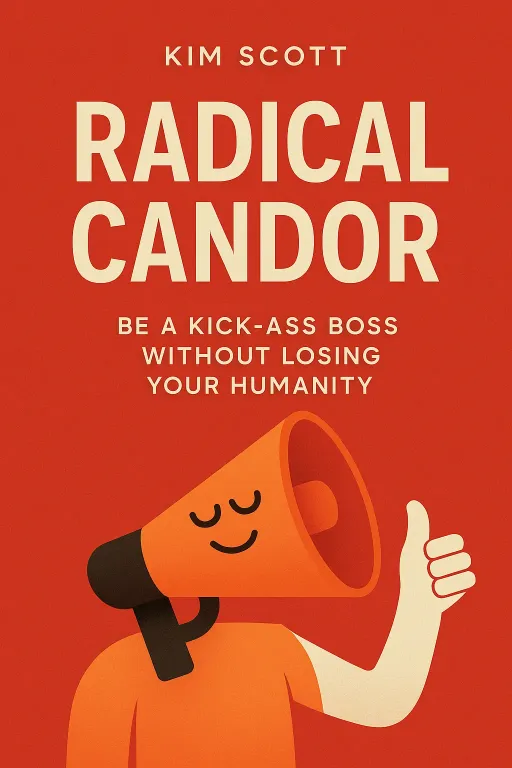
Nova: Well, it’s not a secret, really. It's a fundamental shift in how we approach feedback and team dynamics. Today, we're diving into the powerful ideas from two transformative books: Kim Scott's "Radical Candor: Be a Kick-Ass Boss Without Losing Your Humanity" and Daniel Coyle's "The Culture Code: The Secrets of Highly Successful Groups."
Atlas: Ah, "Radical Candor." I've heard that phrase thrown around a lot. Isn't that just a fancy way of saying "be brutally honest" or "tell people what you really think"? Because, honestly, that sounds like a recipe for a lot of hurt feelings and awkward silences in a team meeting.
Nova: That’s a common misconception, and a really important one to address. Kim Scott, who actually developed this framework during her time as an executive at Google and Apple, saw firsthand the pitfalls of both overly aggressive and overly nice management. She realized that true leadership required a delicate, yet powerful, balance. Her book, which has become a staple in modern leadership literature, pushes back against the idea that you have to choose between being a good person and being an effective boss. She argues that the best managers are those who genuinely care about their team members, while also having the courage to.
Atlas: Okay, I can see how that's a different angle. So, it's not just about being blunt for bluntness's sake. It's about genuine care as the foundation?
Nova: Exactly. Think of it as a spectrum. On one axis, you have "Care Personally," ranging from not caring at all to caring deeply. On the other, you have "Challenge Directly," from avoiding confrontation entirely to being incredibly direct. Most people tend to fall into one of three traps: "Ruinous Empathy," where you care so much you never challenge, letting performance slide; "Manipulative Insincerity," where you don't really care and you don't challenge directly, often leading to passive-aggressive behavior; or "Obnoxious Aggression," where you challenge directly but don't care personally, making you a jerk.
Atlas: Oh, I've definitely seen all three of those in action. The "obnoxious aggressor" is easy to spot, but "ruinous empathy" is probably the most insidious, isn't it? It feels kind, but it ultimately hurts everyone involved.
Nova: Absolutely. Ruinous Empathy feels like kindness, but it's actually a disservice. Imagine a scenario: a brilliant engineer, let's call her Maya, is beloved by her team. She’s technically gifted, but her presentations are always a disaster—rambling, unfocused, and she often alienates stakeholders. Her manager, deeply fond of Maya, keeps telling her, "Great job on the content, Maya, just a little polish needed." Everyone knows Maya's presentations are a problem, but because her manager "cares personally" but avoids "challenging directly," Maya never improves. The team suffers, projects get delayed, and eventually, Maya's career growth stalls, all because no one had the courage to tell her the hard truth.
Atlas: Wow, that's kind of heartbreaking. So, the manager thought they were being kind, but they were actually undermining Maya's potential and the team's success. It's like a slow poison.
Nova: Precisely. Radical Candor, on the other hand, means that manager would sit down with Maya and say something like, "Maya, I know you're passionate about this work, and your technical insights are invaluable. I genuinely want to see you succeed and grow into a leadership role. But your presentations are consistently missing the mark. They're disorganized, and you often lose the audience. We need to work on this, and I'm here to help you every step of the way."
Atlas: That’s a fundamentally different conversation. It's direct, but it's wrapped in genuine support. It sounds like the manager is invested in Maya's success, not just pointing out a flaw.
Nova: Exactly. The "Care Personally" part makes the "Challenge Directly" part land, not as an attack, but as an act of service. It builds trust because Maya knows her manager is on her side, even when delivering tough news. It’s about being clear, kind, and immediate. And this is where it ties into Daniel Coyle's work, which explores the deeper neurological and social underpinnings of high-performing teams.
The Foundation of Safety Cues
SECTION
Atlas: Okay, so "Radical Candor" sounds like the ideal communication style. But let's be real, Nova, that takes a lot of emotional intelligence and courage. Most people, myself included sometimes, shy away from those difficult conversations. What makes a team environment where that kind of candor can actually thrive instead of just blowing up into arguments?
Nova: That's a brilliant question, and it's the perfect segue into Daniel Coyle's insights from "The Culture Code." Coyle spent years studying some of the most successful groups on Earth – from Navy SEALs to Pixar animation studios – and he found a surprising common thread: 'safety cues.' These aren't written rules or mission statements; they're subtle, non-verbal signals that communicate to everyone in the group, "You are safe here. You belong. You can be vulnerable, and you won't be punished for it."
Atlas: So, it's not about what you you value, but what you and how you?
Nova: Absolutely. Coyle argues that our brains are constantly scanning for signals of safety or danger. When we feel unsafe, our primitive fight-or-flight response kicks in, shutting down our higher cognitive functions—creativity, collaboration, complex problem-solving. But when we receive safety cues, our brains relax, we feel connected, and we become far more capable of innovation and deep collaboration. He calls it "belonging cues."
Atlas: What do these "safety cues" actually look like in practice? Is it just everyone being nice to each other all the time?
Nova: Far from it! It’s much more nuanced. Coyle identified three main types of belonging cues: first, – how much effort you're putting into the interaction; second, – how much you treat people as unique individuals; and third, – showing that the relationship will continue. Think about it: eye contact, active listening, turning towards someone when they speak, small touches of affirmation, acknowledging mistakes, asking questions about someone's weekend, remembering details about their family. These are all tiny, subtle signals that collectively scream, "I see you, I hear you, you matter, and we're in this together."
Atlas: That's fascinating. So, it's not just about a kumbaya moment. It's about consistent, small behaviors that build up a sense of psychological safety over time. Can you give me an example of a team that lacked these cues and what happened?
Nova: Certainly. Coyle recounts a story about a team working on a critical software project. The leader was brilliant but aloof, rarely making eye contact, often interrupting, and never acknowledging personal contributions. Meetings were tense, people spoke in clipped, formal tones, and ideas were shot down quickly. The team members, feeling constantly judged and unsafe, withheld creative solutions, avoided honest feedback, and ultimately, the project floundered. They were technically skilled, but the lack of safety cues meant their collective intelligence was severely hampered. Everyone was in self-preservation mode.
Atlas: That sounds like a silent killer for innovation. If people are afraid to speak up or challenge assumptions, even good ones, because they fear being shut down or looking foolish, then the team is just operating at a fraction of its potential.
Nova: Exactly. Now, contrast that with another example Coyle studied: a highly successful improv comedy troupe. Improv, by its nature, requires extreme vulnerability and trust. They created safety cues through constant affirmation, equal turn-taking, intense eye contact, and a shared understanding that mistakes were not failures but opportunities for collective creativity. They were constantly sending signals that said, "I've got your back, we're building this together, and it's safe to take risks." This allowed them to be incredibly direct and challenging in their performance, but always within a framework of absolute trust and belonging.
Atlas: That's a perfect analogy! They're challenging each other constantly, but it's all in service of creating something better, and they know the other person isn't going to let them fall. So, it's not about discomfort, but creating an environment where discomfort can be productive.
Integrating Candor with Safety
SECTION
Nova: And that brings us to the profound connection between Radical Candor and Safety Cues. The takeaway from these two insights is to practice Radical Candor by giving specific, helpful feedback today, but always ensuring you first establish a 'Safety Cue' to show you care about the team member's personal success.
Atlas: So, you can’t just jump into challenging someone directly without first laying the groundwork of safety. It makes perfect sense. If I feel like my boss doesn't care about me as a person, or if the team environment is hostile, then any "direct challenge" is going to feel like an attack, not an act of support.
Nova: Precisely. Trying to deliver Radical Candor without first establishing safety cues is like trying to build a skyscraper without a foundation. It’s going to crumble. The "Care Personally" axis of Radical Candor is essentially about generating those safety cues. It's about demonstrating genuine empathy, active listening, and showing you're invested in their long-term growth and well-being, not just their immediate performance metric.
Atlas: So, for our listeners who are focused achievers, driven by purpose and wanting to make a difference in their careers, what's a concrete first step? How do they start building these safety cues so they can then deliver more effective feedback?
Nova: A fantastic question. Start small, start today. Before you even think about delivering a piece of challenging feedback, make a conscious effort to increase your "belonging cues." That could be as simple as:
Atlas: I love that. It's not about a grand gesture, but a consistent series of micro-interactions that build trust. It sounds like creating a culture of safety is less about a policy and more about a daily practice of human connection.
Nova: Exactly. And once that foundation of safety is there, when you do need to deliver that specific, helpful, challenging feedback – that Radical Candor – it lands differently. It’s received as constructive guidance from someone who believes in them, rather than criticism from someone who doesn’t. This iterative process of building safety, delivering candor, and reinforcing care creates a virtuous cycle that elevates not just individual performance, but the entire team's capacity for innovation and resilience.
Atlas: So, it's about being human first, then being a leader. It's about understanding that our brains are wired for connection and safety, and by intentionally providing those signals, we unlock deeper engagement and performance. That's a truly profound insight.
Nova: It fundamentally shifts our understanding of what "strong leadership" means. It's not about being the smartest person in the room, but about creating the conditions where can be their smartest, most candid, and most collaborative self.
Atlas: That really makes me rethink how I approach team interactions, not just in giving feedback, but in every single conversation. It's about building that relational bank account so that when you need to make a withdrawal, there's plenty of trust there.
Nova: Absolutely. It's about recognizing that the most powerful thing we can build isn't just a product or a service, but a team that feels safe enough to truly challenge each other, grow together, and ultimately, achieve extraordinary things.
Atlas: That’s actually really inspiring. It frames feedback not as a chore, but as an act of care, and team building not as a series of exercises, but as a continuous practice of human connection.
Nova: This is Aibrary. Congratulations on your growth!