Authentic Leadership: Stop Performing, Start Connecting for True Loyalty
Golden Hook & Introduction
SECTION
Nova: What if the very act of trying to be 'the boss,' of projecting an image of unwavering strength and control, is actually sabotaging your team's loyalty and connection? Today, we're flipping that script.
Atlas: Whoa. That’s a bold statement right out of the gate, Nova. Because I imagine a lot of our listeners, especially those who are leading teams, have been taught that projecting strength is part of the job.
Nova: Absolutely, Atlas. It's almost ingrained in our leadership DNA, isn't it? But today, we're unpacking the profound insights from a concept we're calling 'Authentic Leadership: Stop Performing, Start Connecting for True Loyalty.' It’s a powerful idea that challenges the traditional top-down leadership model.
Atlas: And it's a concept that feels incredibly urgent right now, when so many leaders are grappling with how to genuinely engage their teams, especially in a world that often feels disconnected and, frankly, a little cynical about authority. It makes me wonder if that traditional idea of 'being the boss' is actually creating more problems than it solves.
Nova: Precisely. And that's where we start. The cold, hard fact is that many leaders unknowingly create distance when they try too hard to be 'the boss.' Think about it: when you're performing, you're not truly present. You're putting on a show, and people can feel that.
The Performance Trap & The Power of Connection
SECTION
Atlas: Okay, but isn't some level of 'performance' necessary for leadership? Don't you need to project confidence, a certain level of authority, especially when things are tough? It seems almost counterintuitive to suggest leaders should drop that.
Nova: That’s a super important distinction, Atlas. It’s not about lacking confidence, it’s about that confidence is expressed. Think of it this way: imagine a stage actor versus a genuine friend. The actor performs for applause, for an external reaction. Every gesture, every word, is calibrated for effect. The friend, on the other hand, connects for trust. They share, they listen, they are simply. A performative leader, despite good intentions, inadvertently builds a wall. They might look strong, but they're not inviting anyone in.
Atlas: I see what you mean. So it’s not about being weak, it’s about being real. Like, you can still be decisive and confident, but that confidence comes from an authentic place, not a carefully constructed facade. That’s going to resonate with anyone who's ever felt like they're constantly 'on' at work.
Nova: Exactly! True confidence actually stems from authenticity. It allows for a level of vulnerability that, surprisingly, is a massive strength in fostering connection. When a leader is genuinely themselves, even admitting a mistake or asking for help, it signals to their team, "It's safe to be human here." This is a huge step towards earning, not demanding, loyalty. It’s the difference between a team that follows orders and a team that follows your lead because they believe you.
Building Blocks of Loyalty – Why & Safety
SECTION
Atlas: That makes so much sense. If performing is out, and authenticity is in, what the playbook for actually earning that deeper loyalty? What are the building blocks we should be focusing on?
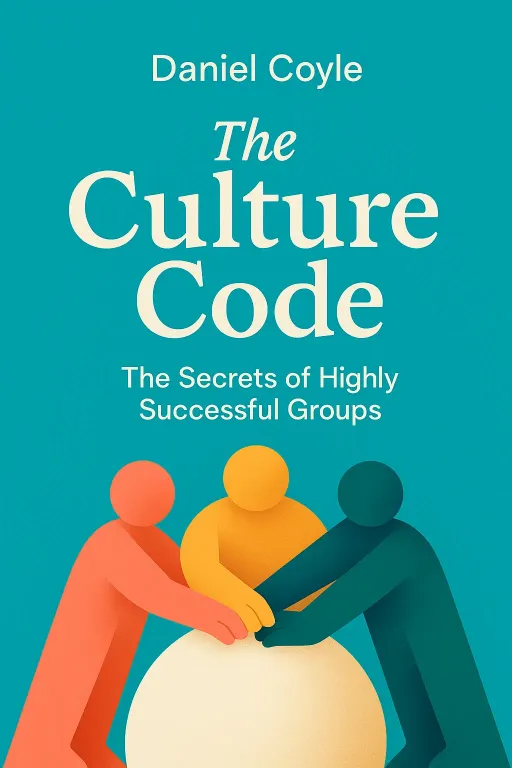
Nova: That’s the million-dollar question, and it brings us to two incredibly powerful concepts that often go hand-in-hand. The first is beautifully articulated in "The Culture Code" by Daniel Coyle. He argues that high-performing groups don't just have talent; they cultivate three things: psychological safety, vulnerability, and a shared purpose.
Atlas: Psychological safety. That term gets thrown around a lot. What does it actually look like in practice? For our listeners who are trying to build that sense of belonging, what does it like day-to-day?
Nova: It’s the feeling that you can take risks, speak up, and even make mistakes without fear of punishment or humiliation. Coyle gives this incredible example of a NASA team. Before a critical mission, they had a 'red team' whose job was to find every possible flaw in the plan. They weren't just allowed to; they were for it. The leaders weren't afraid of being challenged; they actively sought it out. That created an environment where everyone felt safe enough to contribute their best, leading to faster problem-solving and stronger bonds. It signals belonging through subtle, but powerful, actions.
Atlas: Wow. So it’s not just about what you say, but what you to create that space for people to truly show up. And that naturally leads me to thinking about Simon Sinek’s "Start with Why." It feels like Coyle gives us the 'how' for connection – through safety and vulnerability – and Sinek gives us the 'what' to connect – the shared purpose. For our listeners who are trying to build that sense of belonging, what does 'shared purpose' actually like day-to-day?
Nova: You've hit on a brilliant connection there, Atlas. Sinek's "why" is about inspiring, not just instructing. It’s about clearly articulating the belief, the cause, the purpose that drives you and the team. It turns mundane tasks into a mission. Imagine a team building medical devices. If the leader only focuses on deadlines and specs, it's just a job. But if they constantly remind the team that their work literally saves lives, that their precision means a child gets to go home, suddenly every screw, every line of code, has a profound purpose. That's a shared 'why' in action. It transforms followers into advocates.
Synthesis & Takeaways
SECTION
Atlas: Okay, so we've talked about the trap of performing, and the power of building safety and connecting through a shared 'why.' But for someone listening right now, maybe feeling a bit overwhelmed by the idea of completely overhauling their leadership style, what’s one tangible, tiny step they can take to start this journey towards more authentic leadership?
Nova: I love that question, Atlas, because it’s all about actionable change. The tiny step is this: tomorrow, start your team meeting by sharing a personal 'why' behind a current project, and then invite others to share theirs. It could be as simple as, "I'm really passionate about this project because I believe it will fundamentally improve our customer's daily lives," or "My 'why' for pushing this initiative is to create more opportunities for our junior team members."
Atlas: That sounds simple, but for someone who's never done that, especially if they've been in that 'performing leader' role, it could feel incredibly vulnerable. What's the immediate payoff? Why is that 'tiny step' so powerful, beyond just sharing?
Nova: Oh, the payoff is immediate and profound. First, you're breaking that performance barrier. You're showing your team a glimpse of, the human, not just the title. That act of vulnerability immediately invites reciprocal vulnerability. Second, and crucially, you're kickstarting the conversation around shared purpose. You’re inviting others to articulate their own 'why,' which illuminates common ground and strengthens collective motivation. It's a micro-moment that signals a macro shift in how connection and loyalty are built in your team. True loyalty isn't a transactional outcome; it's an organic growth from consistent, authentic connection.
Atlas: I totally agree. It really redefines leadership not as a position of power, but as a role of cultivation – cultivating connection, cultivating purpose, cultivating safety. It’s about building a community where people feel safe and valued, not just managed. And that’s a legacy worth building.
Nova: Absolutely. So, we challenge you, our listeners, to reflect on your own leadership journey. Where are you performing, and where can you start connecting more authentically? What's your 'why' that you can share with your team this week?
Atlas: We'd love to hear your thoughts and experiences. Share your 'tiny steps' with us.
Nova: This is Aibrary. Congratulations on your growth!