

The Daily Ritual: Cultivating a Creative Life Beyond the Canvas
Golden Hook & Introduction
SECTION
Nova: Atlas, I want you to name three historical figures you think were absolute creative geniuses. Go!
Atlas: Oh, that's easy. Leonardo da Vinci, obviously. Marie Curie, for her scientific breakthroughs. And... let's go with Maya Angelou, for her incredible words.
Nova: Excellent choices. Now, if I told you the common thread among them wasn't some mystical muse, but something far more mundane, far more... scheduled, what would you say?
Atlas: I'd say you're about to blow my mind, Nova, because that sounds completely counterintuitive to everything we're taught about creative sparks.
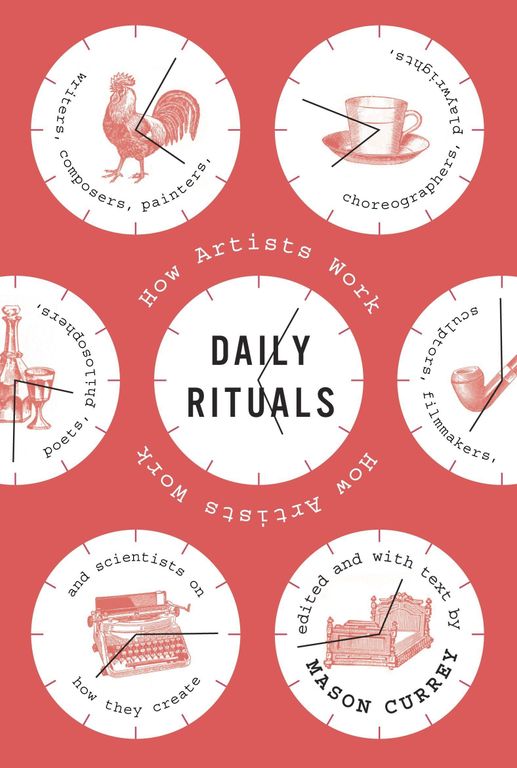
Nova: Exactly! And that's what we're unraveling today as we dive into the fascinating world of creative rituals, inspired by Mason Currey's insightful book,, and Twyla Tharp's. Currey, a writer who spent years meticulously researching the daily habits of brilliant minds, found a surprising commonality: they didn't wait for inspiration; they engineered it.
The Unseen Architecture of Creativity: Rituals vs. Inspiration
SECTION
Atlas: That's a huge claim! I mean, we've all been told creativity is this elusive, ethereal thing that strikes you when it strikes you. Are you saying it's... just a job? Clocking in and out?
Nova: Well, in a way, yes! Think of it like this: Currey’s research, which is so meticulously detailed, reveals that for many of history's most prolific artists, writers, and thinkers, their creative output wasn't born from spontaneous bursts of genius. It was the result of incredibly consistent, often surprisingly unglamorous, daily routines. It's the unseen architecture supporting their grand visions.
Atlas: Oh, I like that – "unseen architecture." So, give me an example. Who are we talking about here? Because I'm picturing a tortured artist in a garret, waiting for a bolt of lightning.
Nova: Far from it! Take the composer Igor Stravinsky. Every morning, he would stand on his head for 15 minutes. Not for a mystical vision, but to clear his head, he said. After that, he’d compose for precisely three hours. Rain or shine, inspired or not, he was at his piano. Or the poet W. H. Auden, who relied on a strict schedule and even took benzedrine to maintain his writing routine. He believed that a routine was essential for turning professional, for treating writing as a serious craft.
Atlas: Whoa. So he literally medicated to stick to a schedule? That’s dedication, or maybe... something else. But this is fascinating, because it flips the narrative. It’s not about waiting for the muse, it’s about showing up.
Nova: Precisely. Currey’s work is like a meticulous anthropologist documenting the habits of a rare tribe. He found that these creative giants weren't necessarily more talented, but they were certainly more in their approach to their craft. They understood that creativity is a muscle, and it needs regular exercise, not just sporadic flexing. It's an insight that has resonated with so many readers, challenging the romanticized view of the lone genius.
Atlas: That makes me wonder, then, if these routines were so crucial, what happens when they're broken? Did Currey's research touch on that?
Nova: Absolutely. The disruption of these rituals often led to creative blocks or decreased output. The consistency wasn't just about efficiency; it was about creating a mental space, a trigger for their creative faculties. It's almost like Pavlov's dogs, but for genius. The routine itself became the muse.
Atlas: That's actually really inspiring. Because it takes creativity out of the realm of "gift" and puts it into the realm of "skill." It means it's something we can all cultivate, not just something we're born with.
Your Creative Blueprint: Skill, Discipline, and Practice
SECTION
Nova: And that naturally leads us to the second key idea we need to talk about, which often acts as a counterpoint to the romanticized view: the notion that creativity is a skill, not a gift. This is beautifully articulated by the renowned choreographer Twyla Tharp in.
Atlas: Oh, I love Twyla Tharp. Her work is so dynamic. How does a choreographer approach something as seemingly internal as creativity?
Nova: Her perspective is incredibly practical. Tharp, who has created over 160 works, including 129 dances, doesn't believe in waiting for inspiration. She sees creativity as a direct result of discipline, preparation, and ritualistic practice. For her, creativity is a habit you learn and use for life, a skill you hone.
Atlas: So basically, you don't just wake up one day and decide to choreograph a ballet. You show up in the studio every single day, even when you don't feel like it.
Nova: Exactly! Tharp famously starts every day with the same ritual: she hails a taxi, tells the driver to take her to the gym, and works out. This seemingly mundane act is her first creative act of the day, a way to build momentum and psychological readiness. It's her way of saying, "Okay, I'm showing up for my work today." It's not about the gym itself, but the ritual of starting.
Atlas: That’s a great analogy. It’s like, the act of getting dressed for work, even if you work from home, signals to your brain that it’s time to be productive. But how does this apply to someone who might not have a physically demanding creative job, or even someone who thinks they're 'not creative' at all?
Nova: That’s the beauty of it. Tharp emphasizes that these rituals don't have to be grand or complex. They can be incredibly small, consistent daily practices. It could be journaling for ten minutes, taking a walk, reading a chapter of a book, or even just making your bed perfectly every morning. The point is the consistency, the act of showing up for yourself and your potential. It’s about building a framework within which creativity can emerge.
Atlas: So it’s less about you do, and more about the of it, consistently. I’m curious, then, what if someone adopts a ritual, and it just doesn’t feel right? Is it about finding the perfect ritual, or just ritual?
Nova: Tharp would argue it's about finding ritual. It’s a highly personal blueprint. What works for Stravinsky might not work for you. The key is to experiment, to be mindful of what helps you enter that focused state, and then to commit to it. It’s about building a system that allows you to consistently engage with your creative potential, whatever that looks like. It's the quiet, persistent work of showing up, day after day.
Atlas: I love that. It democratizes creativity. It takes it from this exclusive club of 'geniuses' and opens it up to everyone who's willing to put in the consistent effort. That’s empowering.
Synthesis & Takeaways
SECTION
Nova: So, what we've learned from both Currey and Tharp is that true creativity is less about waiting for a sudden, brilliant flash, and far more about the deliberate, consistent cultivation of daily practices. It’s about building a personal system that supports your creative output.
Atlas: Right, like that famous quote often attributed to Chuck Close, "Inspiration is for amateurs; the rest of us just show up and get to work." It’s about the grind, but a mindful, intentional grind.
Nova: Exactly. It's about understanding that the seemingly mundane acts can be the most profound catalysts for your greatest work. It’s a powerful invitation for all of us to stop waiting for inspiration to strike and instead, to start building the daily habits that will invite it in.
Atlas: That’s such a hopeful way to look at it. It gives us agency. Instead of feeling helpless in the face of a blank page or an empty canvas, we can actually something. We can design our creative lives.
Nova: Indeed. The biggest takeaway here for anyone looking to unlock their creative potential: what small, consistent daily practice could you adopt to unearth your hidden creative power? Start there. Start small, but start consistently.
Atlas: And keep showing up. That’s the real secret, isn't it?
Nova: It is. This is Aibrary. Congratulations on your growth!