The Ideological Echoes of History
Golden Hook & Introduction
SECTION
Nova: We like to tell ourselves that our organizations, our teams, and our modern institutions are meritocracies—clean, efficient, and built from scratch by brilliant minds. But that is a dangerous delusion.
Atlas: It is, because if you ignore the historical architecture of power, you aren't building a company; you are just repeating a pattern you haven't bothered to study.
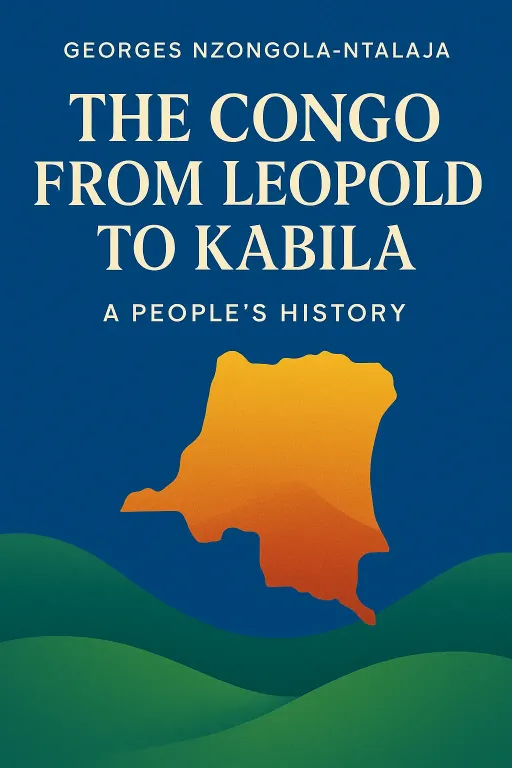
Nova: Exactly. And that is why we are looking at two very different, but equally piercing, accounts of how power actually flows. Today, we are diving into Georges Nzongola-Ntalaja’s The Congo from Leopold to Kabila, and Karl Marx and Friedrich Engels’ The Communist Manifesto.
Atlas: That is an intense combination. On one hand, you have a rigorous historical archive of colonial exploitation, and on the other, the foundational critique of how economic systems dictate human relationships. It feels like we are looking at the autopsy of power itself.
Nova: It is. Nzongola-Ntalaja’s work is vital because he doesn't just list dates; he dissects how the Congo was turned into a private enterprise, literally owned by a king, Leopold II. It is a masterclass in how unchecked institutional power cannibalizes its own future.
Atlas: And then you pair that with Marx and Engels, who were essentially arguing that the way we organize our work—our economic system—is the invisible hand steering the ship of society. For anyone listening who is building a team or leading an organization, this isn't just history. This is the blueprint for understanding how systems either empower people or extract from them.
The Mechanism of Extraction
SECTION
Nova: Let’s start with that Congo example, because it is the most extreme illustration of an extractive system. Nzongola-Ntalaja documents how Leopold II didn't just govern the Congo; he treated the entire nation as a resource to be mined.
Atlas: I have read about this, and it is chilling. But for our listeners who are managing modern teams or building businesses, how does that translate? We aren't talking about colonial rule here.
Nova: Here is the connection. The Congo model was based on the idea of maximum extraction with zero investment in the long-term health of the environment or the people. When you look at an organization today, you have to ask: are you building a system that extracts value from your employees to fuel a short-term goal, or are you building a system that creates value for everyone involved?
Atlas: That is a sharp pivot. I imagine a lot of leaders think they are building culture, but they are actually just extracting labor.
Nova: Precisely. Nzongola-Ntalaja shows that the tragedy in the Congo wasn't an accident of management; it was a feature of the design. The system was optimized for one thing: getting the rubber out. When you optimize a modern organization purely for short-term KPIs or quarterly profit at the expense of human sustainability, you are essentially running a micro-version of that extractive model. You are depleting the resource—your people—and eventually, the system collapses because the resource is spent.
Atlas: That makes me think about the "Strategist" mindset. If I am a builder, I am looking for longevity. If the system is designed to consume the people working within it, the legacy I leave behind is going to be a hollow shell. What Nzongola-Ntalaja is really teaching us is that when you remove the human element from the economic equation, the result is always violence—whether that is physical violence in a colonial state or the psychological violence of burnout and turnover in a modern office.
Nova: That is a profound way to put it. The violence of burnout is a slow-motion version of what we see in historical archives of exploitation. It is the exhaustion of the human asset.
Atlas: It also brings up the question of accountability. In the Congo, the structure protected the exploiter. In a modern org, who is responsible when the structure itself is extractive?
Nova: That is the million-dollar question. And that is exactly where we need to bring in the lens of Marx and Engels.
Modern Power Structures
SECTION
Atlas: Right. The Communist Manifesto is often treated as this political relic, but if we strip away the 19th-century rhetoric, what are they actually saying about organizational power?
Nova: They are saying that the people who control the means of production—the tools, the capital, the processes—dictate the reality of everyone else. In a modern context, replace "means of production" with "organizational resources" or "decision-making power." Marx and Engels were highlighting that power is not just about who is the boss; it is about who owns the narrative of how work gets done.
Atlas: So, if I am a leader, the question isn't just "Am I a nice boss?" It is "How am I distributing the power to create?"
Nova: Exactly. Marx and Engels argued that the tension between those who own the capital and those who provide the labor is the fundamental engine of history. Now, in a modern, flat-structured company, that might sound archaic. But look at the friction in any organization. It usually comes from a disconnect between the people making the high-level strategy and the people doing the actual work.
Atlas: It is the "ivory tower" problem. The people at the top make decisions based on spreadsheets, and the people on the ground feel the consequences of those decisions in their daily lives.
Nova: And that creates an echo of the class struggle. It is not necessarily about wealth in the traditional sense; it is about agency. When you have a team that feels they have no agency, no control over their process, and no stake in the outcome, you are creating the conditions for resentment, disengagement, and eventually, the failure of the project.
Atlas: I can see how that would resonate with someone trying to lead with integrity. If you ignore the agency of your team, you are essentially setting up a hierarchy where the "capital" holders—the leadership—are disconnected from the reality of the work. That leads to bad strategy, because the strategy isn't grounded in the truth of what the team can actually do.
Nova: And that is the brilliance of re-reading these texts today. Marx and Engels were essentially calling for a alignment between the worker and the work. They wanted to dissolve the alienation between the person and the product of their labor.
Atlas: Which is exactly what modern "employee engagement" and "purpose-driven work" is trying to do, right? We are all trying to figure out how to make people feel like they own their work, rather than just being cogs in a machine.
Nova: But here is the catch. You cannot fake that. You cannot just put a "purpose" mission statement on the wall and expect the underlying power dynamics to shift. If the structure remains extractive—if the power remains concentrated and the feedback loops are broken—the rhetoric will ring hollow.
Atlas: That is the "Strategist" trap. You can have all the vision in the world, but if your organizational structure is built on the same extractive logic as the colonial systems Nzongola-Ntalaja writes about, you are going to fail. You are essentially building a house on a foundation of sand.
Synthesis & Takeaways
SECTION
Nova: So, where does this leave us? We have the Congo, which shows us the catastrophic results of pure, unchecked extraction. And we have the Manifesto, which gives us a framework to analyze how power and labor interact.
Atlas: It leaves us with a responsibility. If we are the ones building these systems—whether it is a small startup, a non-profit, or a large corporation—we have to be the ones to break the cycle.
Nova: And how do we do that? It starts with a shift in mindset. Instead of viewing your team as a resource to be consumed, view them as the primary architects of your success. That means shifting from a model of extraction to a model of contribution.
Atlas: I love that. Contribution implies that everyone has a stake. It implies that the goal is not just to "win" or to "extract profit," but to build something that sustains itself and the people within it.
Nova: It also means being radically transparent about the "means of production." In your organization, that looks like transparency about decision-making. Why are we doing this? Who decided this? How does this impact our daily work? When you open those doors, you dissolve the alienation Marx wrote about.
Atlas: That is how you build a legacy. It is not about the product you ship; it is about the system you built. If you build a system that empowers people, that is a legacy that lasts. If you build a system that uses people up, you are just a footnote in a history book about extraction.
Nova: That is the core takeaway. History isn't just something that happened to other people. It is a set of lessons about what happens when power is misused. We have the agency to choose a different path.
Atlas: I think that is the most empowering part of this conversation. We aren't trapped by these historical patterns if we choose to recognize them. We can look at the Congo, we can look at the critiques of the 19th century, and we can say, "We are going to build something different."
Nova: And it starts with that 15 minutes of reflection we talked about. Ask yourself: Is my leadership style extractive or contribution-based? Am I building a system that empowers agency, or one that suppresses it?
Atlas: That is a tough question to sit with, but it is the only one that matters if you want to be a real strategist.
Nova: It is the only way to ensure the echoes of history don't become the noise of our future.
Atlas: This is a great place to leave it. We have covered a lot of ground, from the colonial archives to the roots of organizational power. I hope our listeners take this and start looking at their own teams with a new set of eyes.
Nova: I have no doubt they will. And remember, your potential is always unfolding. Keep building with intention.
Atlas: This is Aibrary. Congratulations on your growth!