Analyzing Power Dynamics and Economic Systems
Golden Hook & Introduction
SECTION
Nova: I read a study once that said the average person spends more time analyzing their Netflix queue than the economic systems that actually dictate their salary and their daily reality. We obsess over the micro, but we completely ignore the macro-level architecture that we are all living within.
Atlas: That is a brutal observation, Nova. But honestly, it is hard to blame people. When you look at economic theory, it feels like a dense forest of jargon. It is easy to assume that those systems are just background noise, like the weather, something that happens to you rather than something you can navigate or influence.
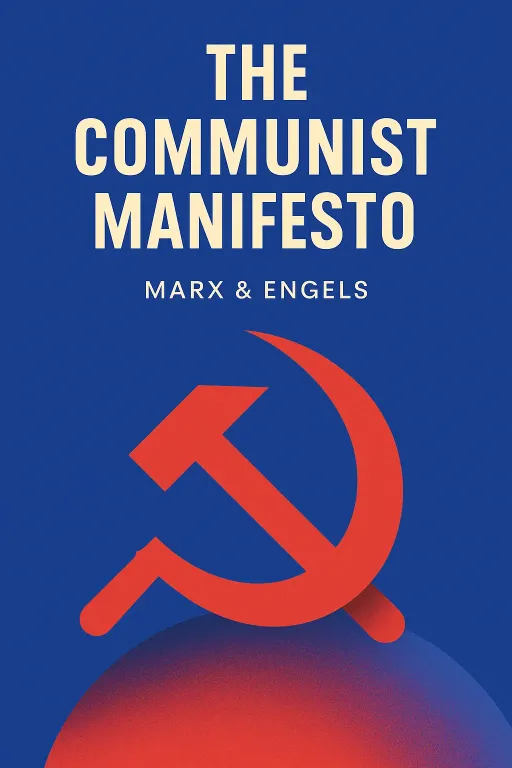
Nova: That is exactly the trap. Today, we are going to break out of that trap by looking at two heavy-hitting, yet often misunderstood texts. We are talking about The Communist Manifesto by Karl Marx and Friedrich Engels, and Georges Nzongola-Ntalaja’s The Congo from Leopold to Kabila.
Atlas: Okay, that is quite the pairing. You have the foundational text of modern political economy on one side, and a specific, harrowing, and deeply revealing history of the Congo on the other. It feels like we are going from the bird’s-eye view of history straight down to the ground level of human impact.
Nova: That is the goal. Marx and Engels wrote the Manifesto in 1848, a time of massive upheaval in Europe, essentially diagnosing the engine of industrial capitalism. It is a text that has been debated for nearly two centuries, yet people rarely look at it as a structural analysis of power. Then, with Nzongola-Ntalaja, we see what happens when those global economic forces land in a specific place. His work on the Congo is a masterclass in understanding how self-determination struggles against external extraction. By looking at these together, we are going to map out how these power dynamics are not just historical artifacts. They are the invisible lines of code in the business and social world we navigate right now.
The Engine of History and Class Struggle
SECTION
Atlas: Let’s start with the Manifesto. I think the challenge for most people is that this book comes with so much cultural baggage. You hear the title and you immediately think of flags, revolutions, and political debates. But if we strip all that away and look at it through the lens of a strategist, what are Marx and Engels actually trying to tell us about how the world works?
Nova: You hit the nail on the head. When you remove the political noise, the Manifesto is essentially a theory of historical change. Marx and Engels argue that the history of all hitherto existing society is the history of class struggles. They view society as a series of layers, or classes, defined by their relationship to the means of production. In their view, progress happens when one class challenges the dominance of another because the economic system no longer serves the current reality.
Atlas: So, it is like a system update. The previous version of the software, or the economic structure, starts to lag, it stops producing value efficiently, and the tension between the people who own the system and the people who operate it reaches a breaking point.
Nova: That is a perfect analogy. The tension is the driver. They describe this process as the bourgeoisie, or the owners of capital, constantly revolutionizing the instruments of production. They are always looking for the next efficiency, the next expansion. But in doing so, they create conditions that eventually undermine their own stability. It is this constant, restless search for growth that changes the social fabric.
Atlas: I see why this would resonate with someone trying to optimize their own life or business. If you are a leader, you are constantly trying to innovate. But what Marx and Engels are saying is that there is a cost to that innovation, and there is a structural reaction to it. My question is, how does this actually look in practice? Does the class struggle always have to be a zero-sum game?
Nova: That is where the theory gets really interesting. They argue that the nature of the system forces a specific type of behavior. It is not necessarily that individual owners are evil; it is that the system demands constant expansion and competition to survive. If you are a business owner and you do not optimize, you get replaced by someone who does. The system compels you to act in a way that maximizes extraction. That is the fundamental pressure point. When they wrote this, they were looking at the steam engine and the factory system. Today, you could look at the digital economy, platform monopolies, and the gig economy. The technology changes, but the structural dynamic of the owner versus the producer remains the core tension.
Atlas: That makes sense. It is the pressure of the system itself. But wait, if the system is designed to force that kind of behavior, is there any room for the conscious optimizer? If the structure is rigged for extraction, how do you build something that is actually sustainable or balanced?
The Local Reality of Global Power
SECTION
Nova: That is the perfect bridge to our second text. If Marx and Engels provide the theoretical framework for how these systems operate, Georges Nzongola-Ntalaja provides the brutal, real-world case study. His work on the Congo is essential because it shows us what happens when those global economic forces, the ones Marx described, are applied to a specific territory with the intent of pure extraction.
Atlas: I have read excerpts of his work, and it is unflinching. He does not just talk about politics; he talks about the resource economy. He traces how the Congo was essentially treated as a private asset by King Leopold II, and how that legacy of extraction continued long after.
Nova: Exactly. Nzongola-Ntalaja’s work is a masterclass in showing how global economic structures are not abstract. They have a zip code. They have a human cost. He explains that the Congo’s struggle for self-determination was not just a political fight; it was an economic fight to reclaim the value being sucked out of the land and the people. When he details the transition from colonial exploitation to post-colonial challenges, he is showing us the mechanics of how power is maintained. It is not just about who holds the flag; it is about who controls the flow of resources.
Atlas: This brings up a point that I think is really relevant for anyone in business today. We talk a lot about supply chains and global markets, but we often treat them like lines on a map. Nzongola-Ntalaja forces you to look at the other end of those lines. When we talk about global economic integration, we have to ask: who is integrating, and who is being integrated into a system that was designed to extract from them?
Nova: That is the crucial insight. Nzongola-Ntalaja argues that the underdevelopment of the Congo was not a natural state of affairs. It was a manufactured outcome of an economic system designed to prioritize external profit over internal development. He shows that when you create a system that relies on the extraction of raw materials without reinvesting in the local infrastructure or the human capital, you create a cycle of dependency that is incredibly hard to break.
Atlas: It sounds like he is describing the ultimate version of the class struggle Marx and Engels were talking about, but on a global, geopolitical scale. You have the global center, which acts like the bourgeoisie, and the resource-rich territories, which are forced into the role of the producers who see little of the value they generate.
Nova: That is an incredibly sharp synthesis. You are connecting the dots. The power dynamic is the same. It is about who owns the means of production and who controls the distribution of the value. When you look at the history of the Congo as Nzongola-Ntalaja lays it out, you see how these power structures are reinforced by political and economic institutions. It is not just about the market; it is about the governance that protects the market’s ability to extract.
Atlas: This makes me think about the modern business environment. We are all operating in these systems. Whether you are a founder, a manager, or an individual contributor, you are part of a structure that has built-in incentives. If you are not paying attention, you might find yourself perpetuating the same cycle of extraction, even if you do not intend to.
Nova: That is the key. The takeaway here is not to feel guilty, but to become aware. Awareness is the first step to optimization. When you understand the logic of the system, you can start to make different choices. You can look at your own company, your own supply chain, or your own career path, and ask: Am I just participating in an extractive loop, or am I building something that creates genuine value for everyone involved?
Synthesis & Takeaways
SECTION
Atlas: I love that. It takes the conversation from being a history lesson to being a personal and professional development tool. If I am listening to this, I am thinking, how do I apply this to my life? I am not in charge of a nation or a global supply chain. But I am in charge of my own decisions.
Nova: Here is how you apply it. First, look at your own environment through the lens of power dynamics. Ask yourself, where is the value actually being created, and where is it being captured? In any organization, there are people doing the work, and there are structures that capture the value of that work. Being a strategic architect means understanding that flow. You want to be in a position where you are not just a cog in an extractive machine, but someone who is actively shaping the value creation process.
Atlas: So, identify the extraction points. That is a great mental model. And then, I would add, look at the second lesson from Nzongola-Ntalaja: the importance of self-determination. In your own career, that means having agency. It means not just accepting the default path that the system lays out for you, but actively building a path that aligns with your own values and long-term sustainability.
Nova: Exactly. It is about moving from being a passive participant in an economic system to being an active architect of your own reality. Marx and Engels warn us about the dangers of the system when it runs on autopilot, and Nzongola-Ntalaja shows us the real-world cost of that autopilot when applied to vulnerable systems. The synthesis of both is a call to conscious leadership.
Atlas: It also reminds me that balance, the thing we talked about at the start, isn't just about work-life balance. It is about systemic balance. If you are part of a team or a business, you have to be the one who asks, is this sustainable? Are we building something that lasts, or are we just maximizing for the next quarter at the expense of our people and our future?
Nova: That is the ultimate strategic question. It is the difference between a short-term win and a long-term legacy. When you view the world through this lens, you stop seeing economic systems as fixed, unchangeable laws of nature. You start seeing them as what they are: human-made structures that can be understood, navigated, and yes, improved.
Atlas: This has been a fascinating journey, Nova. We started with the engine of history and ended up with a blueprint for personal and professional agency. It really shows that the most powerful tool you have is your ability to understand the context you are operating in.
Nova: It is the only way to truly scale your influence. If you do not understand the system, you are just reacting to it. When you understand it, you can lead within it. I hope our listeners take that and apply it to their next project, their next meeting, or their next big life decision.
Atlas: I am definitely going to be looking at my own work projects with a much sharper eye for where the real value is going. This was a great session.
Nova: I am glad to hear that. That is the goal of Aibrary—to give you the frameworks to build a better reality, one insight at a time. Thank you for joining us today. This is Aibrary. Congratulations on your growth!