Antifragility: 5 Must-Read Books on Resilience
How To Build A Mind That Can't Be Broken
Setting the Crack
SECTION
Sophia: I broke my favorite mug this morning. Daniel: That’s one way to start the day—with loss. Sophia: It’s been with me for years. Big handle, chipped rim, survived two apartments and one breakup. Then, this morning, gone. Split right down the side. I stared at it for a minute, thought about throwing it away, and then realized—I could still use it. I’d just have to hold it differently. Daniel: That sounds like denial. Or poetry. Can’t tell which. Sophia: Maybe both. But that’s when it hit me—people always talk about being “strong,” about bouncing back. But what if strength isn’t about fixing what’s broken? What if it’s about learning how to live with the crack? Daniel: So that’s where we’re going today? Sophia: We’re talking about resilience—the real kind. Not the “just power through” kind, but the quiet art of holding your life differently when the handle breaks. How people actually do that. Daniel: All right, so… not another “grind harder” episode. Sophia: No hustle slogans. Just five books, five different ways to build a brain that doesn’t collapse when life does. Let’s start with the first step: facing the fracture.
Face the Fracture
SECTION
Daniel: You mean, actually admit things hurt? That’s radical. Sophia: It is. M. Scott Peck opens The Road Less Traveled with three words—“Life is difficult.” That’s his thesis. He tells this story about a patient who’d had six jobs in five years. Every time, he said the same thing: the people were toxic, the boss was impossible. When he sat down in Peck’s office, he was restless, defensive, listing everyone who’d done him wrong. And then Peck asked one quiet question: “Is it possible the toxicity travels with you?” Daniel: That’s the therapy equivalent of a gut punch. Sophia: It was. The man froze, couldn’t speak. And Peck said later—that silence was the first honest moment in five years. He wasn’t cured; he was cracked open. Once he stopped running from the pain, he could finally start to understand it. Daniel: That’s brutal, but it makes sense. You can’t out-run your own patterns. Sophia: And that same truth shows up in Edith Eger’s The Choice. She was sixteen when she arrived at Auschwitz. The night she got there, a guard told her to dance. Imagine that—you’re starved, terrified, barefoot on concrete, and someone orders you to perform. She dances anyway, a ballet she remembered from before the war. Later, she said, “They could control my body, but not my mind.” That’s when she realized—resilience isn’t pretending it’s fine. It’s deciding what part of you can’t be taken. Daniel: I can’t even picture that. You’re surrounded by death, and somehow you still have the presence to say, “This part of me stays mine.” Sophia: That’s what makes her story so powerful. Years later, she became a therapist herself. She writes about a patient who told her, “I can’t go on; I’m broken.” And she said, “You’re not broken. You’re bent. You can straighten again.” Daniel: “Bent, not broken.” That’s such a small shift in language, but it changes everything. Sophia: It does. Because resilience doesn’t start when you’ve healed—it starts when you tell the truth about the damage. Daniel: So the first rep in this whole “resilience gym” isn’t endurance. It’s honesty. Sophia: Yes. Honest enough to say, “This hurts, and I’m still here.” Peck calls it discipline; Eger calls it choice. Different words, same act: facing the fracture. Daniel: And weirdly, that feels hopeful. Because if the crack is where it starts, then breaking isn’t failure—it’s the invitation. Sophia: That’s where real strength begins: not in being unbreakable, but in finally admitting where you already are.
Train in the Fire
SECTION
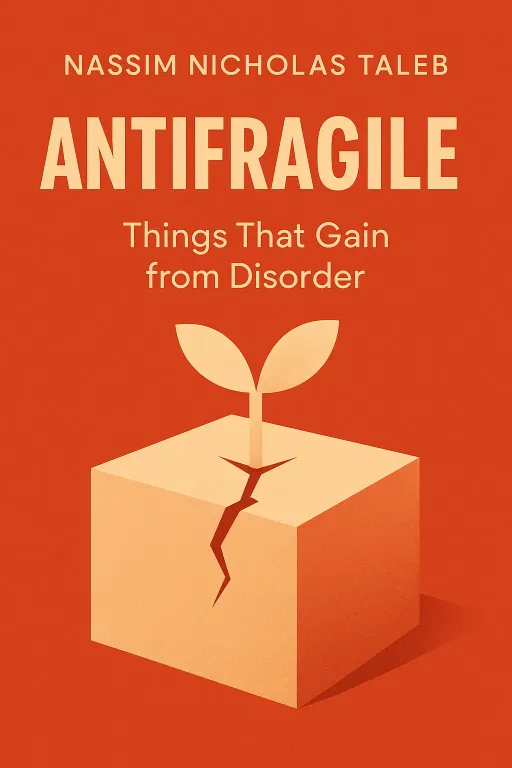
Sophia: Here’s the thing about resilience—people treat it like personality. But it’s more like fitness. You can train it, or you lose it. Daniel: Yeah, but most people only start “training” after they’ve already hit the wall. It’s like learning CPR while someone’s already choking. Sophia: That’s why David Goggins always fascinates me. Before he became the Navy SEAL legend, he was just a guy stuck in a dead-end job, 300 pounds, no confidence, no discipline. Then came Hell Week. Daniel: Hell Week? Sounds like a marketing gimmick for pain. What actually happens? Sophia: Five days. Almost no sleep. Constant drills. They’ll run you until your legs give out, then dump you into the Pacific. Daniel: That’s not a workout—that’s a lawsuit. Sophia: Pretty close. Picture thirty SEAL candidates standing chest-deep in freezing mud, teeth chattering like dice in a cup. The instructors shout, “If five of you quit, the rest can go inside.” Daniel: So everyone’s waiting for someone else to cave first. Sophia: Right. Until one guy starts humming—just to stay sane. Another joins. Then another. Soon, thirty freezing men are singing together, off-key but defiant. Daniel: That’s incredible. They didn’t escape the pain—they turned it into rhythm. Sophia: And that’s the lesson. Goggins says suffering isn’t punishment; it’s practice. Every hard thing you do is just another mental rep. You’re training your brain to believe you’ll show up again tomorrow. Daniel: So resilience isn’t about being fearless—it’s about proving to yourself that fear won’t decide for you. Sophia: And on a bigger scale, that’s what Nassim Taleb talks about in Antifragile. Daniel: Oh, the Black Swan guy? Sophia: The same one. Before he wrote philosophy, he traded options on Wall Street. He watched people try to eliminate every tiny risk—and realized that the more we avoid small shocks, the bigger the collapse when reality hits. Daniel: Can you give me a picture? Sophia: Picture this: a plane crashes. Investigators dissect every wire, redesign the weak link, retrain the pilots. The next flight is safer. Now, compare that to a bank. When a bank nearly crashes, executives hide the losses and call it “stability.” Until 2008—boom. Daniel: So the plane learns from bruises; the bank hides them. Sophia: That’s it. Taleb’s point is that small stress keeps a system alive. Remove every bump, and you don’t get safety—you get fragility dressed as calm. Daniel: Which loops us back to Goggins. If you never rehearse discomfort, real pain will wreck you. Sophia: Whether it’s one body or a whole economy, resilience grows by facing friction, not avoiding it. You don’t toughen up in peace—you toughen up by choosing small storms before the big one finds you.
Rebuild with Meaning
SECTION
Sophia: Here’s the paradox of resilience—at some point, strength alone stops working. You can lift, fight, push through, but the real test comes when there’s nothing left to fix. Daniel: You mean when the story can’t go back to what it was. Sophia: That’s what Paul Kalanithi’s life became—a story that couldn’t go back. He was a neurosurgeon, one of the best of his generation, and at thirty-six he was diagnosed with terminal lung cancer. All those years studying the brain, learning how to repair it—and now the mind was fine, but the body was giving up. Daniel: That’s the kind of plot twist no amount of discipline prepares you for. Sophia: He thought the same. In When Breath Becomes Air, he describes trying to keep living like a doctor—analyzing symptoms, reading charts, planning his next step. But the more he tried to stay in control, the smaller his world became. So he changed the question. Instead of “How do I live longer?” he asked, “What makes life worth living?” Daniel: That’s such a simple pivot, but it flips the entire equation—from survival to meaning. Sophia: Right. He went back to work, finished his residency, and wrote at night. He and his wife had a daughter after his diagnosis—he knew he wouldn’t see her grow up, but he wrote to her anyway. “When you come to one of the many moments in life where you must give an account of yourself,” he said, “provide a line from the poem that is your life.” Daniel: That line kills me every time. He didn’t get to finish the poem, but he left the rhythm. Sophia: Yes. His story isn’t about losing the battle—it’s about redefining what victory means. He didn’t outlive his disease; he outlived despair. Daniel: It reminds me of something from earlier. When we talked about facing the fracture, it was about telling the truth that you’re broken. When we talked about training in the fire, it was about building through pain. But this—this is the stage where you make peace with what can’t be undone. Sophia: That’s the essence of resilience. Not bouncing back, not even bouncing forward, but integrating the loss into a larger meaning. Daniel: It’s almost like the Japanese art of kintsugi—repairing cracks with gold. The break doesn’t disappear; it becomes the most beautiful part. Sophia: Exactly. The scar stops being a wound and becomes part of the design. That’s what Kalanithi teaches us. You can’t choose when the story ends, but you can choose what it means before it does. Daniel: So, the full arc looks like this: first, face the fracture—admit the break. Then, train in the fire—learn from the heat. Finally, rebuild with meaning—fill the cracks with gold. Sophia: That’s resilience. Not rubber bands. Forged steel.
The Return
SECTION
Sophia: You know, I keep thinking about that mug from this morning. The crack’s still there. But when I poured coffee into it again tonight, it didn’t leak. Daniel: So it’s officially back in service. Sophia: Yeah. Just not the same service. It holds less now, but somehow I hold it more carefully. Daniel: That’s the thing, isn’t it? Nothing we talked about today—Goggins, Eger, Kalanithi—none of them got their old life back. They built a new one that could hold what broke. Sophia: Exactly. Resilience isn’t about erasing the fracture; it’s about learning how to live around it, and sometimes through it. Daniel: And if that’s true, then maybe we don’t need to fear the next crack so much. It’s not the end of the story—it’s the start of a stronger one. Sophia: Maybe that’s the real secret: the things that break us are the same things that let the light in. Daniel: And on that note—handle your cracks with care, friends. Sophia: This is Aibrary, signing off.