The 'Genius' Mythology is a Trap: Why You Need Systems, Not Just Talent.
9 minGolden Hook & Introduction
SECTION
Nova: We're often told to 'find our passion' or 'chase genius,' to be that singular, brilliant mind in the room. But what if that very narrative is actually setting us up for fragility, for limits we don't even see? What if the true path to lasting innovation isn't about individual brilliance, but something far more fundamental, yet infinitely more powerful?
Atlas: Oh, I like that. It's almost an uncomfortable question for anyone who prides themselves on being the 'go-to' person, the one who always figures it out. Are you saying our individual 'heroics' might actually be a trap?
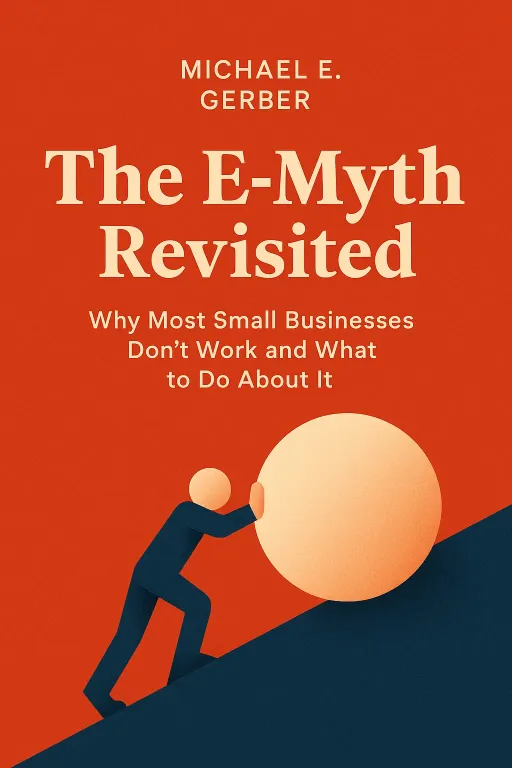
Nova: Exactly! And today, we're dissecting that very idea through the lenses of two foundational books. First, by Michael E. Gerber. What's fascinating about Gerber is that he started out as a small business consultant and quickly realized his clients were often brilliant at their craft—amazing bakers, incredible mechanics—but absolutely terrible at building a around that skill.
Atlas: So, they were fantastic technicians, but not necessarily great architects of a system. I can see how that would be a common blind spot.
Nova: Precisely. And then we'll turn to by Atul Gawande, a renowned surgeon and public health researcher. Gawande brought the stark reality of human fallibility into sharp focus, even in the most high-stakes environments like an operating room. His work isn't about blaming individuals, but about understanding how simple, structured thinking can prevent catastrophic errors.
Atlas: That's a great way to frame it. So, we're talking about going beyond just being good at something, right? It sounds like we're moving from a focus on individual talent to the structures that amplify and protect that talent.
Nova: Absolutely. And that naturally leads us into our first deep dive: the technician's trap.
The Technician's Trap: Building a Business Around a Person, Not a System
SECTION
Nova: Gerber’s core argument in is that most small businesses fail because of what he calls the 'fatal assumption.' This is the idea that if you understand how to the technical work of a business, you understand how to a business that does that technical work.
Atlas: I mean, that sounds logical on the surface, doesn't it? If you're the best chef, you open a restaurant. If you're a brilliant coder, you start a software company.
Nova: It does sound logical, but it’s a profound misstep. Think of that brilliant baker. They love baking. They make the most exquisite sourdough. So, they open their own bakery. Suddenly, they're not just baking. They're managing inventory, hiring staff, dealing with marketing, cleaning toilets, and worrying about cash flow. They get completely buried the work, not the business. They’ve essentially created a job for themselves, often a more demanding one, instead of a scalable enterprise.
Atlas: That makes me wonder, for our listeners who are visionaries, building new systems, how do they avoid becoming their own bottleneck? If you’re the one with the strategic insight, the 'genius' behind the innovation, how do you prevent your own brilliance from limiting your impact?
Nova: That’s the crux of it. Gerber identifies three personalities within every entrepreneur: the Technician, the Manager, and the Entrepreneur. The Technician is the doer, the Manager brings order, and the Entrepreneur is the visionary. The fatal assumption is when the Technician dominates. You end up with a business that is completely dependent on. If you take a vacation, the wheels fall off. If you get sick, operations grind to a halt. It can’t grow beyond your personal capacity.
Atlas: So it's really about designing the structure first, the blueprint, rather than just having amazing individual components. Because if that one brilliant component breaks, the whole thing crumbles.
Nova: Exactly. Gerber urges us to design the business we’re going to franchise it from day one. You need systems, processes, and documentation so that anyone, with proper training, can step into a role and execute it effectively. It’s about creating a predictable, repeatable machine, not just relying on a series of heroic individual efforts. This frees up the actual entrepreneur—the visionary—to work the business, to strategize, to innovate, to expand, instead of constantly being stuck the daily grind.
Atlas: I can definitely relate to that, especially in fast-paced tech environments. You see brilliant engineers who build incredible products, but the moment they try to scale, they hit a wall because they haven't systematized the. It's almost like they're building a custom-made car for every single customer instead of designing an assembly line.
Nova: A perfect analogy. And that idea of designing for scale, for repeatability, naturally brings us to the power of simpler systems, and few things illustrate this better than the humble checklist.
The Unsung Power of Checklists: Systemizing Excellence and Reducing Error
SECTION
Nova: Atul Gawande’s makes a profound case for something we often dismiss as mundane: the checklist. His research, particularly in high-stakes fields like medicine and aviation, revealed that even the most highly skilled, experienced professionals make critical errors. Not from lack of talent or effort, but from simple memory lapses or communication breakdowns.
Atlas: That sounds rough, but isn't that just human nature? Even the best of us forget things sometimes.
Nova: It is human nature, but Gawande argues that relying solely on individual memory or genius in complex environments is a recipe for disaster. He spearheaded the World Health Organization’s Surgical Safety Checklist initiative. Before a surgery, the team would pause and go through a simple, quick checklist: confirming patient identity, surgical site, allergies, and anticipating potential issues. No groundbreaking new medical techniques, just a simple list.
Atlas: And what was the impact? Because for our 'Futurist' listeners, doesn't that sound almost... too basic? Like it would slow down innovation, not accelerate it? Or even imply a lack of trust in highly trained professionals?
Nova: The impact was staggering. In eight pilot hospitals around the world, surgical complications and deaths dropped by over a third. Not because surgeons suddenly became 'better' or more brilliant, but because a simple system ensured critical, often overlooked, steps were consistently followed. It wasn't about stifling creativity; it was about standardizing the routine so the exceptional could flourish. Checklists offload the mundane cognitive burden, freeing up mental space for the complex, the unexpected, the truly innovative parts of the job.
Atlas: So, it's not about micromanaging genius, it's about building a safety net, a foundational layer that genius to operate at its peak without being derailed by preventable errors. I can see how that would apply to something like 'Decentralized Autonomous Organizations' or new team structures, where clear, simple protocols could be essential for distributed teams to function effectively.
Nova: Exactly! Think of it like this: a checklist doesn't tell a pilot to fly through a storm, but it ensures they've checked the fuel, the hydraulics, and the landing gear they even take off. It ensures the basics are covered, so their talent can be fully dedicated to navigating the unique challenges of the situation. It’s a system designed to empower, not to constrain.
Atlas: That’s a great analogy. It ensures the foundations are solid, so the creative problem-solving can happen on top of that. It’s about creating a robust, repeatable foundation that empowers distributed teams and allows individual brilliance to shine where it truly matters, rather than getting bogged down in the basics.
Synthesis & Takeaways
SECTION
Nova: So, when we bring Gerber and Gawande together, the message becomes incredibly clear: our obsession with individual genius is a trap. True innovation, lasting impact, and scalable success don't come from isolated brilliance. They emerge from well-designed, replicable systems that empower many, reduce errors, and free up talent to focus on what truly matters.
Atlas: That really makes me reflect on the deep question from our main content: "What part of your current technological workflow relies too heavily on individual heroics rather than a robust, repeatable system?" For anyone building systems, leading teams, or just trying to make a lasting change, this is a powerful reminder that the blueprint matters as much, if not more, than the individual bricks.
Nova: Absolutely. Systems are not about replacing talent; they are about amplifying it. They create the scaffolding for genius to truly thrive, to scale, and to have a sustained impact far beyond what any single individual could achieve alone. It's a mindset shift from 'I have to be the hero' to 'I have to design a system where everyone can be effective.'
Atlas: That’s actually really inspiring. It’s about building a legacy, not just making a splash. And for our listeners, I’d encourage you to identify just one area in your current workflow where you can implement a simple system, a checklist, or a documented process. See how that small shift can free up your energy for bigger, more impactful work.
Nova: A fantastic challenge. Because the genius isn't just in the idea, it's in the execution, and the execution is perfected through system.
Atlas: It truly is.
Nova: This is Aibrary. Congratulations on your growth!