The Art of Persuasive Communication
Golden Hook & Introduction
SECTION
Nova: Atlas, five words. "The Art of Persuasive Communication." Go.
Atlas: Intentional, impactful, authentic, strategic,.
Nova: Oh, I love that! Mine would be: Clarity, purpose, words, resonance,. See, we’re already on the same page.
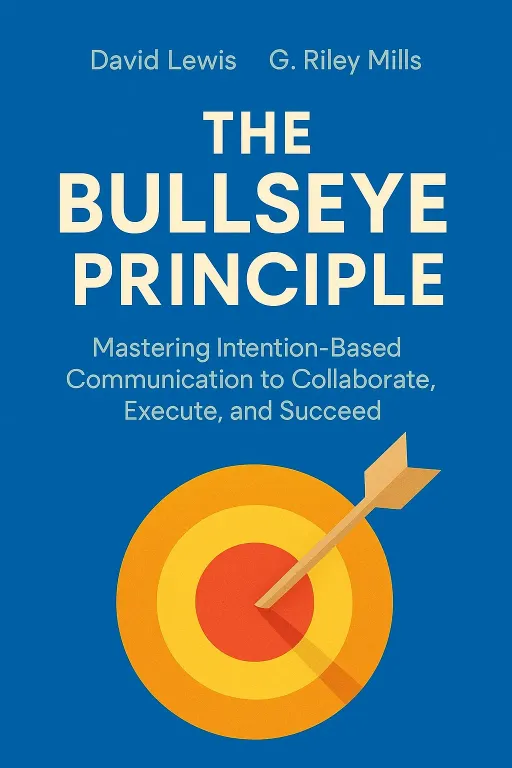
Atlas: We are! It’s like we’ve mastered this whole communication thing already. Which, of course, is what we’re diving into today with two incredible works: "The Bullseye Principle" by David Lewis and G. Riley Mills, and "Words That Work" by the legendary Dr. Frank Luntz.
Nova: Exactly. And what’s fascinating about these two is how they complement each other. Lewis and Mills, with their corporate training background, really lay down the strategic foundation for communication. They’re all about the architecture of your message.
Atlas: Right, like building the perfect launchpad. But then you’ve got Dr. Luntz, a renowned political consultant and pollster, who’s famous for shaping the language of political discourse itself. His insights come from deep dives into what truly moves public opinion, not just in politics, but in any high-stakes conversation. It’s the difference between having a well-designed rocket and having the exact right fuel for it.
Nova: That’s such a perfect analogy! Luntz is a master at understanding the emotional triggers in language. He’s the one who understands that for our resilient achievers and empathetic leaders out there, articulating a vision isn't just about bullet points; it's about connecting on a visceral level.
Atlas: So you’re saying it’s not enough to know you want to say, you also have to know to say it so it actually lands? For anyone trying to articulate a vision or build effective systems, this feels like the holy grail.
Nova: It absolutely is. And that brings us to our first core idea, straight from "The Bullseye Principle": the absolute power of intention-based communication.
The Power of Intent: Aiming Your Message with Precision
SECTION
Nova: So, think about it: how many times have you walked into a conversation, a meeting, or even just sent an email, without truly defining what you want to achieve? We often just.
Atlas: Oh, I know that feeling! Especially when you’re overwhelmed with options, just getting the words out feels like a victory. But then you walk away thinking, "Did I even get my point across?"
Nova: Exactly. Lewis and Mills argue that true persuasive communication starts with a single, clear intention. They compare it to an archer. You wouldn't just nock an arrow and shoot it vaguely into the air, hoping it hits something. You aim for the bullseye.
Atlas: Hold on, so it’s not just about having a goal, but a? That feels incredibly focused. For leaders, that’s a big shift. We often have five things we want to achieve.
Nova: That’s the key distinction. They say you might have secondary goals, but one primary, non-negotiable intention. It’s about clarity of purpose. And intertwined with that is a deep audience analysis. Who are you speaking to? What do they care about? What are their fears, their hopes?
Atlas: What do you mean by ‘audience analysis’ in a practical sense? Is it just knowing their job title, or something deeper? For someone leading a team, trying to get buy-in on a new strategy, how does that look on the ground?
Nova: Let’s imagine a CEO, a resilient achiever like many of our listeners, who needs to deliver some challenging news—say, a restructuring that will inevitably cause anxiety. If their intention is just "to inform," they might just rattle off facts and figures. The outcome? Panic, rumors, low morale.
Atlas: Yeah, that’s a common scenario. It feels like a necessary evil to just get through it.
Nova: But if their is: "I want my team to understand the necessity of this change, trust our path forward, and feel supported," then their communication strategy completely shifts. Their audience analysis tells them: "My team fears job loss, uncertainty, and feeling devalued."
Atlas: Oh, I see! So, knowing that, the CEO wouldn't just present data. They’d proactively address those fears.
Nova: Precisely. They would frame the message with transparency about the challenges, empathy for the impact on individuals, and concrete steps for support and future growth. They’d talk about this change is happening, not just is happening. The difference is profound. The outcome is often less fear, more understanding, and a greater willingness to adapt.
Atlas: That’s a game-changer for strategic communication. It’s about guiding the emotional landscape, not just delivering information. So, the first step is always: what’s my bullseye, and who am I aiming at? And I imagine a lot of our listeners, especially those in leadership roles, often overlook that deep audience understanding. It’s not about manipulating, but about truly connecting.
Nova: Exactly. It's about respect and effectiveness. And once you have that bullseye clearly in sight, the next challenge is choosing the right verbal ammunition to hit it.
The Alchemy of Language: Crafting Words That Stick and Persuade
SECTION
Nova: This is where Dr. Frank Luntz’s "Words That Work" comes into play. Once you know your intention and your audience, how do you choose the words that don't just convey information, but actually and?
Atlas: Right, because I can have the best intention in the world, but if my words are flat, or worse, accidentally offensive, I’m sunk. So, is this about finding the perfect buzzwords?
Nova: Not at all. Luntz argues that "It's not what you say, it's what people hear." He delves into the psychology of language and framing. It's about understanding the underlying values and emotions that specific words evoke, and how those connect with your audience's worldview.
Atlas: Can you give an example? Because for many of us, words feel like tools to describe reality, not to shape it.
Nova: Think about how different terms evoke different reactions. Luntz famously highlighted the difference between "estate tax" and "death tax." Logically, they refer to the same thing. But "death tax" carries a much stronger emotional charge. It conjures images of the government reaching into the grave to take from your family.
Atlas: Wow. That’s incredibly powerful. It’s not just a subtle rephrasing; it’s a complete reframing of the emotional context.
Nova: Exactly. Another one: instead of "cost-cutting measures," which sounds negative and restrictive, frame it as "investing in our future resilience" or "optimizing for sustainable growth." The intention is the same – financial prudence – but the language shifts the perception from loss to opportunity.
Atlas: So, for our listeners who are trying to build effective systems, it’s not just about what they’re doing, but how they talk about it. How do we, as leaders, identify specific words? Is it just about guessing, or is there a method?
Nova: Luntz’s methodology isn't about guessing; it's about listening and testing. He spends countless hours in focus groups, listening to how people react to different phrases. He looks for words that resonate because they tap into deeply held values. It's about identifying common ground and shared aspirations. For instance, words like "imagine," "courage," "trust," "truth," "freedom," "hope," "responsibility," and "opportunity" often have universal resonance because they speak to fundamental human desires.
Atlas: That makes perfect sense. Consistent language, infused with these resonant words, creates consistent understanding and action within a team. It builds a shared mental model, making effective systems not just about process, but about shared purpose and emotional buy-in. It’s almost like you’re not just communicating, you’re creating culture with every word.
Nova: Precisely. It’s the alchemy of language. You’re not just transmitting data; you’re inspiring, motivating, and shaping perception. And that’s a skill that can transform everything from a team meeting to a major product launch.
Synthesis & Takeaways
SECTION
Nova: So, bringing these two powerful ideas together, we see that persuasive communication is a two-step dance: first, clarity of intention and deep audience understanding from "The Bullseye Principle," and then, crafting language that resonates and sticks, informed by "Words That Work." They’re not separate; they’re two sides of the same incredibly powerful coin.
Atlas: That’s a fantastic way to put it. It’s like the strategic brain and the emotional heart of communication. And for our clarity seekers and resilient achievers, the idea of having a clear framework for this is incredibly valuable.
Nova: It really is. And the beauty is, the tiny step recommended by these experts is so accessible. It’s something you can start doing immediately.
Atlas: Right, like that growth recommendation for our listeners: before your next important conversation or presentation, define your single most important intention. And then, identify the three most impactful words or phrases you want your audience to remember.
Nova: Just those two simple questions can transform a scattershot message into a laser-focused one. It forces you to be deliberate, empathetic, and strategic with every word.
Atlas: Honestly, that sounds like my Monday mornings, but with a much clearer path forward. The idea that such a small shift can lead to such a profound impact on how we articulate our vision and lead effectively… it’s incredibly empowering. It makes you wonder how many misunderstandings or missed opportunities could have been avoided with just a little more intentionality and a few better chosen words.
Nova: And that’s the art of persuasive communication: transforming conversations from accidental to artful, one intention and one resonant word at a time.
Atlas: This is Aibrary. Congratulations on your growth!