The Vicarious Burden: Protecting Your Well-being in High-Impact Work
Golden Hook & Introduction
SECTION
Nova: You know, Atlas, there's this pervasive myth out there, especially for people who dedicate their lives to helping others. It’s the idea that the truly strong, the truly resilient, are those who are completely unaffected by the suffering they witness. Like, if you're tough enough, it won't touch you.
Atlas: Oh, I know that feeling. It’s almost like a badge of honor, isn't it? To say, "I just compartmentalize," or "I don't let it get to me." But honestly, Nova, that sounds a bit out there. Isn’t that just setting people up for a crash?
Nova: Exactly! It’s actually a recipe for burnout. What if I told you that the toughest among us, the most empathetic strategists and resilient advocates, often feel the profound weight of others' experiences the most? It’s not a weakness; it’s a testament to their humanity and their deep connection to the work.
Atlas: That’s actually really inspiring. So you’re saying feeling that impact is less about being fragile and more about being truly engaged?
Nova: Precisely. And that's exactly what we're unpacking today, drawing heavily from a powerful concept often explored in the book, "The Vicarious Burden: Protecting Your Well-being in High-Impact Work." This book synthesizes insights from critical trauma literature, especially from giants like Bessel van der Kolk and Laura van Dernoot Lipsky, making complex trauma theory incredibly accessible and actionable for anyone in a caregiving or advocacy role. It’s not just a theoretical read; it's a practical guide for sustaining your most impactful work.
Atlas: I can see how that would be vital. For our listeners who are constantly pouring themselves into protecting the vulnerable and shaping systems, this isn't just an academic exercise. This is about their actual ability to keep doing what they do.
Acknowledging the Vicarious Burden: It's Not Weakness, It's Humanity
SECTION
Nova: Absolutely. And the first, most crucial step, is simply acknowledging this 'vicarious burden.' The book makes it clear: deeply caring for others, especially those experiencing intense trauma or hardship, takes a toll. It’s not some personal failing or a sign you're not cut out for the job. It's a natural, human response.
Atlas: Wait, so when I hear about someone feeling completely drained after a particularly tough week, that's not them being weak? That’s them being human?
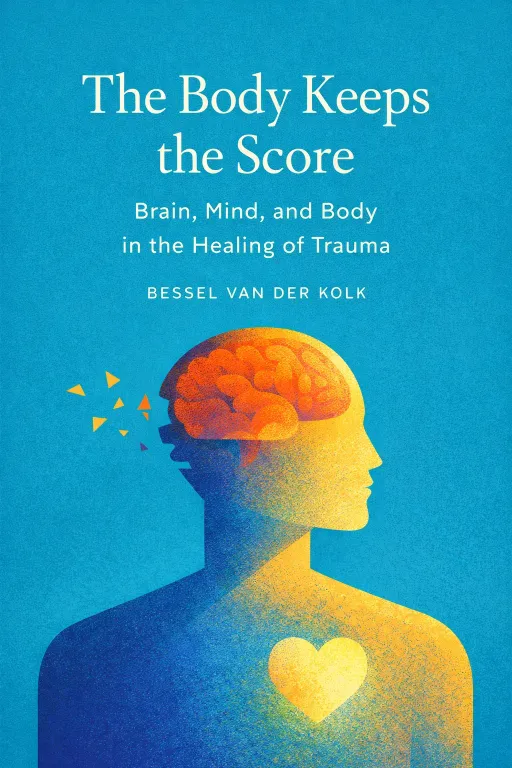
Nova: In essence, yes. Think about Bessel van der Kolk's groundbreaking work in "The Body Keeps the Score." He meticulously details how trauma doesn't just affect the mind; it fundamentally rewires the brain and impacts the body. When you're constantly exposed to others' trauma, even indirectly, your own system is reacting. Your empathy, your mirror neurons, your very biology are responding to intense human experiences. It’s not a choice; it’s a physiological reality.
Atlas: So basically you’re saying that the stress of absorbing others' pain manifests physically, even if you’re not the one directly experiencing the trauma? That’s going to resonate with anyone who struggles with feeling physically exhausted even when they haven't done much 'physical' work.
Nova: Exactly. And the problem is, we often internalize this as a personal weakness. We think, "I should be tougher, I should be able to handle this." But understanding van der Kolk helps us recognize these signs—the fatigue, the irritability, the emotional numbness—as natural indicators of vicarious trauma. It’s like a check engine light coming on. Ignoring it doesn't make the problem go away; it just leads to a breakdown.
Atlas: That makes me wonder, why is it so hard for people in these high-impact roles to acknowledge this? I imagine there’s a lot of pressure, maybe even a belief that admitting you’re affected means you’re not good enough to help.
Nova: There’s immense pressure. Society often glorifies the stoic hero, the tireless advocate who never breaks. And within these professions, there can be a culture of 'suck it up.' But the book emphasizes that acknowledging this burden isn't about giving up; it’s the very first step toward building genuine, sustainable resilience. It’s about being strategic with your own resources so you can continue to show up effectively.
Strategic Self-Care: Protecting Your Capacity to Serve
SECTION
Nova: And that naturally leads us to the second key idea, which is how we actively protect that capacity to serve, moving from just acknowledging the burden to strategically managing it. This is where Laura van Dernoot Lipsky's "Trauma Stewardship" becomes an absolute cornerstone.
Atlas: Okay, but for our listeners who are managing high-pressure teams, or advocating for systemic change, isn't 'self-care' just, you know, bubble baths and scented candles? How does that help someone trying to change the system, or dealing with incredibly difficult cases day in and day out? It often feels like a luxury, not a necessity.
Nova: That's a great point, and it’s a common misconception that Lipsky directly challenges. She reframes self-care not as a luxury, but as a professional necessity. The core message here, which is echoed in "The Vicarious Burden," is profound: your capacity to advocate for others is directly linked to your capacity to care for yourself. This isn't selfish; it's strategic.
Atlas: So you're saying that by taking care of myself, I'm actually becoming a more effective advocate for the causes and people I care about? That totally flips the narrative from self-indulgence to self-preservation for the greater good.
Nova: Exactly. Think of it like this: if you’re driving a car that’s constantly running on fumes, skipping oil changes, and ignoring warning lights, eventually it’s going to break down, and you won't be able to get anyone anywhere. Your own well-being is the engine of your advocacy. Lipsky provides practical strategies that go way beyond superficial self-care. We're talking about setting clear boundaries, engaging in peer support, implementing reflective practices, and understanding your own limits. It’s about creating a sustainable practice of care, not just for others, but for yourself.
Atlas: That makes perfect sense. So for our listeners who are constantly in the trenches, dealing with complex dilemmas and protecting the vulnerable, what's a small, actionable step they can take that truly makes a difference, not just feels good for a moment? Something that feels strategic, not like another thing on their already overflowing to-do list?
Nova: A really powerful, quick technique, straight from the wisdom the book synthesizes, is what they call a "Healing Moment." Set aside just five minutes today—seriously, five minutes—for a simple, grounding breath exercise. Find a quiet spot, close your eyes if comfortable, and just connect with your physical sensations. Notice your breath, the feel of your clothes, the sounds around you, without judgment.
Atlas: Huh. That seems so simple, almost too simple. But I guess the point isn't to solve everything in five minutes, but to just reconnect with yourself in the present moment, right? To acknowledge that you exist outside of the burden.
Nova: Precisely. It's about creating a tiny pocket of presence, a micro-reset button, that helps you reconnect with your own physical sensations without the constant internal narrative or the weight of external demands. It’s a small, strategic act of self-reclamation. It builds that muscle of self-awareness and self-compassion, which are foundational for long-term resilience.
Synthesis & Takeaways
SECTION
Nova: So, bringing it all together, what "The Vicarious Burden" really illuminates is that working in high-impact fields isn't just about the external battles; it's also about the internal landscape. True resilience isn't about ignoring the emotional toll; it's about acknowledging it honestly and then strategically nurturing your own well-being.
Atlas: It sounds like it’s a complete mindset shift, especially for those of our listeners who are driven by justice and systemic change. It’s moving from seeing self-care as optional to understanding it as absolutely essential for maintaining their capacity to make that impact. If you want to protect the vulnerable and advocate for change, you have to protect yourself first.
Nova: Exactly. It's about understanding that your deep commitment to others is your greatest strength, but it also creates your greatest vulnerability. And embracing strategic self-care is how you transform that vulnerability into sustainable power. It's how you ensure you can stay in the fight for the long haul, rather than burning out.
Atlas: That’s such a hopeful way to look at it. It’s not about being less empathetic; it’s about being more strategically empathetic. For all of our listeners out there, the system shapers, the empathic strategists, the resilient advocates, remember that taking those five minutes for yourself today isn't just for you. It's for everyone you serve.
Nova: Fantastic point, Atlas. Your capacity to advocate for others is directly linked to your capacity to care for yourself; this isn't selfish, it's strategic. So, how will you strategically care for yourself this week to amplify your impact?
Nova: This is Aibrary. Congratulations on your growth!