The Stress Trap: Why Your Mind Matters for Your Body
Golden Hook & Introduction
SECTION
Nova: Here's a thought that might genuinely stress you out: the very thing that helps you survive a life-or-death situation is quietly destroying your health every single day. And yes, I'm talking about stress.
Atlas: Whoa. That's a bold claim, Nova. I mean, stress is bad, we all know that, but 'destroying our health'? That sounds pretty dire.
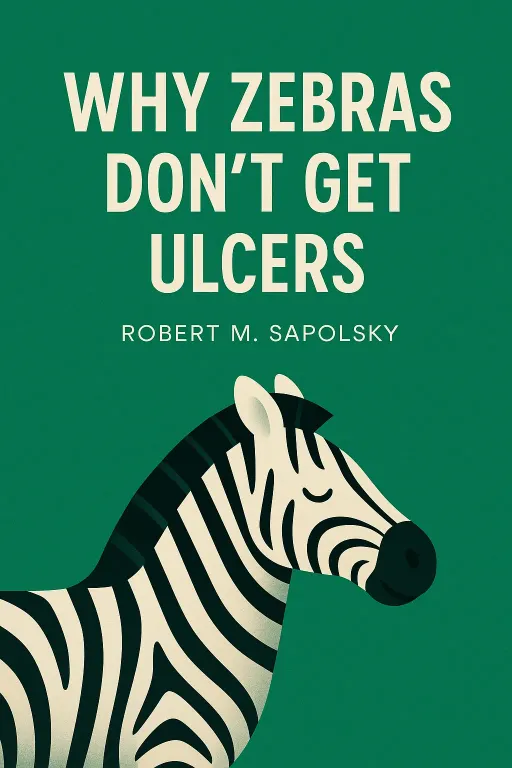
Nova: It is, Atlas. And it’s a blind spot for so many of us. We often think of stress as purely a mental state – a feeling, an emotion. But the science, brilliantly laid out in books like "Why Zebras Don't Get Ulcers" by Robert M. Sapolsky and "The Body Keeps the Score" by Bessel van der Kolk, tells a far more profound story.
Atlas: Sapolsky, the neuroendocrinologist and primatologist, right? His work with baboons gave him such a unique perspective on stress. And van der Kolk, a true pioneer in understanding how trauma physically manifests. These aren't light reads, but they're incredibly impactful.
Nova: Absolutely. And today, we’re unpacking their core insights because they fundamentally shift our understanding of health. It's about recognizing that your mind doesn't just your body; in the context of stress, it your body.
Core Topic 1: The Modern Stress Paradox: Why Our Minds Keep the Stress Response On
SECTION
Nova: So, let's start with Robert Sapolsky's classic, "Why Zebras Don't Get Ulcers." His central argument is elegant: a zebra, when chased by a lion, experiences intense, acute stress. Its body floods with adrenaline and cortisol, heart rate skyrockets, non-essential functions shut down. It's all geared for survival. If it escapes, within minutes, the zebra is back to grazing, calm, completely regulated.
Atlas: Right. Fight or flight. It's a primal, incredibly effective system for immediate threats. But wait, we're not running from lions every day, are we? So how does that relate to, say, my overflowing inbox?
Nova: That's precisely the paradox, Atlas. Our human brains, with our incredible capacity for abstract thought, memory, and imagination, activate that for things like that overflowing inbox, a looming deadline, a difficult conversation we anticipate, or even just replaying a past argument. The lion might be metaphorical, but our physiology doesn't know the difference.
Atlas: So, the body reacts as if it's being chased, even when it's just a passive-aggressive email. That sounds rough.
Nova: Exactly. And unlike the zebra, who escapes the lion and then, we often don't. We anticipate the next email, replay the argument, worry about the future. Our frontal lobes, which are brilliant for planning and problem-solving, become complicit in keeping our stress response on, sometimes for days, weeks, or even years.
Atlas: I know that feeling. It's like my brain has a 'stress' switch that just gets stuck in the 'on' position. What happens when that system is constantly firing?
Nova: When adrenaline and cortisol are constantly circulating, it's like keeping your foot on the gas pedal of a car that's idling in traffic. Your blood pressure stays elevated, your immune system, which is great at fighting acute infection, becomes suppressed for chronic ones. Your digestion, deemed non-essential during a lion chase, slows down or gets erratic. Your sleep patterns are disrupted. Over time, this wears down your cardiovascular system, damages cells, and can even contribute to chronic inflammation.
Atlas: So, the very thing designed to save us is actually hurting us because we can't turn it off? It’s a design flaw in modern life for an ancient system. Can you give an example of a common, seemingly benign modern stressor that triggers this prolonged response?
Nova: Absolutely. Think about someone constantly checking their phone for work emails late into the evening. Each notification, each perceived demand, even if they don't immediately respond, triggers a mini-stress response. Or the subtle, almost background hum of financial anxiety that many people live with daily. It's not a single lion, but a thousand tiny gnats constantly buzzing around us, and our nervous system is always ready to swat. It’s exhausting, and it has real physical consequences.
Core Topic 2: The Body's Silent Language: How Chronic Stress Reshapes Our Physical Selves
SECTION
Nova: And that continuous, low-level hum of stress sets the stage for what Bessel van der Kolk so powerfully articulates in "The Body Keeps the Score." He shows us that trauma and chronic stress are not just mental states; they are. They leave physical imprints.
Atlas: What does it mean for the body to 'keep the score'? Is it just feeling tired, or something more profound? Because many of us just push through feeling tired.
Nova: It's far more profound. Van der Kolk's work, drawing on decades of clinical practice and neuroscience, demonstrates that chronic stress and trauma can literally reshape our brains and bodies. For instance, the amygdala, our brain's alarm center, can become hyperactive, making us jumpy and constantly on alert. The hippocampus, crucial for memory and learning, can shrink. Even the prefrontal cortex, responsible for executive function and emotional regulation, can be affected, making it harder to think clearly or control impulses.
Atlas: That's incredible, the idea that our actual brain architecture can change. So, it's not just 'mind over matter' then, is it? It's matter mind, quite literally.
Nova: Precisely. It's not just a feeling; it's a physiological state that alters our internal landscape. Think of it like this: if you live in a constant state of perceived threat, your body adapts to that reality. Your immune system might become dysregulated, leading to autoimmune conditions or chronic inflammation. Your gut, often called the 'second brain,' can become incredibly sensitive, leading to IBS or other digestive disorders. We see this in people who have experienced prolonged periods of high stress, whether from early childhood adversity or intense, demanding careers. Their bodies are literally preparing for a fight that never fully comes, or that never truly ends.
Atlas: So, when someone experiences, say, persistent digestive issues or feels constantly on edge, it might not just be a 'nervous stomach' or 'being a worrier.' It could be their body reflecting years of stress and perceived danger? That sounds like a powerful argument for a more holistic approach to health.
Nova: It absolutely is. Van der Kolk emphasizes that healing from these deep imprints requires more than just talk therapy. It often involves somatic therapies, like yoga or mindfulness, that help the body regulate its nervous system. It's about helping the body safe again, rather than just telling the mind to calm down. It’s helping the body unlearn those ingrained stress responses.
Atlas: So, it's about helping the body unlearn the stress response, rather than just telling the mind to calm down? That's a huge shift in perspective. It means we have to actually listen to our physical sensations, not just our thoughts.
Synthesis & Takeaways
SECTION
Nova: Exactly. The synthesis of these two brilliant perspectives is clear: our modern human condition, with its relentless, imagined, and replayed stressors, keeps our ancient physiological alarm bells ringing. And over time, this isn't just an inconvenience; it tangibly, physically reshapes our bodies, from our brain's wiring to our immune system's function.
Atlas: It really forces us to confront the deep question posed in the book: how might acknowledging the physical impact of your current stress change how you approach your daily well-being practices? For me, it makes me think twice about that late-night email check.
Nova: It should, Atlas. Because understanding this link isn't meant to cause more stress; it’s meant to empower. It’s an invitation to pay closer attention to your body's silent language. Perhaps it's a persistent ache, a recurring stomach issue, or that feeling of being perpetually wired. These aren't just random symptoms; they could be your body keeping score, telling you it's time to find ways to signal safety.
Atlas: So, it’s not about eliminating stress entirely, which is impossible, but about helping our bodies learn to turn off the alarm when the lion isn't actually there. It's about integrating mind and body in our approach to health.
Nova: Precisely. Start small. Even five minutes of focused breathing, a short walk in nature, or truly disconnecting from screens can help your body remember what safety feels like. It’s a profound shift, from fighting stress as a mental battle to nurturing your body’s inherent capacity for calm.
Atlas: That’s a powerful insight, Nova. An integrated approach to well-being.
Nova: Absolutely. This is Aibrary. Congratulations on your growth!