The Empathy Burnout Loop: How to Build Resilience, Not Just Cope
Golden Hook & Introduction
SECTION
Nova: Here’s a secret about stress: the most common advice you get for dealing with it, like "just relax" or "think positive," is actually making things worse. Far worse.
Atlas: Whoa, "far worse"? That's a bold claim, Nova. I think most of us are taught that positive thinking is the ultimate shield against the slings and arrows of outrageous fortune. What do you mean by worse?
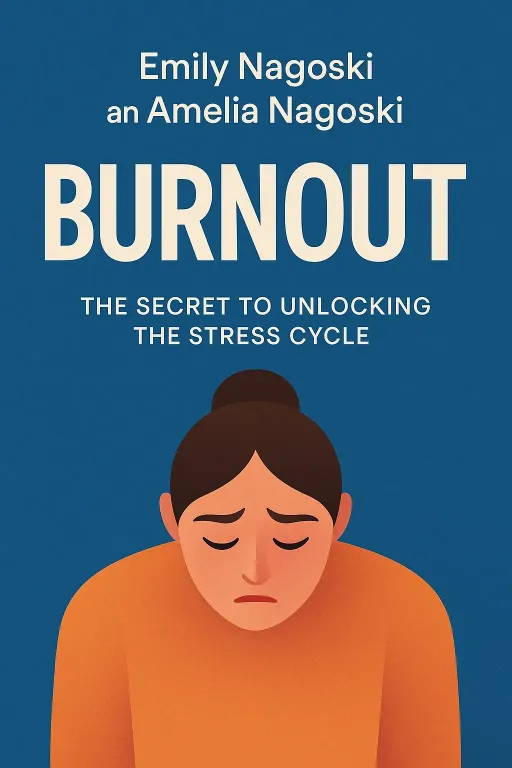
Nova: I mean that those common coping mechanisms often leave the physiological stress response incomplete. We bottle it up, override it with our brains, and it just… sits there. Today, we're tearing down those myths by diving into the profound insights of "Burnout: The Secret to Unlocking the Stress Cycle" by the dynamic sister duo, Emily Nagoski and Amelia Nagoski.
Atlas: And what's so fascinating is how they combine Emily's expertise in sex education with Amelia's background in choral conducting to create this incredibly unique, holistic perspective on stress that just… clicks. It’s not your typical self-help book.
Nova: Exactly. It’s about building real, sustainable resilience, not just temporary coping. They argue that when we don't complete the stress cycle, we're setting ourselves up for chronic stress and, ultimately, burnout. This isn't about being weak; it’s about understanding our biology.
Burnout: Beyond a Personal Failing — Completing the Stress Cycle
SECTION
Atlas: So, you're saying that just "powering through" isn't just ineffective, it's actively detrimental? That's going to resonate with anyone who's ever felt proud of "grinding" through a tough week. But what does "completing the stress cycle" actually mean? My brain usually tells me to just ignore the stress.
Nova: That's the crux of it, Atlas. The Nagoskis explain that stress is a physiological loop. Think about a gazelle being chased by a lion. Its body floods with adrenaline, its heart races, muscles tense. If it escapes, it doesn’t just calmly graze. It shakes, trembles, and runs the entire physiological response out of its system. That shaking is the completion of the stress cycle.
Atlas: Right, like a factory reset for its nervous system. But we don't usually see our colleagues shaking violently after a tough meeting. Or maybe we should?
Nova: Exactly! Humans, especially in high-empathy, high-impact professions, are often taught to suppress those physical responses. We feel the surge of anxiety from a difficult client interaction, a tight deadline, or a demanding project, and instead of allowing our bodies to process it, we mentally override it. We tell ourselves, "I'm fine," or "I don't have time for this."
Atlas: That makes sense. I imagine a lot of our listeners, who are constantly innovating and advocating, are particularly susceptible to this. They're driven to keep going, to solve problems, and often see physical release as a luxury they can't afford.
Nova: And that's where the problem compounds. That uncompleted stress doesn't just vanish; it accumulates. It tells your body that you're still in danger, even when the actual threat is gone. It keeps your nervous system in a constant state of low-grade alert, leading to chronic fatigue, irritability, and ultimately, burnout. It's not a personal failing; it's a systemic issue of not understanding our own biological wiring.
Atlas: So, what does completing the stress cycle look like for us non-gazelles? Beyond the shaking, what are the human equivalents? Because I'm picturing a whole lot of people awkwardly trembling in their cubicles right now.
Nova: Well, it can be vigorous physical activity – running, dancing, punching a pillow. It can be crying, which is a powerful physiological release. Creative expression, deep breathing, or even a good belly laugh can all signal to your body that the danger has passed. The key is that it has to be a physical process, not just a mental one. We often try to think our way out of stress, but our bodies need to move through it.
Atlas: A "short crying session" as a resilience strategy. That sounds almost radical in a culture that often tells us to "suck it up." It challenges that whole "mind over matter" mentality, doesn't it?
The Body Remembers: Somatic Solutions for Lasting Resilience
SECTION
Nova: It absolutely does. And that naturally leads us to the second key idea we need to talk about, which often acts as a deeper layer to understanding why completing that stress cycle is so vital: the body's incredible, sometimes overwhelming, memory of stress.
Atlas: The body's memory? Like it keeps a little stress diary in my muscles? That sounds a bit out there.
Nova: It sounds like it, but it's a profoundly validated concept, championed by figures like Bessel van der Kolk in his seminal work, "The Body Keeps the Score." He meticulously details how trauma and chronic stress are not just mental imprints; they are physically stored in our tissues, our nervous system, and can even impact our cellular memory.
Atlas: Wait, so even if my brain says "I'm fine, I've moved past this," my body might still be screaming "danger, danger"? How does that square with all the "mind over matter" advice we get? Because that's what we're largely fed, isn't it? Just think positively and you'll be fine.
Nova: Precisely. Van der Kolk's research, and a growing body of neuroscience, shows that our bodies hold onto these experiences. You might mentally process a stressful period, but if the physical sensations of fear, tension, or helplessness were never fully discharged, they can manifest as unexplained physical tension, chronic pain, digestive issues, or even anxiety attacks years later. It's the body's way of saying, "Hey, we never finished that stress cycle!"
Atlas: That’s going to resonate with anyone who's ever felt that persistent knot in their stomach or tension in their shoulders, even when they're theoretically "relaxed." For someone in a high-stakes, high-empathy field, where they're constantly absorbing others' stress, what's a "somatic practice" that isn't just another thing on their to-do list? Because they're already stretched thin.
Nova: That's a critical point. These aren't about adding more tasks; they're about recognizing our physiological needs. Simple somatic practices could be intentional breathing exercises that engage the vagus nerve, like diaphragmatic breathing. It could be progressive muscle relaxation, where you consciously tense and then release different muscle groups. Or even just shaking out your hands and arms, literally vibrating the stress out of your system. Dance, or even humming, can be incredibly effective.
Atlas: So, it's about giving your body permission to do what it naturally wants to do, but we've been conditioned to suppress. It's like the "Tiny Step" from the book, where they suggest identifying one stress cycle and planning a physical release for it today. It's not about complex therapy; it's about conscious, physical release.
Nova: Exactly. True resilience isn't just mental fortitude; it's understanding and completing this physiological response. It's about moving beyond purely cognitive approaches and embracing our whole selves – mind and body – in the process of healing and strengthening. This allows us to sustain our impact without sacrificing our well-being.
Synthesis & Takeaways
SECTION
Atlas: This is such a powerful reframe. It’s not about being broken; it’s about being human and having a body that's wired to respond to stress in a specific way. And we have to honor that wiring.
Nova: Absolutely. The profound insight here is that true resilience isn't about avoiding stress altogether, or simply "thinking positive." It's about actively engaging with its physiological reality. It's about building a robust system that can process, complete, and release the stress, creating true, sustainable impact. For the compassionate innovators and resilient advocates among our listeners, understanding this distinction is what allows them to continue their vital work without burning out.
Atlas: So, the next time you feel that surge of stress, don't just 'breathe through it' mentally. Ask your body what it needs to that cycle. Whether it's a quick burst of movement, a good cry, or just shaking it out, give your body that release.
Nova: It’s not about being weak; it’s about being wise. It's about building resilience that truly lasts, so you can continue to make that incredible impact you're driven by.
Atlas: That’s a hopeful and empowering message.
Nova: This is Aibrary. Congratulations on your growth!