The Longevity Illusion: Why More Years Aren't Enough Without Purpose.
Golden Hook & Introduction
SECTION
Nova: What if the very thing we relentlessly pursue for a longer life is actually making our extended years feel emptier? It’s a paradox, and it’s staring us in the face.
Atlas: Whoa, that’s a bold claim right out of the gate, Nova. Are you saying all those green smoothies and bio-hacks might be, dare I say, counterproductive to genuine well-being?
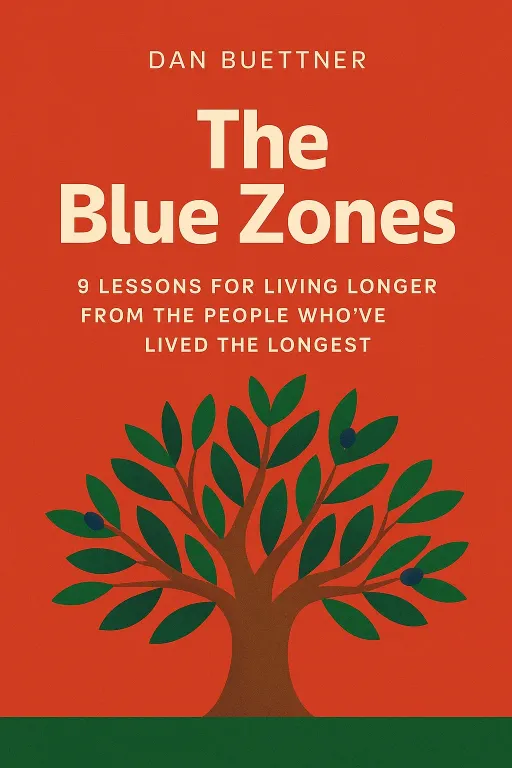
Nova: Not counterproductive in terms of raw biology, Atlas, but certainly incomplete. We're talking about what I call "The Longevity Illusion." It's the blind spot in our modern quest for more years, where we often forget what makes those years truly worth living. It’s the core idea behind today’s deep dive, inspired by the profound insights in Dan Buettner’s work on "The Blue Zones" and David A. Sinclair’s scientific exploration in "Lifespan."
Atlas: Ah, Buettner. I’m curious, what's his story? I know "The Blue Zones" are famous, but what makes such a compelling voice on this?
Nova: What's fascinating about Buettner is he wasn't a doctor or a nutritionist to begin with. He was an explorer and a journalist. He actually with a team of researchers, identifying these pockets where people live demonstrably longer, healthier lives than anywhere else. He wasn't prescribing; he was observing and documenting. It’s a ground-level, human-centric approach that contrasts beautifully with, say, Sinclair, a Harvard geneticist who's delving into the molecular mechanisms of aging. Together, they paint a comprehensive picture.
Atlas: I like that – the explorer and the scientist, two sides of the same coin, both pointing to something deeper. For our listeners who are constantly seeking ways to optimize their lives for holistic well-being, this idea of an "illusion" is going to hit home. It makes me wonder, if we're all so focused on stretching our lifespans, what exactly are we missing?
The Longevity Illusion: Beyond Just More Years
SECTION
Nova: Exactly. We're missing purpose. We've become obsessed with biological markers. We track our sleep, our steps, our heart rate variability, our glucose levels. We're inundated with new supplements, new diets, new exercise regimens, all promising to add another decade, another year, another month to our existence. And that's not inherently bad! The science is incredible.
Atlas: But what's the catch? It sounds like we're just getting closer to the fountain of youth.
Nova: The catch is, we're so focused on the of life – the sheer number of years – that we often sideline the of those years. We forget that longevity isn't just about avoiding disease or maintaining optimal biological function. It’s about deep, lasting well-being. It’s about having a reason to get up in the morning, a community to share your life with, a sense of contribution.
Atlas: So basically, you're saying you could have the perfect biomarker profile, live to 100, but still feel utterly hollow? That’s going to resonate with anyone who’s ever achieved a big goal only to feel a bit… flat afterwards.
Nova: Precisely. Imagine someone who meticulously plans every meal, tracks every calorie, exercises for hours, optimizes their sleep, and takes every cutting-edge supplement. They might live to 110, but if their days are devoid of meaningful connection, if they feel isolated, if their work feels like a monotonous grind, and they have no passion to pursue – is that truly a long, life? Or is it just an extended survival? We have to distinguish between lifespan, which is how long we live, and healthspan, which is how long we live well, with vitality and purpose.
Atlas: That's a great distinction. It’s like owning a car that will run for a million miles, but you never actually drive it anywhere interesting. Or you drive it alone, feeling no joy in the journey. Why do you think this singular focus on mere survival, this "blind spot," has become so prevalent in our culture?
Nova: I think it’s a mix of things. Part of it is the sheer marvel of medical advancements – we extend life in ways we never thought possible, so we chase that frontier. Another part is perhaps a societal fear of death, making us grasp at any quantifiable measure of extended life. And honestly, purpose is harder to measure. It's not a blood test. It's a feeling, a connection, a deeply personal quest. So, it often gets overlooked in favor of more tangible, scientific metrics.
Atlas: That makes sense. It’s easier to count steps than to quantify joy. But what does "purpose" even look like in this context? For someone who’s maybe feeling a bit adrift, it sounds like a huge, abstract mountain to climb.
Nova: It doesn't have to be. It’s about finding meaning in your daily life, in your interactions, in your contributions, however small. It's about having a 'why.' As Victor Frankl famously explored, meaning is a primary human motivator. And what Buettner found in the Blue Zones perfectly illustrates this.
Weaving Purpose: The Blue Zones & Healthspan Connection
SECTION
Nova: So, while the illusion can be stark, the solution, when you look at it, is beautifully simple and incredibly human. This is where Dan Buettner's expeditions into the "Blue Zones" become so illuminating. These are places like Okinawa, Japan; Sardinia, Italy; Nicoya, Costa Rica; and Ikaria, Greece, where people not only live to 100 at ten times the rate of Americans, but they do so with incredible vitality and joy. They aren't just surviving; they're.
Atlas: That’s amazing. My first thought is always, "What are they eating? What crazy superfood are they all on?"
Nova: And while diet is a component, it’s not the thing. What Buettner consistently found were shared lifestyle traits, and at the top of that list were strong social ties and a profound sense of purpose. In Okinawa, they talk about – your reason for being. In Nicoya,, or reason to live. These aren't abstract philosophical concepts for them; they're woven into the fabric of their daily existence.
Atlas: So, it's not just about having a purpose, but about that purpose being into their everyday life, almost subconsciously? It’s not a separate task on a to-do list.
Nova: Exactly! They wake up each day with a clear sense of why they matter to their family, their community, their craft. Their elders are revered and actively involved in family life, passing down wisdom. Their social circles are tight-knit, offering constant support and belonging. They have natural movement built into their day, often through gardening or walking, and they have rituals for de-stressing. It’s a holistic ecosystem of well-being.
Atlas: That’s incredible. And how does this connect to someone like David Sinclair's work on the science of aging? Because it sounds almost too simple, too… human, to be backed by hard biology.
Nova: That's the beautiful bridge! Sinclair explores the science of aging, discussing how our environment and daily choices profoundly influence our genetic expression. Our genes aren't destiny; they're like switches. What Buettner observed in the Blue Zones – strong social ties, a sense of purpose, natural movement – these aren't just 'nice-to-haves.' They are powerful environmental inputs that tell our genes to express themselves in ways that promote repair, resilience, and longevity. Stress, isolation, lack of purpose? Those are signals for our genes to accelerate aging. Connection, meaning, movement? Those are signals for healthspan.
Atlas: So, in essence, the Blue Zones aren't just cultural curiosities; they're living laboratories demonstrating how our lifestyle choices, particularly around purpose and connection, literally influence our biological healthspan at a genetic level. That's mind-blowing. But wait, looking at this from a high-pressure, modern city perspective, isn't that almost impossible to replicate? We can’t all move to Sardinia and become shepherds!
Nova: You're right, we can't simply transplant ourselves. But we can extract the. It's not about replicating their exact lives, but about integrating their wisdom. It’s about asking: How can I cultivate my own in my current environment? How can I strengthen my social ties, even if it's just committing to a weekly call with a friend or joining a local club? How can I infuse my daily routine with small acts of purpose, whether it's volunteering, mentoring, or simply dedicating focused, meaningful attention to my work?
Atlas: That makes it much more actionable. It's about weaving purpose into the pursuit of a longer, healthier life, rather than just adding it as an afterthought. It’s about intentionality.
Synthesis & Takeaways
SECTION
Nova: Exactly. The Longevity Illusion teaches us that chasing years without purpose is a hollow pursuit. The Blue Zones, backed by the science of healthspan, show us the profound alternative: a life where purpose isn't a luxury, but a fundamental building block of well-being. It’s about remembering that true health comes from integrating our physical and social selves, finding meaning in our daily lives. Longevity, in its deepest sense, is about living fully, richly, and meaningfully for however many years we are given.
Atlas: That’s actually really inspiring. It shifts the focus from a daunting, sometimes anxiety-inducing quest for more time, to a more empowering journey of making the time we have deeply fulfilling. For our listeners who are constantly seeking actionable steps for holistic well-being, what’s one small, daily practice they could adopt to start weaving purpose into their lives?
Nova: I'd suggest a "Purpose Pause" each morning. Before you dive into your emails or your to-do list, take just five minutes. Ask yourself: What is one small thing I can do today that aligns with my values or brings meaning to someone else? It could be as simple as reaching out to a colleague, offering a genuine compliment, or dedicating focused, undistracted time to a passion project. It’s a tiny ripple that can create a profound wave of purpose throughout your day.
Atlas: I love that. A "Purpose Pause." It’s not about finding grand purpose, but about recognizing and acting on the micro-purposes that fill our days. It’s about making sure those extra years we’re all striving for are actually rich with intention and connection.
Nova: Absolutely. It’s the profound shift from merely surviving to truly thriving, anchoring our existence in meaning.
Atlas: This is Aibrary. Congratulations on your growth!