The Unseen Architects: Understanding Human Nature's Impact on History
Golden Hook & Introduction
SECTION
Nova: What if the most impactful forces in human history weren't kings, battles, or inventions, but something far more invisible, woven into the very fabric of our minds?
Atlas: Huh. That’s a bold claim, Nova. I imagine a lot of our listeners, especially those who spend their days analyzing complex systems or historical data, might be thinking, "Invisible? How can something invisible be more powerful than, say, the Roman Empire or the Industrial Revolution?"
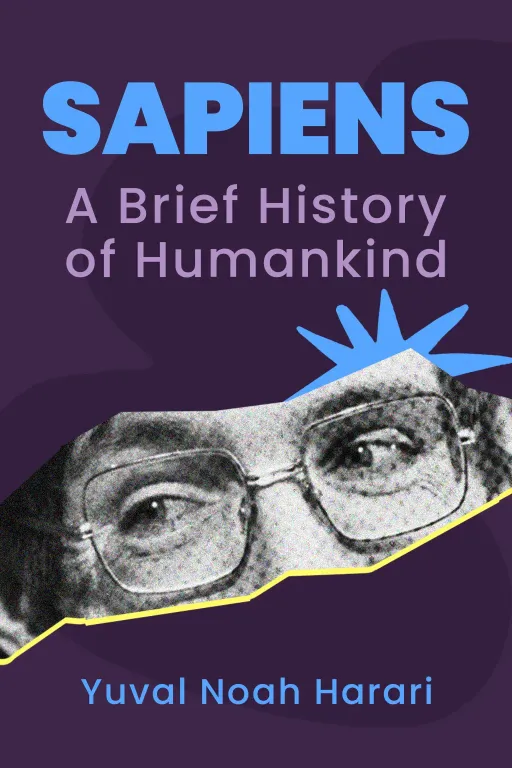
Nova: Exactly! Because we often study history as a series of events, right? Who won which war, when the printing press was invented. But the underlying human psychological drives that fuel these events are just as critical, if often overlooked. And that’s what we’re diving into today, through the lens of two incredibly influential books: Yuval Noah Harari’s and Steven Pinker’s.
Atlas: Oh, I love those. Harari, a historian, brought this distinctly biological and anthropological lens to history, making a global phenomenon. And Pinker, a cognitive scientist, challenged conventional wisdom with extensive data in, presenting a compelling argument for human progress. Both are critically acclaimed and widely influential.
Nova: Absolutely. And when you put them together, they force us to ask that deep question: How might acknowledging our inherent human biases change our interpretation of historical decisions made by leaders and societies? That’s what we’re going to unravel.
The Power of Shared Fictions: How Cognitive Biases Shape Civilizations
SECTION
Nova: So, let’s kick this off with Harari and. Atlas, what do you think truly allows millions of strangers to cooperate effectively, to build cities, nations, and global economies? It’s not just shared DNA, certainly not.
Atlas: Oh, I've been thinking about this. I mean, from an analytical perspective, it has to be some kind of common goal, or a system of laws, right? Something that creates order out of chaos.
Nova: You’re on the right track, but Harari takes it a step further. He argues it’s our unique cognitive ability to believe in what he calls "shared fictions." These are collective myths, stories, or constructs that don’t physically exist but are so widely believed that they become immensely powerful. Think money, nations, religions, corporate brands.
Atlas: What exactly do you mean by "shared fiction"? That sounds a bit like... delusion. Are you saying civilizations are built on lies?
Nova: Not lies, but collectively agreed-upon constructs. Take money. A fifty-dollar bill is just a piece of paper, or just numbers on a screen. It has no intrinsic value. Yet, we all agree it can buy us food, shelter, a new gadget. That agreement, that shared belief in its value, is the fiction. It allows someone in New York to trade with someone in Tokyo, even if they'll never meet.
Atlas: Right, like a national brand identity, but for an entire civilization. I guess that makes sense. We give it meaning, and then it meaning.
Nova: Exactly. And this capacity, this ability to craft and believe in these shared fictions, is what allowed to cooperate flexibly in large numbers, far beyond the small, intimate groups other species can manage. It’s why we dominate the planet. Imagine two chimpanzees trying to build a cathedral or a global bank. Impossible, right? They can’t agree on a shared purpose beyond their immediate social group. But give two humans a shared belief in a god, a nation, or even a company mission, and they can coordinate on a massive scale.
Atlas: That gives me chills. So, our capacity for what you might call 'collective imagination' or even 'collective delusion' is actually our superpower. It means that when we look at historical decisions, like a leader rallying their people for war or to build an empire, it’s not just about raw power or resources. It’s often about tapping into and manipulating these shared fictions.
Nova: Precisely. The Crusades weren't just about land; they were about a shared religious narrative. The rise of empires wasn't just about conquest; it was about a shared belief in a divine right to rule or a national destiny. Acknowledging this reveals that historical decisions are often less about pure logic and more about how effectively leaders can weave and sell a story that appeals to our pre-existing cognitive biases for belonging and belief.
Atlas: Wow. That’s actually really inspiring, in a strange way. It highlights how powerful our minds are, not just individually, but collectively.
Nova: Absolutely. And it shows that if we want to understand history, we have to understand the stories people told themselves, and why those stories resonated.
The Surprising Decline of Violence: Unpacking Our Evolving Moral Landscape
SECTION
Nova: Now, while shared fictions can build incredible things, they’ve also fueled some of humanity's darkest chapters—wars, genocides, profound struggles. But here’s where Steven Pinker steps in with and offers a truly counter-intuitive perspective.
Atlas: Wait, are you saying history isn't just one war after another? That sounds a bit out there, given what we see on the news. I mean, from a purely analytical standpoint, it feels like we’re constantly on the brink of conflict.
Nova: I hear you, and it’s a common perception. But Pinker, using vast amounts of historical data, makes a compelling argument: violence, across many different metrics, has actually been in long-term decline for millennia. He shows that our ancestors, in tribal societies, often faced far higher rates of violent death than people in modern states.
Atlas: Really? That’s a surprising claim. Can you give an example? I’m curious about the specific historical data points.
Nova: Think about it. In many ancient societies, murder rates were astronomically higher than today. Cruel and unusual punishments, like torture and public executions, were commonplace. Pinker points to several forces that contributed to this decline. One is the "Leviathan," the rise of centralized states with a monopoly on violence, which reduced tribal warfare and feuds. Another is commerce, where trade makes other people more valuable alive than dead.
Atlas: I guess that makes sense. If you have a strong central authority, you’re less likely to take matters into your own hands. And economic interdependence creates a shared interest in peace.
Nova: Exactly. But perhaps the most fascinating force Pinker identifies is the "Humanitarian Revolution," a psychological shift. As literacy spread, as people gained access to more diverse perspectives through books and travel, our circle of empathy expanded. We started to see others, even those outside our immediate tribe, as fellow humans deserving of rights and consideration.
Atlas: So, our biases for tribalism and 'us vs. them' are still there, but other biases, like for empathy and reason, are gaining ground? That makes me wonder, how does this understanding change our historical interpretation of atrocities, for example?
Nova: It doesn't excuse them, but it frames them differently. It shows that while human nature has a capacity for brutality, it also has an incredible capacity for moral progress. The atrocities become less about an unchanging, inherently evil human nature, and more about specific social, political, and psychological conditions that allow our 'inner demons' to flourish, or conversely, for our 'better angels' to emerge. It's like a widening spotlight, slowly illuminating more and more of humanity.
Atlas: That’s such a hopeful way to look at it. It suggests that progress isn't just technological or economic, but deeply moral and psychological. It’s not just about what we, but how we and about each other.
Synthesis & Takeaways
SECTION
Nova: So, when we bring Harari and Pinker together, we see a powerful synthesis. Our shared fictions—those invisible stories that bind us—can indeed sometimes fuel conflict and division. But simultaneously, a deeper understanding of our psychological evolution, as Pinker shows, reveals a long-term, albeit sometimes bumpy, trend towards less violence, driven by the expansion of reason and empathy.
Atlas: It really does. And it brings us back to that deep question: How might acknowledging inherent human biases change your interpretation of historical decisions made by leaders and societies? For me, it means moving beyond just judging the actions and trying to understand the underlying narratives and psychological currents that shaped those choices.
Nova: Absolutely. It’s about recognizing that history isn't just a parade of inevitable events, but a complex interplay of human psychology. Our biases, our capacity for shared fictions, our evolving empathy—these are the unseen architects. Understanding them allows us to interpret history not just as what happened, but it happened, and what that means for our own choices today.
Atlas: And it gives us a responsibility, doesn't it? To be more critical of the narratives we're told, to question the 'fictions' we collectively buy into, and to actively cultivate that expanding circle of empathy.
Nova: Precisely. Because the future, just like the past, will be built by the stories we believe and the biases we either succumb to or consciously overcome. It’s an invitation to engage with history as a living, breathing testament to our evolving human nature.
Atlas: What if we, as individuals and as a society, chose to consciously craft shared fictions that prioritize empathy and reason, rather than division? That’s a powerful thought to leave our listeners with.
Nova: This is Aibrary. Congratulations on your growth!