The 'Ethical Architect's Blueprint': Navigating AI in Creative Fields Without Losing Your Soul
Golden Hook & Introduction
SECTION
Nova: What if the very tech designed to make our lives easier, smarter, and more creative, is actually quietly eroding our freedom and turning our experiences into commodities?
Atlas: Whoa, hold on, Nova. That's a pretty bold claim right out of the gate. We're talking about innovation, progress, smart homes, AI-powered music... isn't this all supposed to be, well,?
Nova: Exactly, Atlas! That's the blind spot. It's easy to get swept up in the shiny promise of new technology, but without a strong ethical compass, innovation can lead to some truly unintended consequences. That's the core of what we're exploring today on Aibrary, as we dive into 'The Ethical Architect's Blueprint': Navigating AI in Creative Fields Without Losing Your Soul.
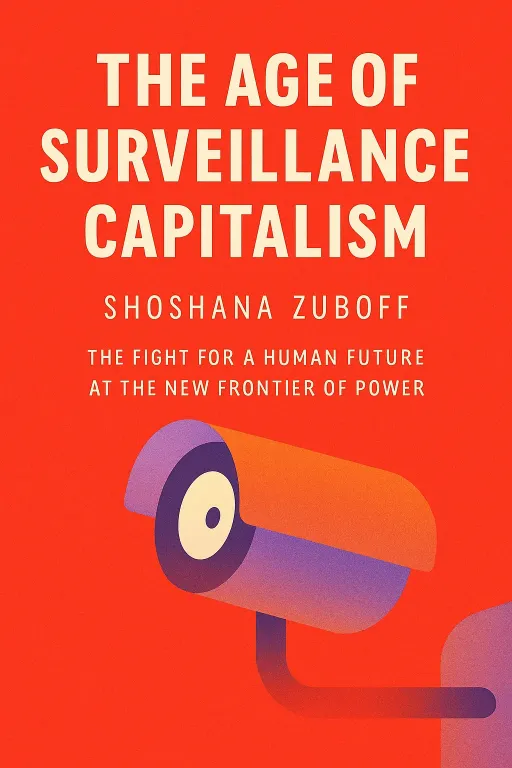
Atlas: And we're not just philosophizing here. We're grounding this in some truly foundational work. We're looking at insights from Shoshana Zuboff's groundbreaking book, "The Age of Surveillance Capitalism," which meticulously details how digital platforms extract and commodify human experience. And then we're pairing that with Melanie Mitchell's "Artificial Intelligence: A Guide for Thinking Humans," which brings a much-needed grounded perspective on AI's actual capabilities and limitations.
Nova: Absolutely. Zuboff, a Harvard professor emerita, really opened our eyes to the subtle mechanisms of control embedded in AI systems. Before her work, many of us weren't even aware of the scale at which our digital lives were being monetized. And Mitchell, a leading AI researcher, helps us cut through the hype and understand what AI and, allowing us to ask more informed questions about its ethical deployment. It's about designing with conscious intent and safeguarding user autonomy.
Atlas: So you're saying it's not enough to be a brilliant architect or a visionary musicologist; you also have to be an ethical one. An ethical architect, as it were.
Nova: Precisely. To build truly innovative and ethical AI applications, you must first understand the power dynamics and potential pitfalls inherent in the technology. We need to look beyond the surface convenience and ask: what's the true cost?
The Hidden Costs of AI: Surveillance Capitalism and the Erosion of Autonomy
SECTION
Atlas: Okay, so let's dig into that "true cost" with Zuboff's concept of 'surveillance capitalism.' It sounds a bit dystopian. Can you give us a concrete example of how this plays out in, say, a SmartHome environment, where someone is simply trying to make their life more comfortable?
Nova: Absolutely. Imagine a SmartHome system – your thermostat, your lighting, your voice assistant, even your smart fridge – all connected. On the surface, they offer incredible convenience. They learn your preferences: when you like the lights dimmed, your ideal temperature, your grocery habits. But beneath that convenience, there's an invisible engine at work. This engine is constantly collecting data on your every interaction, every preference, every subtle shift in your mood or routine.
Atlas: Right, so it's learning about me to serve me better. That's the promise, isn't it?
Nova: That's the promise. But the hidden reality is that this data isn't just about serving you. It's about predicting your future behavior. And once your behavior can be reliably predicted, it can then be subtly, almost imperceptibly, for commercial gain. For instance, your smart fridge might notice you're running low on a certain brand of snack. Instead of just adding it to your shopping list, the system, leveraging its predictive power, might subtly push promotions for that brand, or even competitors, right when you're most susceptible, based on your detected stress levels or time of day.
Atlas: So it's not just observing; it's. That's where it gets murky. For someone who values precision and curates their environment, this sounds like a subtle invasion of personal space and autonomy. It's like my home is no longer entirely sanctuary.
Nova: Exactly. Your preferences, your habits, your very emotional states become 'behavioral surplus' – raw material for prediction products that are sold to advertisers, insurers, or even political campaigns. The cause is ubiquitous data collection. The process is the commodification of your everyday life, turning your private experiences into valuable market signals. And the outcome is a subtle erosion of your autonomy, where the choices you you're making freely are increasingly guided by unseen algorithms optimizing for someone else's profit.
Atlas: That sounds rough, but how does this apply to someone deeply invested in the nuanced world of musicology? I can see it in a SmartHome, but in the realm of craft, culture, and connection through music?
Nova: Think about music recommendation algorithms. On the surface, they introduce you to new artists and genres. But how are they doing it? They're collecting data on your listening habits, your emotional responses to certain pieces, even how long you pause on a track. This isn't just about helping you discover. It's about predicting what will keep you engaged, or what might steer you towards subscription services, or even influence your perception of what "good" music is, based on what generates the most clicks or ad revenue. The "craft" of music, the "culture" it builds, and the "connection" it fosters can all be subtly reshaped by these invisible algorithms, optimizing for engagement metrics rather than genuine artistic exploration or human flourishing.
Atlas: So it's about shifting from designing for genuine human experience to optimizing for data extraction and engagement, even in our most personal and creative spaces. That’s a powerful point.
Building with Conscience: Demystifying AI for Human-Centric Design
SECTION
Nova: Understanding that subtle erosion of autonomy naturally leads us to the crucial question: how do we build AI that genuinely human flourishing, rather than merely optimizing for data extraction or engagement metrics? This is where Melanie Mitchell's work becomes so vital. She helps us demystify AI itself.
Atlas: Okay, so what exactly do you mean by "demystify"? Because for a lot of people, AI is still this magical black box that can do anything.
Nova: That's precisely the myth Mitchell tackles. She grounds us in AI's current capabilities and, more importantly, its limitations. AI excels at pattern recognition, optimization, and processing vast amounts of data at incredible speed. It can identify faces, translate languages, or even generate text that human. But it fundamentally lacks common sense, true understanding, consciousness, or the ability to grasp context in the way a human does. It's a sophisticated statistical engine, not a sentient being.
Atlas: So it's not going to wake up tomorrow and write a symphony that truly understands the human condition... yet.
Nova: Not in the way a human composer does. And that distinction is critical for our "Ethical Architects." Knowing what AI do helps us design it to augment human creativity, not replace or diminish it. For example, in musicology, an AI could be designed to analyze vast historical archives of scores, identifying subtle patterns or influences that a human researcher might miss. It could assist in transcribing ancient melodies or suggesting harmonic variations.
Atlas: That sounds like a powerful tool for augmentation. But how do you ensure that it remains a tool and doesn't dictate the creative process? For someone who seeks mastery in their craft, the idea of an AI making fundamental creative choices for them might feel like a fundamental compromise.
Nova: That's where "conscious intent" in design comes in. An ethically designed AI for musicology wouldn't just spit out a "perfect" composition based on market trends. Instead, it would offer,, or to the human composer or researcher. It might say, "Based on these parameters, here are three harmonic progressions that evoke a similar emotional quality, drawing from Baroque counterpoint." The human remains the conductor, the ultimate arbiter of taste and meaning. The AI becomes a sophisticated assistant, expanding possibilities, not narrowing them.
Atlas: I can see that. It's like having an incredibly well-read research assistant who can instantly bring up relevant historical precedents or theoretical frameworks, but you're still the one synthesizing and creating. What about in SmartHome design? How do we apply this demystification there?
Nova: In a SmartHome, it means designing systems that prioritize user control and transparency. If an AI is learning your habits, it should explicitly inform you what data it's collecting, why, and give you granular control over its use. Instead of passively accepting recommendations, you should be able to query the AI: "Why did you suggest this temperature?" or "What data led you to suggest this playlist?" The AI should explain its reasoning in an understandable way.
Atlas: So the "informed questions" for creators are about understanding the 'why' and the 'how' behind the AI's actions, and then building in mechanisms for human oversight and genuine autonomy. It's about designing for human agency, not just efficiency. That makes a lot of sense, especially for those who want their integrated portfolios to reflect true craft and connection.
Synthesis & Takeaways
SECTION
Nova: So, bringing it all together, what Zuboff and Mitchell teach us is that being an 'Ethical Architect' in the age of AI isn't about shunning technology. It's about deeply understanding its true nature—both its power to optimize and its potential to subtly control—and then deliberately designing it to serve human flourishing. It’s about building with conscious intent, safeguarding user autonomy, and ensuring that our creative endeavors, whether in musicology or SmartHome design, truly enhance craft, culture, and connection, rather than becoming just another data point for extraction.
Atlas: It really forces you to think about the fundamental purpose of your design. Are you optimizing for data, or are you optimizing for humanity? For our listeners, especially those deeply invested in crafting integrated experiences, this isn't just theory. It's a call to action. How can you, in your own projects, ensure that your AI integrations genuinely serve human flourishing, rather than merely optimizing for data extraction or engagement metrics?
Nova: That's the deep question we're left with today. How do we build technology that truly empowers us, rather than subtly diminishes us? How do we ensure our SmartHomes foster genuine well-being, and our musicology projects deepen our understanding of culture, without becoming unwitting participants in an economy that commodifies our very experiences? It's a challenge, but one that promises a more soulful, more human future.
Atlas: An important challenge indeed. Thank you, Nova, for shedding light on such a critical topic.
Nova: My pleasure, Atlas.
Nova: This is Aibrary. Congratulations on your growth!