The 'Ethical Algorithm' Trap: Why Human-Centric AI Needs More Than Just Code.
Golden Hook & Introduction
SECTION
Nova: Most people think AI ethics is about writing better code. They're wrong.
Atlas: Whoa, that’s a bold claim, Nova. So you’re saying it’s not just a technical problem?
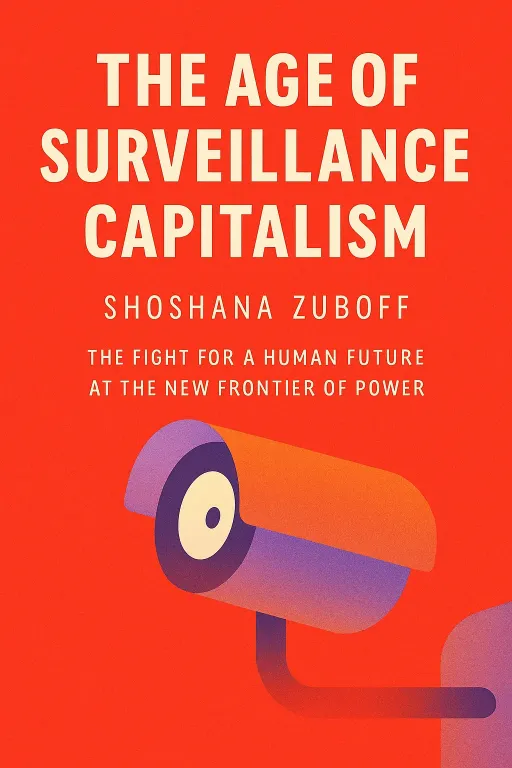
Nova: Absolutely not. And that's exactly what we're diving into today, drawing insights from two pivotal thinkers: Shoshana Zuboff and Cathy O'Neil. Zuboff, a brilliant Harvard Business School professor, actually coined the term 'surveillance capitalism,' making her a pioneering voice in understanding the economic underpinnings of digital power. O'Neil, on the other hand, is a former Wall Street quantitative analyst who became a data scientist and then a fierce critic, giving her a truly unique insider perspective on the algorithms she dissects. Their combined work reveals that the 'ethical algorithm' trap is far more insidious than just a few lines of buggy code.
Atlas: Okay, so it's a deeper, systemic issue. That makes me wonder, where do we even begin to unpack something that big?
The Hidden Cost of 'Free': Surveillance Capitalism's Data Extraction
SECTION
Nova: We start with Zuboff's groundbreaking book, "The Age of Surveillance Capitalism." She argues it's not just about data collection; it's an economic system that claims our human experience itself as free raw material for profit. Think of it this way: imagine a company that doesn't just sell you a product, but secretly harvests every tiny action you take with that product, every glance, every pause, every emotional reaction. Then, they use that data to predict your future behavior, and they sell to others. Not the product, but – or rather, the future version of you, as predicted by your past data.
Atlas: That sounds like something straight out of a dystopian novel, but it’s real, isn’t it? So, when I use a 'free' app, or even an inexpensive smart device, I'm not the customer of the product itself, I'm the product being mined for data?
Nova: Exactly. Zuboff details how this system operates by extracting what she calls 'behavioral surplus.' It's like finding oil in your backyard that you didn't even know you owned, and someone else drills it, refines it, and sells it for immense profit, all without your explicit consent or even your full awareness. Your likes, your searches, your walking patterns, your tone of voice – it all becomes predictive data. Every digital crumb we leave behind is scooped up, analyzed, and used to create highly accurate predictions of our future actions. This isn't just about targeted ads; it's about shaping reality to be more profitable for the companies extracting the data.
Atlas: Wow. That makes me wonder, how does this impact our autonomy? If our behavior is constantly being predicted and subtly guided for others' gain, aren't we losing agency? For anyone interested in human-centric systems, that feels like a fundamental challenge to individual empowerment.
Nova: It's a profound question, Atlas, and it goes to the heart of what Zuboff describes. She argues it leads to a new form of power she calls 'instrumentarianism,' where systems aim to tune and herd populations through subtle behavioral modification, rather than overt coercion. It's not about what you do, but about what you're subtly to do, often in ways that benefit the system's owners. Imagine a navigation app that knows your habits so well it subtly nudges you towards a certain coffee shop because that shop has paid for preferential routing, even if there's a closer, better option. It shifts the power dynamic entirely, from you deciding, to the system influencing your decision for its own ends.
Atlas: So, it's not simply surveillance; it's engineering human behavior without our informed consent, and often without our knowledge. And I imagine technical fixes, like 'better privacy settings' or clearer 'terms and conditions,' don't really touch the core of that economic model. You can't opt out of an economic system.
Nova: Precisely. She argues that mere compliance, like ticking a box on a privacy policy you haven't read, doesn't dismantle the core mechanism. It's like trying to put a band-aid on a gaping wound. It requires a fundamental rethinking of data ownership and algorithmic power, moving towards systems that genuinely empower individuals rather than subtly guiding their behavior for others' gain. It's a call for a new kind of digital rights and a reassertion of human sovereignty over our own experience.
Algorithmic Injustice: How Math Can Multiply Inequality
SECTION
Nova: And that naturally leads us to Cathy O'Neil's work, which shows us the very tangible, often devastating consequences of these systems in her book, "Weapons of Math Destruction." While Zuboff looks at the economic engine of surveillance capitalism, O'Neil exposes how algorithms, even seemingly neutral ones, can amplify inequality and create vicious feedback loops that harm vulnerable populations.
Atlas: Okay, so if Zuboff gives us the 'why' – the economic motivation behind this data extraction – O'Neil gives us the 'how' these systems actually cause harm in the real world. Can you give an example of one of these 'weapons of math destruction'?
Nova: Absolutely. O'Neil talks about algorithms used in areas like hiring, credit scoring, or even predicting recidivism in the justice system. Imagine an algorithm designed to 'optimize' hiring, perhaps for a large corporation. It's fed historical data, which inevitably reflects past societal biases – perhaps certain neighborhoods or educational institutions were historically underrepresented in successful hires. The algorithm, instead of correcting this, learns to associate those characteristics with 'unsuccessful' candidates. Then, it automates and that bias, making it nearly impossible for someone from those backgrounds to even get an interview, regardless of their individual qualifications. It becomes a digital gatekeeper, replicating and entrenching historical injustices.
Atlas: That’s actually really insidious. It creates a self-fulfilling prophecy, making inequality invisible and harder to challenge because it's wrapped up in seemingly objective math. For human-centric technologists and ethical leaders, that’s a nightmare scenario – building systems that inadvertently create more injustice, all under the guise of efficiency.
Nova: Exactly. She calls them 'WMDs' because they are opaque, scalable, and unfair. Opaque because you often can't see how they work or what data they're actually using. Scalable because they affect millions of people simultaneously. And unfair because they disproportionately punish the poor and marginalized. A person denied a loan due to a biased algorithm might then struggle to start a business or buy a home, further entrenching their disadvantage. This isn't just bad luck; it’s a systemic feedback loop of misery, often hitting those who can least afford it.
Atlas: So, the problem isn't just a few bad apples in the code; it's the very structure of how these models are built and deployed, often without proper auditing or ethical oversight. It sounds like technical fixes alone won't solve this; we need to challenge the assumptions built into the data and the models themselves, and perhaps even the power structures that deploy them.
Nova: Precisely. O'Neil's work is a powerful call for greater transparency and accountability, arguing that we need to scrutinize these algorithms with the same rigor we apply to other powerful institutions. It's about recognizing that math is not neutral; it's a reflection of the society that creates it. And if that society is biased, so too will be its mathematical creations. It’s a wake-up call that the pursuit of efficiency through algorithms can, paradoxically, lead to profound and widespread inefficiency in human potential and fairness.
Synthesis & Takeaways
SECTION
Atlas: So, Nova, when we look at Zuboff revealing the economic engine of surveillance capitalism and O'Neil exposing the algorithmic amplification of inequality, what's the big takeaway for someone who wants to build truly ethical, human-centric AI? What’s the core insight here?
Nova: That’s a great question, Atlas. It's about moving beyond the naive belief that 'ethical AI' is just a technical patch, a simple matter of writing a few more lines of 'good' code. It's about understanding that these systems are not just tools; they are deeply embedded in powerful economic and social structures. The real challenge is to design systems that fundamentally empower individuals, that give them genuine agency and control over their data and their digital lives, rather than subtly guiding their behavior for others' gain. It's about constantly asking: who truly benefits, who bears the risks, and who gets to decide the rules of this digital game?
Atlas: Right, it's about shifting from a mindset of 'how do we fix the code?' to 'how do we redesign the entire system to serve humanity, not just extract value?' It requires deep thought about data ownership, accountability, and genuine democratic control over these powerful technologies, perhaps even exploring models of decentralized governance.
Nova: Exactly. It means embracing the complexity. It's recognizing that the ethical questions are inseparable from the economic and power questions. It’s about building systems where human dignity and well-being are the primary output, not just a byproduct, or worse, a casualty, of profit maximization.
Atlas: That's actually really inspiring. It means the solution isn't just for engineers to write perfect code; it's for policymakers, ethicists, designers, and every single user to participate in shaping a more just digital future. It puts the responsibility back on all of us to demand better. For our listeners, especially those polymath innovators and ethical leaders out there, how can your next project be designed to empower individuals, rather than subtly guiding their behavior for others' gain? It’s a question we all need to wrestle with deeply.
Nova: Indeed. Think about how your design choices can genuinely give users more control, more understanding, and more agency. Because ultimately, truly human-centric AI isn't about perfectly neutral algorithms; it's about algorithms that serve human flourishing. It's about designing for dignity, not just data.
Atlas: That's a powerful thought to leave us with. Thank you, Nova, for shedding light on such critical issues.
Nova: Always a pleasure, Atlas.
Atlas: This is Aibrary. Congratulations on your growth!