The Digitization of Human Experience
Golden Hook & Introduction
SECTION
Nova: Every single click you make, every scroll you pause on, and every location tag you drop creates a digital shadow. That shadow is currently being harvested, refined, and sold to the highest bidder before you even realize you have moved on to the next headline.
Atlas: That sounds like a plot from a dystopian thriller, but I have a feeling you are talking about my Tuesday afternoon. It is unsettling to think that the convenience of our digital world comes with a price tag we never actually agreed to pay.
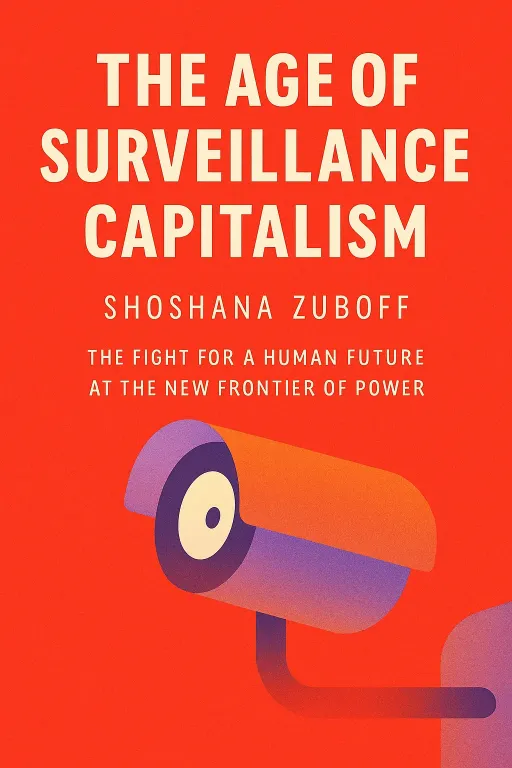
Nova: You are exactly right. It is not just a thriller plot; it is the fundamental economic model of our time. Today, we are diving into two seminal works that expose this hidden machinery. We are looking at The Age of Surveillance Capitalism by Shoshana Zuboff and Technopoly by Neil Postman.
Atlas: I have heard those titles referenced in almost every serious conversation about the future of society. Zuboff is a scholar who really pulled back the curtain on how these tech giants operate, right?
Nova: She is. Zuboff was a professor at Harvard Business School who spent years analyzing how the giants of Silicon Valley shifted their entire business model. She realized they were not just selling ads; they were claiming human experience as free raw material. And then you have Neil Postman, who wrote Technopoly back in the early nineties. He was a cultural critic who saw this tidal wave coming long before most people had a smartphone in their pocket. He predicted that society would eventually surrender its culture to technology, allowing tools to dictate our values.
Atlas: That is the part that gets me. The idea that we have surrendered our culture. I want to understand how we got here and, more importantly, if there is any way to claw back our autonomy.
The Extraction of Human Experience
SECTION
Nova: Let’s start with that idea of autonomy. Zuboff argues that what we are living through is a new economic order. She calls it surveillance capitalism. The key insight here is that our daily lives—our searches, our movements, our emotional reactions to content—are treated as behavioral surplus.
Atlas: Behavioral surplus. That sounds like corporate jargon. Can you break that down into plain English for someone who just wants to check their email without feeling like they are being mined for data?
Nova: Think of it like this. You go to a search engine to look up a recipe for dinner. That is the primary task. But the platform is not just interested in the recipe you find. They are interested in how fast you typed, what you clicked before that, and how your search pattern correlates with your mood that day. That extra information is the surplus. They take that data to predict your future behavior.
Atlas: That feels invasive, but I keep hearing people say, if the service is free, I am the product. Does that really matter in the long run? I mean, if the algorithms suggest a better recipe, isn't that a win-win?
Nova: That is the trap. The win-win is the illusion. The problem is that the prediction of your future behavior is not meant to serve you; it is meant to serve the buyer of that prediction. When these platforms predict your behavior, they are not trying to help you cook a better meal. They are trying to nudge you toward a purchase, a specific political view, or a longer engagement time on their platform. They are turning your autonomy into a product they can sell to advertisers or political entities.
Atlas: I see the pivot now. It is not just about showing me an ad for a blender. It is about shaping the environment so that I am more likely to buy the blender, and then maybe I become the type of person who buys more kitchen gadgets, and suddenly my identity is being curated by an algorithm.
Nova: Exactly. You are describing the shift from advertising to behavior modification. In the past, companies wanted to persuade you. Now, they want to automate you. They want to create a system where your choices are so predictable that they can be manufactured.
Atlas: That brings up a massive question for anyone trying to maintain a sharp mind. If the system is designed to nudge me, how much of my daily routine is actually mine? I feel like I am making choices, but are those choices just the path of least resistance paved by an architecture I cannot see?
Nova: That is the central question. And it leads us directly into what Neil Postman warned us about. He would argue that it is not just the algorithms; it is the entire digital architecture we have allowed to become the infrastructure of our lives.
The Technopoly and Cultural Surrender
SECTION
Atlas: I have always been fascinated by Postman’s idea of a Technopoly. It sounds like something from a science fiction novel, but it feels like our current reality. Can you define what he actually meant by that?
Nova: Postman defined Technopoly as a state of culture where technology is deified. It is a society that has surrendered its culture to its tools. In a Technopoly, we stop asking if a technology is good for our human values. Instead, we ask if it is efficient. We ask if it is fast. We ask if it is new. The technology itself becomes the measure of what is legitimate, what is true, and what is valuable.
Atlas: That explains why we have so many apps that do things we never asked for. We have a solution for everything, but we have stopped asking what the problem was in the first place.
Nova: Precisely. Postman used the example of the clock. Before the mechanical clock, time was something that happened in nature. The sun rose, the sun set, the seasons changed. The clock took time out of the human experience and turned it into an independent, measurable thing. We stopped living by the rhythm of the day and started living by the rhythm of the machine.
Atlas: That is a profound way to look at it. We are slaves to the notification. I see people checking their phones the second they wake up, before they have even had a chance to think for themselves. That is the Technopoly in action, right? The tool is dictating the rhythm of our consciousness.
Nova: You hit the nail on the head. And the danger is that when we outsource our cognitive functions to these tools, we lose the ability to think independently. We rely on the algorithm to tell us what is important, what is true, and who we should listen to. We lose the capacity for deep, sustained focus because our digital architecture is designed for fragmentation.
Atlas: This is starting to feel like a losing battle. If the tools are designed to hack our attention, and the economic model is built on predicting our behavior, what is the alternative? Are we supposed to throw our phones in the river and go live in a cabin?
Nova: That is the extreme reaction, but it is not the only way. The goal is not to abandon technology; it is to regain agency over it. It is about recognizing that technology is not a neutral force. It has a bias. It has a structure. And if you don’t understand the structure, you are being shaped by it.
Atlas: I like that framing. It is not about being a Luddite; it is about being a conscious user. But how do we build that consciousness when the systems are specifically designed to bypass our conscious mind?
Reclaiming Cognitive Architecture
SECTION
Nova: The first step is what I would call cognitive hygiene. You have to be intentional about the architectures you interact with. If you know that a platform is designed to harvest your behavioral surplus, you treat it as a utility, not as a source of truth or connection. You interact with it on your terms, for a specific purpose, and then you leave.
Atlas: That makes sense. It is like treating a hammer as a tool for building, not as the architect of the house. I use the tool to do a job, and then I put it down. I don't let the hammer tell me what I should be building.
Nova: Exactly. And this is where the user profile we are focusing on today becomes so critical. The recommendation for a 60-minute deep-dive session is a direct counter-strategy to the Technopoly. When you commit to a deep-dive, you are essentially saying, I will not allow my attention to be fragmented by the algorithm. I am going to reclaim my cognitive space for one hour a day.
Atlas: I love that. It is a form of resistance. It is quiet, it is private, but it is powerful. It is saying, I am going to produce something, or synthesize something, rather than just consuming what is fed to me. It shifts the dynamic from being a resource to being an architect of my own thoughts.
Nova: And that is the shift that matters. Zuboff talks about the need for a new kind of digital literacy. We need to understand that the screen is not a window to the world; it is a mirror that reflects our own data back at us, optimized to keep us clicking. If we understand that, we can change how we look at it.
Atlas: It makes me wonder about the long-term consequences. If we keep going down this path, where the algorithm knows us better than we know ourselves, do we lose the capacity to surprise ourselves? Do we lose the capacity for genuine human growth?
Nova: That is the ultimate stake. If you are constantly nudged toward the path of least resistance, you never have to struggle. But growth, deep growth, only happens in the struggle. It happens when you encounter something that doesn't fit your profile, something that challenges your worldview, something that requires you to think, not just react.
Atlas: That is a beautiful way to put it. Growth is in the friction. The algorithms try to eliminate friction to keep us engaged, but that friction is actually where the humanity is.
Nova: You have articulated it perfectly. The algorithm wants a seamless experience. Life is not seamless. Life is messy, it is difficult, and it is full of friction. When we embrace that, we step outside of the machine.
Synthesis & Takeaways
SECTION
Atlas: This has been a heavy, but incredibly necessary conversation. We have gone from the extraction of human experience to the surrender of our cultural values. If I had to summarize the takeaway for someone listening, it would be that the digital world is not a neutral playground. It is a battlefield for your attention and your autonomy.
Nova: That is a great summary. And I would add that the battle is not won by fighting the technology directly, but by cultivating the inner strength to set boundaries. It is about moving from a passive consumer of digital content to an active architect of your own cognitive routine.
Atlas: And that 60-minute deep-dive session is the anchor. It is the one thing you can do every single day to remind yourself that you are the one in charge of your mind, not the platform.
Nova: Precisely. It is about reclaiming your time as a precious resource. Don't let the signal of the algorithm drown out the noise of your own potential. Focus on what truly matters, synthesize your own insights, and build your own mental models. That is how you stay ahead of the curve.
Atlas: I feel like I am walking away with a much clearer map of the landscape. It is not about fear; it is about awareness. Once you see the architecture, it loses its power over you.
Nova: That is exactly the point. Awareness is the first step toward freedom. As Zuboff and Postman would both agree, the tools are not going to stop evolving, but we can stop surrendering. We can choose to be human in a world that wants us to be data points.
Atlas: That is a powerful note to end on. Thank you for walking me through this, Nova. I think I am going to go disconnect for a while and actually think about what I want to do next, rather than letting an app tell me.
Nova: That is the best possible use of your time. This is Aibrary. Congratulations on your growth!