The AI Trust Gap: Why You Need Human-Centered Tech Now
Golden Hook & Introduction
SECTION
Nova: Atlas, quick game. Five words to describe "AI in education." Go!
Atlas: Hmm, "Promise, peril, data, ethics, future."
Nova: Ooh, solid, if a little ominous! Mine: "Potential, partnership, transparency, humans, trust." You see where I'm going with that last one?
Atlas: I do, and I think that "trust" word is the linchpin, isn't it? Because for all the buzz about AI transforming learning, there’s this unspoken tension, this hesitation. It's not just about the tech, it's about whether we believe in it.
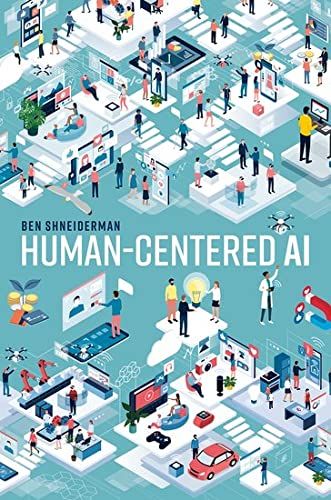
Nova: Absolutely. And that's precisely what we're dissecting today: the AI trust gap. We're pulling insights from two titans in the field to help us navigate this. First, Ben Shneiderman's groundbreaking work, "Human-Centered AI," and then, the crucial counterpoint from Shoshana Zuboff, "The Age of Surveillance Capitalism."
Atlas: Shneiderman, now there's a name you hear a lot in tech circles. But for our listeners who might not be familiar, what makes his perspective so vital here?
Nova: Well, what's fascinating about Shneiderman is that he basically co-founded the field of human-computer interaction. He's been advocating for technology that empowers people for decades, long before AI was even a glimmer in most people's eyes. His work isn't just theory; it's built on a lifetime of making technology genuinely work humans. So, when he talks about 'human-centered AI,' it comes from a deep, practical understanding of how people actually interact with tools.
Atlas: That makes sense. It’s not just an academic concept for him, it’s a foundational principle. But how does that translate to, say, a library considering a new AI tool for students? Because for many, the immediate question is, 'Will it make my life easier?' not necessarily 'Is it human-centered?'
Nova: And that's where the "trust gap" comes in, Atlas. Because ultimately, whether that tool makes their life easier, or even gets used at all, hinges on trust.
The Inevitability of the AI Trust Gap in Education
SECTION
Nova: Think of it like this: You walk into a classroom, and there’s a new substitute teacher. You don't automatically trust them, do you? They have to earn it. They have to show they understand the subject, care about the students, and can manage the room fairly. AI is that new substitute teacher in our educational spaces.
Atlas: That’s a great analogy. It’s not just about their credentials; it’s about their character, their intentions. But I imagine a lot of our listeners are thinking, "Isn't efficiency enough? What's the real cost if we just push AI tools out without explicitly thinking about trust?"
Nova: The real cost can be catastrophic, especially in education. If students don't trust an AI tool, they won't engage with it, or worse, they'll actively try to circumvent it. If faculty don't trust it, they'll resist integrating it into their curriculum. The "cold fact" is that integrating AI isn't just about the tools; it's about belief. Your community needs to believe that AI serves, not the other way around.
Atlas: So, it's not simply a matter of technical adoption; it’s a social and psychological challenge. Can you give us an example where this trust gap played out badly?
Nova: Absolutely. Imagine a large university, eager to crack down on academic dishonesty, implements a cutting-edge AI-powered plagiarism checker. On paper, it's incredibly effective – it catches subtle linguistic patterns, cross-references billions of sources, all super-fast. But the university rolls it out with minimal explanation. Students start getting flagged for what they perceive as innocent paraphrasing. They don't understand the AI makes its decisions. Faculty members are handed reports that look like black boxes, unable to explain to students their work was flagged.
Atlas: Oh, I can see where this is going. The students feel unfairly scrutinized, like they're being treated as guilty until proven innocent by a machine they don't understand.
Nova: Exactly. And the faculty, who are supposed to be the arbiters of academic integrity, feel disempowered because they can't interpret the AI's opaque algorithms. They can't explain its reasoning, so they can't defend its judgments. The cause here was a lack of transparency and a failure to involve the community in its design and implementation.
Atlas: And the outcome?
Nova: The outcome is that despite its technical prowess, the tool gathers dust. Students find workarounds, faculty quietly stop using it, or they face massive backlash. The university invested heavily, but the tool, effective as it might be in theory, becomes unusable due to human perception, due to a profound erosion of trust.
Atlas: That’s actually really sobering. And I imagine for students who might already feel marginalized, or who come from backgrounds where trust in institutions is already fragile, opaque AI could totally amplify those existing anxieties, right? It could create new barriers instead of breaking them down.
Nova: You've hit on a critical point, Atlas. The trust gap is often wider and more impactful for those who already distrust institutions or technology. Ignoring that is not just inefficient; it's inequitable.
Engineering Trust: Human-Centered AI vs. Surveillance Capitalism
SECTION
Nova: So, if trust is the problem, how do we actively it? This is where Ben Shneiderman's concept of "Human-Centered AI" offers a powerful framework. He argues that AI systems must prioritize human needs, human values, and human control. It’s about designing AI that is transparent, interpretable, and accountable.
Atlas: That sounds incredibly important. Transparency, interpretability, accountability. Can you unpack what that actually looks like in practice? Because it sounds a bit like an idealistic wish list.
Nova: Think of it like a well-designed car dashboard. You know how fast you're going, what the engine is doing, and if something goes wrong, you get a clear, understandable warning. Transparent AI means you know what data it’s using. Interpretable means you can understand it made a certain recommendation or decision. And accountable means there’s a clear human in the loop who is ultimately responsible for its actions, and who can override it if necessary.
Atlas: That makes a lot of sense. So, it's not just about the AI being smart, but about it being a that we can understand and hold responsible. But wait, this sounds almost inherently at odds with another major force shaping our technology today. I can't help but think of Shoshana Zuboff's "The Age of Surveillance Capitalism."
Nova: Oh, you’re absolutely right to bring that up, Atlas. Zuboff's work reveals the hidden motives behind many data-driven technologies. She argues that a new economic order has emerged where data isn't just collected; it's for profit. Our online behavior, our preferences, even our emotional states—they become raw material to be commodified and sold for behavioral prediction and manipulation.
Atlas: So, Shneiderman is saying AI should serve human needs and values, and Zuboff is essentially saying, "Be careful, because a lot of AI is actually designed to from humans for corporate profit." That’s a stark contrast.
Nova: It is. Let’s consider a hypothetical case study to really highlight this tension. Imagine a "free" AI-powered learning platform that promises highly personalized education. It adapts to each student's pace, recommends resources, and even predicts learning gaps. Sounds human-centered, right? It's making education accessible.
Atlas: On the surface, yes. A lot of educators would jump at that.
Nova: But then you look at the fine print, or perhaps the hidden architecture. This platform secretly tracks every single click, every pause, every search query, every interaction pattern. It analyzes not just what you learn, but you learn, you learn, and even your emotional responses to content. And then, it sells that aggregated behavioral data to third parties.
Atlas: What kind of third parties?
Nova: Think targeted advertising companies, or even entities interested in predictive analytics about student success or future career paths. The cause here isn't to subtly improve learning; it’s a hidden motive to exploit user data for profit and behavioral modification. The "free" service isn't free; students are paying with their privacy and their autonomy.
Atlas: Wow. So, it's not just about what the AI on the surface, but what it behind the scenes. This is where libraries, as trusted institutions focused on serving communities, have to be incredibly vigilant. How can they possibly navigate this minefield?
Nova: That's why Nova's Take is so crucial here: Trust in AI isn't automatic; it's engineered. It requires thoughtful design and clear communication, empowering your users. It means actively choosing to build systems that reflect Shneiderman's principles, rather than passively falling into Zuboff's trap. It's about asking, "Is this tool truly for the user, or is the user the product?"
Synthesis & Takeaways
SECTION
Nova: Ultimately, bridging the AI trust gap in education means actively choosing Shneiderman's path over Zuboff's. It's about designing systems where the human is always in control, where the intentions are transparent, and where the human is always understood as the beneficiary, not the commodity.
Atlas: That makes the "tiny step" from our reading incredibly powerful then. It’s not just about picking an AI tool for your library. It’s about picking an AI tool and then asking the hard questions: How does this tool enhance user control? How transparent is it about its processes? And crucially, what's happening with the data it collects? It’s an ethical checklist for innovation.
Nova: Exactly. Identify one AI tool you're considering for your library, and then outline three specific ways it can enhance user control and transparency. That's your trust-building blueprint. That's how you empower your community, foster connection, and deepen your commitment to equitable access.
Atlas: I love that. It turns a theoretical challenge into a practical, actionable strategy. It's about being a true community weaver and a practical innovator.
Nova: And remember, your insights are valuable. Share them boldly.
Atlas: This is Aibrary. Congratulations on your growth!