** The Project Manager's Blueprint to the $100 Startup
Golden Hook & Introduction
SECTION
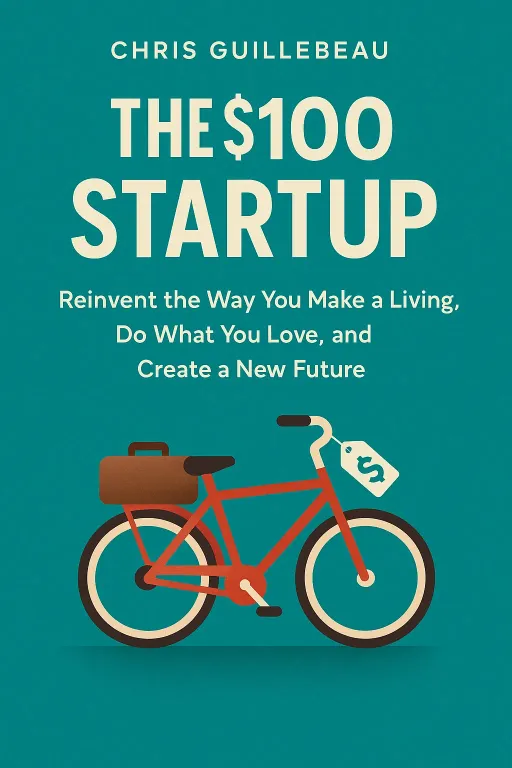
Nova: What if the riskiest project you could ever manage is simply staying in a traditional job? We often think of starting a business as this massive, terrifying leap into the dark, requiring thousands of dollars and a mountain of business school theories. But today, we are completely flipping that script. We are diving into Chris Guillebeau's groundbreaking book,, and we're going to look at it through a very unique lens. Today, we'll tackle this book from three distinct angles. First, we'll explore the science of value creation and how to turn your existing skills into immediate income. Then, we'll discuss the lean launch framework, treating your business like a low-cost, high-yield experiment. And finally, we'll focus on how to scale your freedom without drowning in corporate complexity. Joining us today is Auwal Ibrahim, a project manager in science research who knows a thing or two about running successful experiments. Welcome, Auwal!
Auwal Ibrahim: Thanks, Nova. It is fantastic to be here. You know, when I first picked up this book, I was immediately struck by how much the microbusiness revolution aligns with the scientific method. In research, we don't just throw millions of dollars at a wild guess. We start with a hypothesis, we run a small, controlled test, we gather data, and then we iterate. That is exactly what Chris Guillebeau is advocating for here. It's about taking the fear out of the equation by treating entrepreneurship as a structured, manageable project.
Nova: Oh, I love that! A structured project. That makes it sound so much more approachable, doesn't it? Because let's be honest, most of us hear "startup" and we think of venture capitalists, pitch decks, and massive debt. But Chris shows us that the average startup cost in his study of over fifteen hundred microbusinesses was actually under six hundred and eleven dollars. In fact, the median cost was just a hundred and twenty-five dollars! That is practically pocket change in the business world. We are talking about starting with what you have, right where you are.
Auwal Ibrahim: Exactly. And as a project manager, my mind immediately goes to resource allocation. We often underestimate the assets we already possess. The book argues that you don't need a specialized business degree or a massive inheritance. You just need a convergence of two things: a skill or passion of your own, and a useful application of that skill that other people are willing to pay for. It’s about finding that sweet spot where your capabilities meet someone else's pain point.
Deep Dive into Core Topic 1
SECTION
Nova: Yes! That sweet spot is what Chris calls "convergence." And that brings us to our first big topic: the science of value creation. Chris has this great line in the book: "Freedom is what we’re all looking for, and value is the way to achieve it." But how do we actually define value? In the book, there's a brilliant case study about a man named Michael Hanna from Portland, Oregon. Back in 2009, right in the middle of the economic downturn, Michael was unexpectedly laid off from his corporate sales job after twenty-five years. Talk about a project manager's nightmare, right? Sudden, unplanned change.
Auwal Ibrahim: That is the ultimate scope creep of life, Nova. But look at how he responded. He didn't panic and spend months writing a hundred-page business plan. Instead, a friend suggested he try selling closeout mattresses on Craigslist. Now, on paper, that doesn't sound like a world-changing tech startup. But Michael secured a temporary location in a former car dealership showroom, studied the mattress industry, and realized something crucial. He realized that buying a mattress is usually a terrible, high-pressure experience for customers. So, he decided to change the environment. He made his store incredibly welcoming, focused on education rather than hard selling, and even introduced bicycle delivery to stand out.
Nova: Bicycle delivery for mattresses! I still can't get over that. It's so quirky, but it got him so much local media attention!
Auwal Ibrahim: It did, and it worked because it was a visual representation of his brand's values—eco-friendly, local, and community-oriented. Within two years, Michael's business, Mattress Lot, was highly profitable and supporting his family. He took his existing sales skills, combined them with a customer-centric approach, and filled a gap in the market. He didn't need to invent a new technology; he just needed to package an existing service in a way that made people happy.
Nova: And that is the key, isn't it? Making people happy. Chris talks about this analogy of "giving them the fish." You know that old saying, "Teach a man to fish and you feed him for a lifetime"? Well, Chris jokingly says, "Catch a man a fish, and you can sell it to him. Teach a man to fish, and you ruin a wonderful business opportunity." It's a bit of gentle humor, but the point is so true! Most customers don't want to learn how to do the hard work themselves. They want convenience. They want the ready-made solution. They want the fish!
Auwal Ibrahim: It’s a classic project management principle: deliver the end product, not the process. In science research, we focus heavily on the data and the methodology, but the end-user just wants to know the results. In business, customers are buying emotional benefits, not just features. Chris highlights this beautifully in the appendix with what he calls "Fish Stories." For example, look at the V6 Ranch in California, run by Barbara and John Varian. They don't just advertise "horse rides on a ranch." That’s a feature. Instead, Barbara reframed their marketing to say, "We help our guests become someone else, even if just for a day. Come stay with us and you’ll be a cowboy." They are selling the emotional benefit of escape, adventure, and identity.
Nova: That is so powerful. "You'll be a cowboy." It gives me goosebumps! It’s about moving from the descriptive to the emotional. Another great example from the book is Purna Duggirala from India. He started a website offering Microsoft Excel training. Now, Excel templates sound pretty dry, right? But Purna didn't market it as "learn formulas." He marketed it by saying, "Our training programs make customers a hero in front of their bosses or colleagues." He positioned the customer as the hero of the story. Who doesn't want to be an office superhero?
Auwal Ibrahim: It’s brilliant because it targets a fundamental human desire: the need for recognition and competence. From an analytical perspective, Purna identified a hidden need. People weren't just struggling with spreadsheets; they were struggling with their professional standing. By addressing that deeper emotional need, he built a highly successful business that generated a significant recurring income. It shows that value is entirely subjective. It's not about what you think your product is worth; it's about how it makes your customer feel.
Nova: Exactly. We have to think about value the way our customers do. Remember the story of the locksmith? Chris locked his keys in his car at a Starbucks near Salt Lake City, right before a big speaking event. The locksmith arrived in minutes, popped the lock in less than ten seconds, and charged fifty dollars. Chris felt a little twinge of, "Wow, fifty dollars for ten seconds of work?" But then he realized, he wasn't paying for the ten seconds. He was paying for the years of experience that allowed the locksmith to do it in ten seconds, and the absolute relief of not missing his event. The value was in the peace of mind.
Auwal Ibrahim: That is a perfect example of pricing based on benefits rather than costs. In project management, we look at the value of the deliverable. If a quick intervention saves a project from failing, that intervention is incredibly valuable, regardless of how long it took. Micro-entrepreneurs need to internalize this. If you price your services solely based on your hourly rate or your cost of materials, you are leaving money on the table and failing to communicate the true worth of your solution.
Core Topic 2
SECTION
Nova: So true! And that leads us beautifully into our second core topic: the lean launch and hypothesis testing. How do we actually get this value out into the world without risking our life savings? Chris advocates for what we might call an "action bias." He says, "Plans are only good intentions unless they immediately degenerate into hard work." Auwal, as a project manager, how do you balance the need for planning with this urgent call to action?
Auwal Ibrahim: It is a delicate balance, Nova, but the key is to avoid analysis paralysis. In project management, we use agile methodologies where we build a "Minimum Viable Product"—or MVP—and test it immediately. Chris outlines a seven-step guide to instant market testing that is pure agile project management. The goal is to get your first sale as soon as possible to validate the demand. You don't wait until everything is perfect. You launch, you get feedback, and you refine.
Nova: Yes! And the book has an incredible story about this: Jen Adrion and Omar Noory, two design graduates from Columbus, Ohio. They were feeling completely burnt out by commercial design work and wanted to travel. They wanted a specific type of map to track their travels, but they couldn't find one they liked. So, they designed one themselves. But here's the catch: the printer had a minimum order of fifty units, which cost five hundred dollars. They split the cost, printed the maps, and were left with forty-nine extra copies. Instead of spending months doing market research, they set up a simple website with a PayPal button.
Auwal Ibrahim: And what happened next is the perfect validation of their hypothesis. They got a mention on a popular design blog, and they sold out of their entire first print run in just ten minutes! They didn't have a complex inventory system or a massive marketing budget. They had a simple, elegant solution to a personal problem, and they put it out there. Within nine months, they were working on their map business full-time, completely financially independent. They tested the market with a minimal investment and let the customer demand drive their growth.
Nova: Ten minutes! That is just mind-blowing. And it shows the power of what Chris calls "marketing before manufacturing." You can actually gauge demand before you invest heavily in production. There's that story of Chris's friend who wanted to create a high-end specialty guide for the car industry that would sell for nine hundred dollars. Instead of spending months writing it first, he placed an ad in a magazine to see if anyone would buy it. He got two orders immediately. He then wrote to those buyers, told them he was working on an updated version, and asked if they'd mind waiting a month. They agreed, and he frantically wrote the guide knowing he already had eighteen hundred dollars in guaranteed sales!
Auwal Ibrahim: That is a brilliant risk-mitigation strategy. In research, we call that a pilot study. You don't build the entire laboratory before you know if your basic premise holds water. By securing those first sales, he eliminated the financial risk of writing a guide that nobody wanted. It’s about letting the market fund your development.
Nova: It really is. But what about the launch itself? Chris uses this amazing analogy of a Hollywood movie launch. You don't just quietly put a movie in theaters on a Friday night and hope people show up. You build anticipation! You release trailers, you do press tours, you create a buzz. Chris says a successful launch campaign should unfold in a series of structured messages. You start with an early look at the future, explain why the project matters, share the plan for the big debut, send a "we're almost ready" reminder, and then finally, the big announcement.
Auwal Ibrahim: This is essentially a communication plan, which is a core component of any project management framework. You have to manage stakeholder expectations and build excitement. I love the story of how Chris launched his own online course, the. He was feeling stuck and procrastinating on the launch. But then he noticed that the Amtrak train from Chicago to Portland was named the, and he had just received a messenger bag with the same name. So, he decided to launch the course live from the train on his birthday! He set up a "blogger's lounge" in the train's viewing car and completed his final edits on the journey. It created this fantastic, real-time narrative that his audience could follow. He generated over one hundred thousand dollars in sales in just twenty-four hours!
Nova: Live from a train! That is just pure storytelling gold. It made the launch an event, an adventure that people wanted to be a part of, even if they weren't buying the course. It shows that honesty, relatability, and a bit of fun can make your marketing feel like an invitation rather than a high-pressure sales pitch.
Auwal Ibrahim: Absolutely. And it also highlights the importance of a hard deadline. Having a physical journey with a clear start and end point forced him to finish the project. In my work, we know that tasks will expand to fill the time allotted to them. A forced, public deadline is often the best tool to overcome inertia. Look at Andreas Kambanis, who launched his London cycling app from the Heathrow airport departure lounge just thirty minutes before boarding a flight to Brazil! He had to get it done, and because he did, he landed in São Paulo to find a flood of orders that paid for his entire trip.
Synthesis & Takeaways
SECTION
Nova: I love that! "Just thirty minutes before boarding." Talk about cutting it close, but it worked! Well, we have covered some incredible ground today, Auwal. We looked at how value is really about helping people and connecting with their emotions, and we explored how to launch quickly and leanly using structured, project-like experiments. As we wrap up, what are the key takeaways you think our listeners, especially those with an analytical or structured background like yours, should hold onto?
Auwal Ibrahim: I think the most important takeaway is to re-evaluate our perception of risk. We often think that staying in a traditional job is the safe path, but as Chris points out, relying on a single employer for your entire livelihood can actually be incredibly risky. Building a microbusiness, even as a side project, creates an additional stream of income and a safety net. It gives you options. And the beauty of the $100 startup model is that the financial risk is so low that the barrier to entry is virtually non-existent. You don't need to risk your life savings to test an idea.
Nova: Yes! It’s about taking small, calculated steps. And remember, you already have the skills you need. You don't need to go back to school or completely reinvent yourself. You just need to look at your existing talents and ask, "How can I use this to make someone else's life easier or better?"
Auwal Ibrahim: Exactly. And for the analytical minds out there, treat your business ideas as hypotheses. Run small, low-cost experiments. Use surveys, offer pre-sales, and get that first sale as quickly as possible to validate your concept. Don't get bogged down in writing a fifty-page business plan. Keep it to a single page, focus on the core value proposition, and take action.
Nova: "Take action." That is the perfect note to end on. We want to leave you, our listeners, with a simple challenge today. What is one small, low-risk experiment you can run this week to test a passion or skill of yours? Don't wait for the perfect moment or the perfect plan. Just take that first step, launch your pilot study, and see what happens. Thank you so much for sharing your incredible insights with us today, Auwal!
Auwal Ibrahim: It was an absolute pleasure, Nova. Remember, the best way to predict your future is to create it.
Nova: Beautifully said. Thank you all for listening, and we'll see you next time on the blueprint to your new future!