

The 'Fluent Mindset' Trap: Why You Need Structured Immersion
Golden Hook & Introduction
SECTION
Nova: Atlas, if you had to review the concept of 'conversational fluency' in exactly five words, what would they be?
Atlas: Oh, easy: "More than just words, my friend."
Nova: I love that! Simple, profound, and perfectly sets the stage for what we're diving into today. Because for so many, mastering conversational flow for confident group discussions feels like it's just about having the right vocabulary, or knowing enough grammar.
Atlas: And honestly, who hasn't felt that pang of anxiety, thinking, "If only I knew the perfect idiom, or that specific phrasal verb, I'd nail this conversation." It's a common trap.
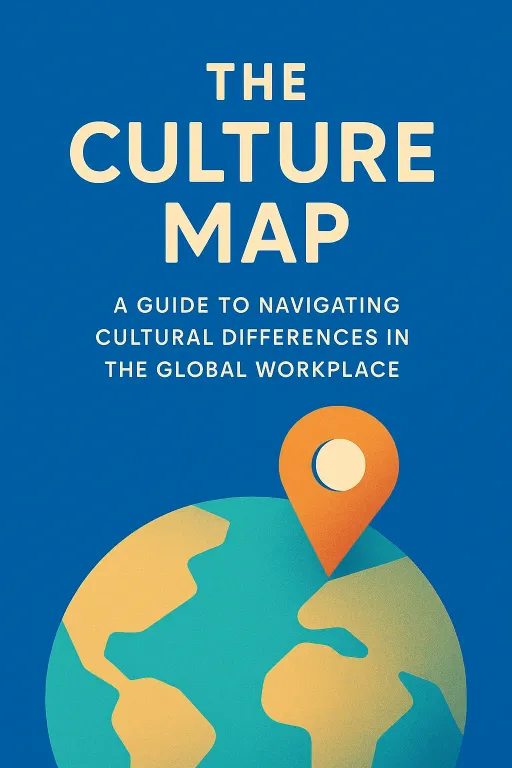
Nova: Absolutely. And it's a trap that two incredible authors, Erin Meyer and Malcolm Gladwell, help us dismantle. We’re talking about "The Culture Map" by Erin Meyer, and "Talking to Strangers" by Malcolm Gladwell. Meyer, a brilliant professor at INSEAD, has built an entire framework around decoding how cultural differences subtly, but powerfully, impact global communication. And Gladwell, of course, is a master of taking complex social science and weaving it into these utterly captivating narratives that completely upend our assumptions.
Atlas: I've always admired how Gladwell makes you question everything you thought you knew, and Meyer gives you a practical lens to understand why those misunderstandings happen in the first place.
Nova: Exactly. Because true fluency, that 'fluent mindset,' isn't just about the words you use. It's about understanding the invisible rules of communication. It's about seeing how culture shapes every interaction, every pause, every gesture.
The Invisible Rules of Communication: Culture as a Conversational Map
SECTION
Nova: So Atlas, have you ever been in a conversation where, even though everyone was speaking English, it felt like you were all on completely different planets? Like the words were there, but the meaning was just… slipping away?
Atlas: Oh man, absolutely. It’s like trying to follow a recipe, but you realize halfway through that the person who wrote it assumes you already know how to make a roux, and you’re just standing there with flour and butter, utterly bewildered. It makes you feel like you’re missing some secret handshake.
Nova: That's the perfect analogy! And Erin Meyer, in "The Culture Map," gives us the blueprint for those secret handshakes. She introduces this incredibly useful concept of "high-context" versus "low-context" communication. Picture it this way: In high-context cultures, communication is indirect. Meaning isn't just in the words; it's heavily embedded in shared understanding, non-verbal cues, the history of the relationship, even the silence between sentences. Think cultures like Japan, China, or many Arab nations.
Atlas: Okay, so it’s like reading between the lines, but the lines are almost invisible to an outsider.
Nova: Precisely. And then you have low-context cultures, where communication is direct, explicit, and clear. You say what you mean, and you mean what you say. There's less reliance on shared context, and more on unambiguous language. We see this often in places like Germany, the United States, or Switzerland.
Atlas: That makes sense. So, my American directness might be perceived as efficient here, but totally rude somewhere else.
Nova: You've got it. Let me give you a classic example Meyer highlights. Imagine a meeting between a Japanese business team, which operates in a high-context culture, and an American team, typically low-context. The American team presents a proposal, and the Japanese team listens intently. At the end, the Japanese team says, very politely, "That would be very difficult."
Atlas: Okay, so "very difficult" to me sounds like, "Hmm, there are some hurdles, but maybe we can work through it." Like, it's not a 'no,' it's a 'maybe with effort.'
Nova: That's exactly where the trap lies for a low-context listener! For the Japanese team, "that would be very difficult" is often their polite, high-context way of saying, "No, absolutely not. That is impossible, and we're too polite to say it directly." The American team, defaulting to their low-context interpretation, might hear "maybe," go back, spend weeks revising the proposal, only to come back and get the same response, leading to immense frustration and wasted effort.
Atlas: Wow. That's actually really eye-opening. So, the conversation itself, even the tone, isn't just about the words. It's about this invisible cultural script that dictates how you interpret those words. For someone like our listeners, who are strategic learners aiming for confident group discussions, how do you even begin to "read" these invisible rules, especially in a diverse academic or professional setting?
Nova: That’s the million-dollar question, isn't it? It starts with awareness, which is what Meyer provides. It’s about recognizing that your default interpretation isn't universal. Then, it's about careful observation. Are people being overly polite? Are they avoiding direct answers? Are they using a lot of silence? These can be clues. And most importantly, it's about asking clarifying questions in a culturally sensitive way. Instead of "Is that a yes or no?" you might say, "To ensure I've understood completely, could you help me understand what specific challenges you foresee?" It’s a humble approach.
Navigating Blind Spots: The Perils and Power of First Impressions
SECTION
Nova: And that idea of humility leads us perfectly to our second core idea, which Malcolm Gladwell dissects so brilliantly in "Talking to Strangers." Because even if we understand the cultural maps, we still have to contend with our own internal GPS, which can be wildly inaccurate.
Atlas: Okay, so we've got the external cultural map, but now we're talking about our internal assumptions, our own biases.
Nova: Precisely. Gladwell's central argument, or one of them, is that we have this innate tendency to "default to truth." We assume people are telling us the truth, especially strangers, unless we have overwhelming evidence to the contrary. And while this is generally a good thing for social cohesion, it makes us incredibly vulnerable to misjudgments and blind spots, particularly in conversations where stakes are high.
Atlas: Hold on. So, we're hardwired to trust? Even when we're trying to be objective and analytical? That sounds a bit out there, especially for strategic learners who are trying to be critical thinkers.
Nova: It’s counterintuitive, isn't it? But think about it: if we questioned every single statement, every single person, society would grind to a halt. So, our brains take a shortcut. The problem arises when we encounter someone whose communication style, or even just their demeanor, doesn't align with our internal template of what "truth" or "honesty" looks like. We project our own cultural norms, our own expectations, onto them.
Atlas: So, if I meet someone who avoids eye contact, my default might be to think they're shifty or dishonest, because in my culture, eye contact signals sincerity. But in another culture, it might signal respect or deference.
Nova: Exactly! Gladwell would argue that your "default to truth" mechanism, combined with your cultural lens, leads you to a false conclusion. You're not seeing; you're seeing your of them. This is why "careful observation and humility" are so crucial. It means suspending that initial judgment. It means actively seeking disconfirming evidence, not just confirming what you already believe.
Atlas: That’s a tough ask, though. Our brains are efficient, sometimes to our detriment. For listeners who are trying to improve conversational flow, especially in new environments or with diverse groups, how do you actively fight against that "default to truth" when your brain is just trying to make sense of the world quickly?
Nova: It’s not about fighting it; it's about acknowledging it and building new habits. One powerful insight from Gladwell is the idea of "transparency." We assume people's internal states are transparently displayed on their faces or in their body language. But often, they're not. A nervous person might fidget, a dishonest person might be perfectly still. So, instead of trying to "read" someone's mind through their non-verbal cues, which is often unreliable, we should focus on their and the around them.
Atlas: Okay, so it's less about becoming a human lie-detector, and more about becoming a human context-detector. And a humility-detector.
Nova: Beautifully put! For our ambitious achievers, who want to thrive in new environments and ace those group discussions, this means actively questioning your first impressions. It means asking, "What if I'm wrong about this person's intentions or meaning?" It means recognizing that your desire for growth should extend to your interpretive frameworks, not just your vocabulary.
Synthesis & Takeaways
SECTION
Nova: So, bringing these two incredible insights together, what we're really talking about with a truly "fluent mindset" isn't just about speaking a language without hesitation. It's about a dynamic awareness of the invisible cultural scripts that everyone operates under, combined with a profound self-awareness of our own interpretive biases.
Atlas: It's about moving beyond the superficiality of words to understand the entire ecosystem of communication. It's truly seeing the conversation as a complex dance, not just a series of spoken sentences. And it sounds like it requires a lot more active engagement and self-reflection than just memorizing flashcards.
Nova: Absolutely. It's an ongoing journey, but a deeply rewarding one. Because when you start to see these invisible rules and blind spots, your conversations become richer, more impactful, and far less anxiety-inducing. You start connecting on a deeper level.
Atlas: That’s actually really inspiring. So, for our listeners, the strategic learners and resilient adaptors out there, what’s one tiny step they can take today to start cultivating this more profound fluent mindset?
Nova: Here’s your challenge: Today, observe a conversation. Any conversation – at work, with friends, even on a TV show. Try to identify just one cultural communication difference you notice. Maybe someone is more indirect, or someone else is incredibly explicit. Then, take a moment to consider: How might you adapt your own style, just slightly, to bridge that gap? It’s not about changing who you are, but about expanding your toolkit.
Atlas: I love that. It’s a practical step that immediately puts these complex ideas into action. And embracing every challenge, even tiny observational ones, truly is a stepping stone for growth, especially for those driven by future security and self-improvement.
Nova: Exactly. Because your journey is unique, and powerful, and this kind of insight is what truly unlocks confident communication.
Atlas: This is Aibrary. Congratulations on your growth!









