Stop Speaking to the Wall, Start Engaging the Room: Your Public Speaking Blueprint
Golden Hook & Introduction
SECTION
Nova: Many people think brilliant ideas speak for themselves. That if your content is good enough, it will naturally rise to the top, cutting through all the noise. But Atlas, I'm here to tell you, that's often the quickest way for your brilliant ideas to just… disappear.
Atlas: Whoa, really? Disappear? I mean, that sounds rough, but I can definitely relate. It feels like sometimes you've got this incredible insight, you've done the work, you've got the data, and then it just… lands flat. Why does that happen, if the content is so strong?
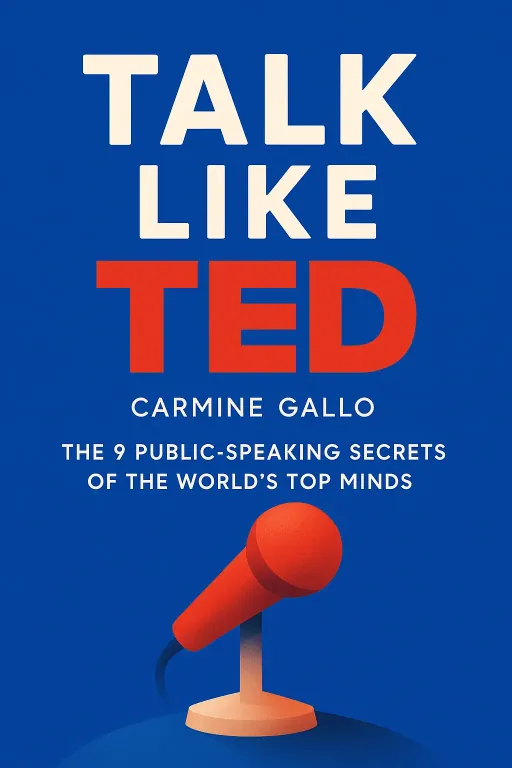
Nova: It happens because brilliant content alone isn't enough. It's about connection. And that's exactly what we're diving into today, with insights from two pivotal books: "Talk Like TED" by Carmine Gallo and "Presentation Zen" by Garr Reynolds. Gallo, a former journalist, became a communication coach for top executives and TED speakers, really breaking down what makes those talks so magnetic. And Reynolds, with his background in graphic design and a deep appreciation for Japanese aesthetics, brought a whole new visual philosophy to presentations.
Atlas: Okay, so it’s not just about what you say, but how you say it, and maybe even how it when you say it. I'm curious. Where do we even start to unpack that?
The Art of Connection: Making Your Message Memorable
SECTION
Nova: We start with the art of connection, Atlas. Gallo's work, especially in "Talk Like TED," really hammers this home. He shows how the best speakers aren't just delivering information; they're creating an emotional bond, making their ideas stick, and frankly, making them unforgettable.
Atlas: So, it’s not just about getting people to something, but to it too? How do you bake that in without sounding like you're trying too hard, or being… well, overly dramatic?
Nova: That's the magic. It's not about being dramatic; it's about being human and strategic. Think about a speaker who opens with a personal story that immediately resonates with a universal human experience – a struggle, a triumph, a moment of profound realization. Gallo points out how these stories, especially if they reveal vulnerability or a surprising insight, create an immediate connection. For instance, one TED speaker shared her personal battle with a rare disease, transforming a scientific talk into a deeply moving narrative about perseverance and hope. Listeners weren't just learning about a disease; they were experiencing a journey.
Atlas: That’s incredible. I imagine a lot of our listeners feel that pressure to be stoic or purely factual, especially in a professional setting. For someone who's not a TED speaker, but just trying to get their project approved in a team meeting, how does 'emotional connection' actually play out? It sounds a bit abstract.
Nova: Ah, but it’s not abstract at all in practice. Emotional connection in a team meeting could be as simple as acknowledging a shared challenge. Instead of just presenting a solution, start by saying, "I know we've all been struggling with the bottleneck in X process… My proposal addresses that frustration directly." You're tapping into their shared pain point, their desire for efficiency, their aspiration for success. That’s emotional connection. It’s about understanding your audience’s needs, not just your message.
Atlas: I see. So it’s framing your content in a way that shows you understand world, problems. That makes sense. But what about making it memorable? What's the secret sauce there?
Nova: The secret sauce often lies in novelty and structure. Gallo talks about the "rule of three" – people tend to remember things in threes. Think about famous slogans or even jokes. He also emphasizes using vivid analogies or surprising facts. Instead of saying, "Our market share is growing," you might say, "Our market share growth is like a snowball rolling downhill, picking up speed and size with every turn." Or present a counter-intuitive statistic that makes people sit up and pay attention. The goal is to make your ideas sticky, so they don’t just hear it, they it and perhaps even repeat it later.
Atlas: That’s a great way to put it. Making it sticky. So it's not just about the information, but about the of that information to make it both relatable and unforgettable.
Simplicity and Storytelling: The Blueprint for Impact
SECTION
Nova: Exactly. And once you have that connection, Atlas, the next challenge is to keep it, and that's where Garr Reynolds' "Presentation Zen" comes in. He makes a powerful case for… less. He argues that often, our instinct to include more and more detail actually dilutes our message.
Atlas: But in the professional world, aren't we often judged by how much detail we provide? How do you strip away clutter when your boss expects a 50-slide deck, or your clients demand every single data point? That sounds like a recipe for disaster for many of our listeners.
Nova: It’s a common misconception that more data equals more credibility. Reynolds challenges that by advocating for visual simplicity and powerful storytelling. Think of it like a skilled chef. They don't throw every ingredient in the pantry into one dish. They select a few high-quality ingredients, prepare them perfectly, and arrange them beautifully to create a memorable experience. Your presentation should be the same. Instead of 50 slides packed with text, imagine 10 slides, each with a single powerful image and a concise, impactful statement that drives your point home.
Atlas: That's a great analogy. So it’s about curation, not just accumulation. But how do you tell a story about, say, Q3 sales figures? It feels like we're always just presenting numbers, and it's hard to make that a narrative.
Nova: Storytelling isn't about making up fiction; it's about framing information with a compelling narrative arc. Every good story has a beginning, a middle, and an end, and crucially, a "hero" who faces a challenge and overcomes it. For Q3 sales figures, the "hero" could be your team, the "challenge" could be market volatility or a tough competitor, and the "solution" is the strategy that led to those sales figures. You start with the context, introduce the challenge, detail the actions taken, and then present the triumphant outcome – the numbers now have meaning.
Atlas: I’m curious, so it's like, instead of just saying "sales went up 10%," you say "we faced fierce competition this quarter, but through our innovative X strategy, we turned the tide, overcoming initial hurdles, and saw a 10% increase in sales, exceeding expectations"?
Nova: Exactly! You give the numbers context, meaning, and a human element. You're not just reporting; you're narrating a journey. Reynolds would say, use visuals to support that story, not to duplicate your words. A simple graph showing the upward trend is far more impactful than a spreadsheet of data. It allows the audience to instantly grasp the meaning without getting lost in the weeds.
Atlas: That’s such a hopeful way to look at it. It transforms what often feels like a dry, necessary evil into an opportunity to really shine. It makes me wonder, what if we applied this principle of "less is more" to our everyday conversations?
Synthesis & Takeaways
SECTION
Nova: That's a fantastic thought, Atlas. Both Gallo and Reynolds ultimately lead us to the same profound insight: powerful communication isn't some mystical talent you're born with. It's a strategic skill, a blueprint you can learn and master. It's about deliberately crafting your message to connect emotionally, simplify effectively, and tell a story that resonates.
Atlas: So, for our listeners, the real takeaway is that their voice matter, and they can absolutely learn to make it land with impact, even if they don't feel like a 'natural' speaker or if they're not on a TED stage. It’s about being intentional.
Nova: Absolutely. And the "Tiny Step" from our main content perfectly encapsulates this: record a two-minute explanation of your current work. Watch it back. What one thing can you simplify or make more engaging? This isn't about perfection; it's about continuous, deliberate practice. Small steps build huge momentum, especially in mastering a skill as crucial as communication.
Atlas: That gives me chills, honestly. It’s a powerful reminder that we all have the capacity to connect and influence, we just need the right tools and the courage to practice. What one thing, after listening to this, are you going to simplify or make more engaging in your next conversation, listeners?
Nova: Think about it. Your career advancement, your influence, your ability to truly make an impact often hinges on how well your words land. It's time to stop speaking to the wall and start engaging the room.
Atlas: This is Aibrary. Congratulations on your growth!