The Art of Quantifiable Storytelling
Golden Hook & Introduction
SECTION
Nova: Atlas, if you had to describe a business valuation purely in emojis, what would you use?
Atlas: Oof, Nova. Probably a calculator emoji, a question mark, and then a runaway train. Because that's what it feels like when the numbers are just numbers, disconnected from reality.
Nova: Exactly! And that’s the heart of what we’re exploring today: "The Art of Quantifiable Storytelling." Because, as we’ll unpack, numbers without narrative are just math, but narrative without numbers is a fairy tale.
Atlas: So, we're talking about making those dry spreadsheets sing? Or at least, make them understandable to someone who isn't a data scientist?
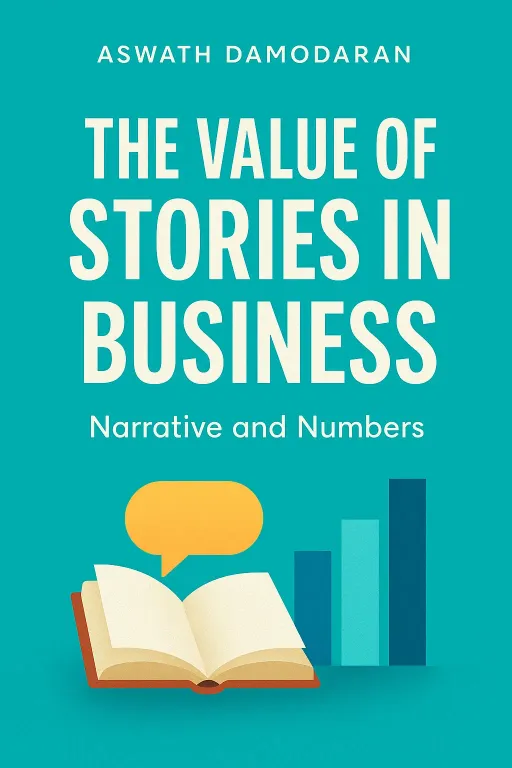
Nova: Precisely. We're diving into how to bridge that gap, drawing on insights from finance professor Aswath Damodaran, who argues that a business valuation is only as strong as the story behind the data, and Gabrielle Dolan, who gives us the practical framework to find and share those authentic stories that humanize brands and make data memorable.
Atlas: That sounds like exactly what a pragmatic visionary needs – clarity and impact. So, how do we actually make that happen? How do we stop being just math and start telling a compelling story?
The Narrative Imperative: Why Data Needs a Story
SECTION
Nova: That’s the million-dollar question, and Damodaran lays it out beautifully. Think about it this way: if you're presented with a pitch deck filled with impressive financial projections, growth charts, and market share percentages, but no context, no ‘why’ behind those numbers, what do you feel?
Atlas: Honestly? A bit lost. Impressed, maybe, but not convinced. It feels like reading a grocery list. I know the items, but I don't know what meal I'm making, or why I should care about this particular meal. It lacks purpose.
Nova: Exactly! And that’s Damodaran’s point. Numbers without narrative are just inert data points. They can be accurate, they can be impressive, but they don't connect. They don't persuade. They don't inspire action. They're just… math. It’s like having all the ingredients for a gourmet meal laid out, but no recipe, no chef’s passion, no story of where the ingredients came from or what culinary magic they’ll create.
Atlas: So, the numbers are the ingredients, and the narrative is the recipe and the chef’s story combined?
Nova: That’s a fantastic analogy, Atlas. And the reverse is also true: narrative without numbers is a fairy tale. You can have a beautiful, inspiring story about a company’s vision, its impact, its potential – but if you can’t ground that story in tangible, quantifiable reality, it remains just that – a hopeful fantasy. Investors, stakeholders, even your own team, need to see the concrete evidence that the dream is built on solid ground.
Atlas: Right. So, if I’m trying to build something, or get funding for a strategic initiative, just saying "we're going to revolutionize the market" isn't enough. I need to show the numbers support that revolution, and it's a revolution worth investing in.
Nova: Precisely. Damodaran’s work emphasizes that a business valuation, or any critical business decision, is only truly robust when it’s supported by a compelling narrative that explains those numbers matter for the company's future. It’s about translating abstract financial figures into a human-centric vision of progress. For instance, imagine a startup pitching for Series A funding. One pitch is purely data-driven: "Our Q3 revenue was up 40%, our customer acquisition cost is $50, and our lifetime value is $300, giving us a healthy payback period."
Atlas: Okay, I see the numbers. They’re good, probably. But I’m an investor. I’ve seen a thousand decks like that. What’s the story?
Nova: Now, imagine a second pitch. It starts with the numbers, yes, but it frames them. It says, "Last quarter, we grew revenue by 40%. But what that means is that 40% more small businesses, like 'Maria's Bakery' down the street, are now able to manage their inventory effortlessly, saving them an average of 10 hours a week. We used to spend $50 to acquire a customer, but we've refined our approach, and now, thanks to word-of-mouth referrals driven by customers like Maria, our acquisition cost is dropping, and we're projecting a $300 lifetime value per customer. This isn't just about numbers; it's about empowering entrepreneurs."
Atlas: Wow. Okay, that’s different. Suddenly, I’m not just looking at abstract growth. I’m seeing Maria’s bakery, I’m seeing saved time, I’m seeing empowerment. I understand the of that 40% growth. The numbers become the evidence for the story, not just the story itself.
Nova: Exactly! The numbers give the story credibility, and the story gives the numbers meaning. It’s that synergy that makes a pitch, a valuation, or any strategic argument truly persuasive and memorable. Without that narrative thread, the data can feel cold, disconnected, and frankly, a lot less impactful. It’s the difference between a financial report and a compelling vision statement backed by reality. It’s how you move from being just a set of financial statements to a dynamic, growing entity with a clear future.
The Craft of Connection: Finding and Telling Your Quantifiable Story
SECTION
Nova: So, we’ve established we need stories. But for many, especially those focused on strategy, building, or hitting those KPIs, the idea of ‘storytelling’ can feel a bit… fluffy. Like it’s for the marketing department, not for the pragmatic visionary. And that’s where Gabrielle Dolan’s work comes in. She provides the practical framework to find and share those authentic stories that humanize your brand and, crucially, make your data memorable.
Atlas: This is where I need help. I’m a builder. I’m a strategist. I’m focused on measurable progress. The idea of digging for ‘authentic stories’ feels like it could derail my focus from the actual numbers and deliverables. How do I find these stories without it feeling like a forced exercise?
Nova: That’s a common hurdle, and Dolan addresses it head-on by emphasizing authenticity. She argues that the best stories aren't invented; they are uncovered. They are already present in the data, in the interactions, in the challenges you’ve overcome. It’s about shifting your perspective to see the human element that lives within the metrics. Think about that "audit your next pitch" takeaway. It’s not asking you to invent a story, but to ask: does this metric matter for the company's future? What problem does it solve? Who does it help?
Atlas: So, it’s about connecting the dots between a number and a tangible outcome or impact?
Nova: Precisely. Let’s take a common business metric, like customer retention rate. A dry number might be: "Our customer retention rate is 85%." Now, that’s a good number, but what does it like? What’s the story behind that 85%? Dolan would encourage you to ask: What does that 85% represent? It represents 85% of people who found enough value, enough connection, enough problem-solving in your product or service to stick around.
Atlas: And the other 15%?
Nova: That’s also part of the story! Understanding why you lost 15% can be incredibly valuable. But for the 85%, perhaps the story is about a specific customer, let's call her Sarah, who was struggling with a recurring issue. Your support team, working tirelessly, not only fixed the technical glitch but also provided her with a workaround and dedicated training, turning her frustration into loyalty. That dedication, that problem-solving, that human touch – that's the narrative thread that explains Sarah, and thousands like her, stay.
Atlas: So, instead of just reporting "85% retention," I could say something like, "We're proud to maintain an 85% customer retention rate. This is a testament to our team's commitment, exemplified by stories like Sarah's, where dedicated support turned a potential churn into long-term partnership."
Nova: Exactly! You've just humanized a statistic. You've made it relatable. You've shown the behind the number, not just the number itself. Dolan’s framework often involves looking for moments of challenge, moments of success, moments of learning. These are the raw materials for authentic stories. She suggests simple techniques like asking your team about their most memorable customer interactions, or reflecting on the biggest challenges you’ve faced and how you navigated them.
Atlas: But what if I’m not a natural storyteller? I’m good with strategy, with execution, with building systems. The idea of crafting narratives feels outside my comfort zone. How do I bridge that gap to master this communication skill, which I know is vital for growth and influence?
Nova: That’s where the ‘pragmatic’ part of the ‘pragmatic visionary’ comes in. Dolan’s approach isn’t about becoming a Shakespearean playwright. It’s about finding the truth in your business and articulating it clearly. It starts with small, focused efforts. Remember that growth recommendation: 15 minutes daily for focused reading or reflection? You could use that time to jot down one observation about your work that highlights a human element or a problem solved.
Atlas: So, I could spend 15 minutes, not reading a dense finance report, but perhaps thinking about a specific client interaction this week and what made it successful, or what challenge we overcame. Then, how do I anchor that to a key data point?
Nova: You connect them. If you’re trying to communicate the value of your strategic planning service, and you spent 15 minutes reflecting on a client who was drowning in options but found clarity through your process, you then look for the data that supports that clarity. Perhaps it’s the reduction in project timelines, the increase in ROI on their initiatives post-planning, or simply their own feedback about feeling more in control and focused. You then weave that story of clarity and control into the data point. "We helped a client move from feeling overwhelmed by options to executing their vision with precision, resulting in a 20% faster project completion time and a significant boost in team morale."
Atlas: That makes it feel much more actionable. It’s not about inventing a grand tale, but about finding the genuine story that underlies the metrics, and then using that story to illuminate the data. It’s about making the ‘why’ behind the number crystal clear, which is essential for anyone trying to master their craft and communicate their vision effectively. This directly ties into building influence and achieving persuasive communication.
Synthesis & Takeaways
SECTION
Nova: And that, Atlas, is the beautiful synergy. Damodaran tells us the story is essential – it transforms sterile math into actionable insight and persuasive valuation. Dolan shows us to find and tell those stories authentically, humanizing brands and making data stick. The takeaway is clear: audit your next pitch, your next presentation, your next report. For every key metric you present, ask yourself: does it have a supporting narrative that explains that number matters for the company's future?
Atlas: And the advice is to use a personal anecdote, or a specific example, to anchor your most important data point. It’s not about making things up; it’s about finding the truth within the numbers and sharing it in a way that resonates. For someone like me, who is driven by progress and mastering their craft, this isn't just a communication technique; it’s a fundamental tool for effective leadership and strategic building. It provides that clarity I seek in a world of options.
Nova: Absolutely. It's about making your strategy tangible, your vision believable, and your impact undeniable. It’s about moving beyond just reporting facts to conveying meaning. Think about your daily growth practice – those 15 minutes. How can you use that time to actively look for these narrative anchors in your work? Perhaps by journaling one key interaction or one challenge overcome, and connecting it to a relevant metric.
Atlas: That’s a brilliant way to integrate it. It turns that 15 minutes from just reading into active observation and reflection, building that skill of finding the story. It’s about making progress not just in terms of numbers, but in terms of how effectively we communicate and influence. This really addresses the goal of persuasive communication head-on.
Nova: It does. Because ultimately, whether you're building a business, a career, or a movement, your ability to connect data with narrative is what makes your vision compelling, your progress understandable, and your impact lasting. It’s the art of making numbers not just seen, but felt and understood.
Atlas: So, the next time I’m looking at a spreadsheet, I won't just see rows and columns. I’ll be looking for the characters, the plot, the emotional arc that makes those numbers come alive. It’s about turning data into a dialogue, and that’s a powerful shift.
Nova: It truly is. It’s the difference between being heard and being understood, between presenting information and igniting inspiration.
Synthesis & Takeaways
SECTION
Nova: So, to wrap up, the core of our podcast today has been an exploration of how to transform raw data into compelling, actionable insights by grounding it in authentic storytelling. We’ve seen how Aswath Damodaran’s work highlights that numbers without narrative are just math, and Gabrielle Dolan’s provides the practical framework to find and share those stories that make your brand unforgettable and your data memorable.
Atlas: The key takeaway for all of us, the pragmatists, the builders, the communicators, is to audit our own communication. Does every key metric have a supporting narrative that explains that number matters for the company's future? And the actionable step? Use a personal anecdote, a specific example, to anchor your most important data point. It’s about making the data tell a story that resonates.
Nova: And for those of you looking to master this craft, remember that growth happens in small, consistent steps. Those 15 minutes daily you might dedicate to focused reading can also be repurposed for focused observation and reflection on the stories within your own work.
Atlas: It’s about building that muscle for persuasive communication, ensuring our visions are not just strategic, but also deeply understood and embraced. What’s one key metric you’re presenting soon? Can you identify the story that will bring it to life?
Nova: That’s the challenge for all of us. Keep seeking that clarity, keep building with purpose, and keep telling your quantifiable story.
Atlas: This has been incredibly insightful, Nova. I feel much better equipped to make my numbers sing.
Nova: And you will, Atlas.
Atlas: Thank you for joining us on this journey of growth.
Nova: Until next time.
Atlas: This is Aibrary. Congratulations on your growth!