The Art of Influence: Storytelling in Business
Golden Hook & Introduction
SECTION
Nova: What if the most powerful tool in your business arsenal isn't data, not strategy, but something as ancient as humanity itself? Something you've been doing since childhood.
Atlas: Whoa, are you talking about… finger painting? Because my quarterly reports could definitely use some more color. Or maybe interpretive dance for our next team meeting?
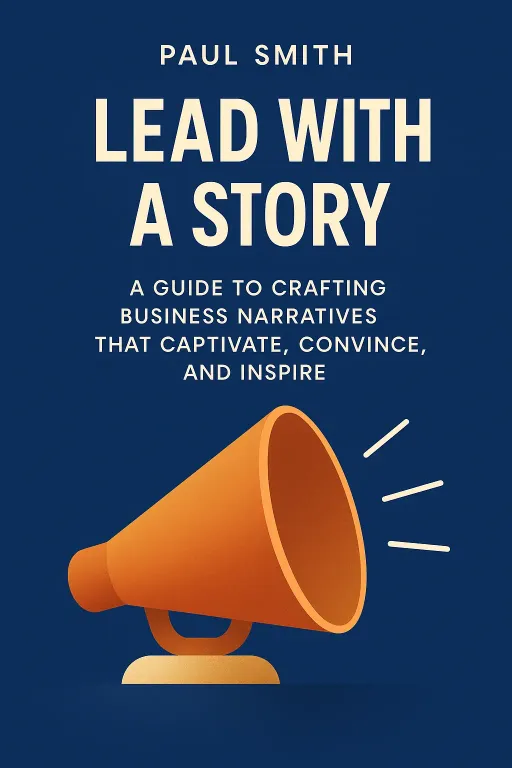
Nova: Close, Atlas, but even more fundamental! Today we're diving into "The Art of Influence: Storytelling in Business," drawing profound insights from two incredible works: Paul Smith's "Lead with a Story" and Gabrielle Dolan's "Stories for Work." Smith, for example, didn't just write a book based on theory; he meticulously researched of stories, from corporate boardrooms to battlefield narratives, to uncover the universal patterns that truly move people.
Atlas: Thousands? That sounds like a lot of bedtime reading. But I imagine a lot of our listeners, the pragmatic strategists and growth seekers, are wondering: how does telling stories actually help me hit my Q3 targets? Isn't business all about hard facts and figures?
Nova: That's the exact tension we're exploring! And it's a critical one for anyone in sales, marketing, or management. The truth is, while data provides the 'what,' stories provide the 'why' and the 'how,' making that data not just understood, but. And that's where we begin, with the undeniable evidence for why stories aren't just for campfires, but for boardrooms and crucial client presentations.
The Why & What of Business Storytelling
SECTION
Nova: So, let's start with Paul Smith's core premise from "Lead with a Story." He argues that in a world drowning in information, a well-told story cuts through the noise. It engages our brains differently. When we hear facts and figures, only two parts of our brain light up. But when we hear a story, our entire brain activates, including the sensory and motor cortices. We don't just process information; we it.
Atlas: Oh, I like that. So it's not just about conveying information, it's about creating an for the listener. That makes me wonder, how does that translate into tangible business results? Like, what's an archetype in a business context?
Nova: Exactly! Think of it this way: stories are the original virtual reality. And archetypes are the universal blueprints. Smith identifies 21 classic story archetypes – from "The Quest" to "Overcoming the Monster" to "Rebirth." These aren't just literary devices; they're psychological structures that resonate deeply because they tap into shared human experiences. For a business leader, understanding these archetypes means you can frame your message in a way that instinctively connects with your audience's deepest motivations.
Atlas: Okay, so you’re saying a manager trying to inspire a team through a tough quarter could tap into "The Quest" archetype? Like, "We're on a journey, there will be challenges, but the treasure at the end is..."?
Nova: Precisely! Let's take a hypothetical example. Imagine a tech company is facing a significant market shift. Their flagship product is losing ground, and morale is low. The CEO could stand up and just present slides full of declining revenue numbers and projected losses. Or, they could do what a smart leader, inspired by Smith, might do.
Atlas: Tell me the story.
Nova: The CEO, let's call her Sarah, stands before her team. Instead of starting with data, she begins by recounting a story from the company's early days. She talks about their first product launch – a chaotic, underfunded scramble where they faced seemingly insurmountable technical hurdles and skepticism from investors. She describes the late nights, the pizza boxes, the moment their lead engineer almost quit, and the unexpected breakthrough they had just days before their deadline. She paints a vivid picture of the sheer willpower and collaborative spirit that saved them.
Atlas: So, she's setting the stage, building that connection.
Nova: Exactly. She then pivots, saying, "That feeling? That challenge? We're facing a new version of it now. The market has changed, and yes, the numbers look tough. But this isn't about those numbers alone. This is about us, the same team that conquered that impossible first launch. This is our next quest, our next 'overcoming the monster.' We've done it before, by innovating, by trusting each other, by being agile. Our new product, 'Project Phoenix,' isn't just a response; it's our rebirth. And just like then, the solution isn't just in the code, but in our collective ingenuity and resilience."
Atlas: Wow. That gives me chills. That's a powerful way to frame a difficult situation. It transforms a threat into a shared mission, a call to adventure. The outcome there isn't just understanding the problem; it's generating renewed commitment, right? It builds trust because she's being vulnerable and honest about the past struggle.
Nova: Absolutely. The cause was declining morale and a difficult market. The process was invoking a "Quest" and "Rebirth" archetype through a personal, historical narrative. The outcome? A galvanized team, not just intellectually aware of the challenge, but emotionally invested in overcoming it. That's the power of storytelling in leadership – it transforms abstract problems into human dramas we want to see through to a successful conclusion.
The How of Authentic Business Storytelling
SECTION
Atlas: That's a fantastic example for inspiring a large group. But what about the everyday interactions? For our listeners who are in the trenches, doing sales pitches, negotiating contracts, or even just giving a presentation to a smaller team – how do they find their own stories? What if they don't feel like they have a "Quest" in their daily work?
Nova: That’s a brilliant question, and it's precisely where Gabrielle Dolan's "Stories for Work" comes in. Dolan shifts the focus from grand narratives to the power of. She emphasizes that you don't need to be a professional orator or have a dramatic, heroic tale. What you need are concise, personal, and relevant anecdotes that make your point memorable and build connection.
Atlas: So basically, you’re saying I don't need to be Gandalf leading a fellowship to Mordor every time I want to explain a new software feature?
Nova: Exactly! Dolan's approach is about making storytelling accessible. Her research shows that authenticity is key. People can spot a fake story a mile away. The power comes from sharing a genuine experience, however small, that illustrates your message. This fosters trust and makes complex information digestible. Think about it: our brains are hardwired for narrative. We remember stories far better than bullet points.
Atlas: I can definitely relate to that. I’ve sat through presentations where the data was all there, but it just washed over me. Then someone tells a quick, personal anecdote, and what sticks. How do you even start to craft one of these "everyday" stories?
Nova: Dolan suggests a few things. First, identify your key message. What's the one thing you want your audience to remember or do? Then, think about a time in your own experience – at work, or even outside of it, if relevant – where that message became clear to you, or where you saw it in action. It could be a moment of challenge, a small victory, a lesson learned, or an unexpected insight. The story doesn't have to be epic; it just needs to be true and illustrative.
Atlas: Like, if I'm trying to explain the importance of user feedback to a development team, I could share a story about a time I personally struggled with a product because it lacked a simple feature that users had been asking for?
Nova: That's a perfect example! Let's build on that. Imagine you're leading a product review meeting. You could present a slide with statistics showing low user engagement for a particular feature. Or, you could start by saying: "I was recently trying to book a flight for my vacation, and I ran into this frustrating loop on a travel site. I clicked 'next,' it refreshed, but didn't move forward. I tried three times, and then I just gave up and went to a competitor. It was a tiny bug, but it cost them a customer – me. And it reminded me exactly why our user feedback on the 'export' function, which shows similar friction points, is so critical right now. We're not just fixing code; we're preventing real-world frustration and lost business."
Atlas: Wow. That's so much more impactful than just saying "user engagement is down 15% on the export function." The personal experience makes it immediately relatable. The cause was a small bug, the process was sharing a personal struggle, and the outcome is a development team that understands the of their work, not just the technical one. That directly addresses clarity and trust, right?
Nova: Absolutely. It clarifies the 'why' behind the data, builds trust because you're sharing a genuine, even slightly vulnerable, experience, and it drives action because it connects the technical problem to a tangible, relatable pain point. Dolan emphasizes that these small, authentic stories are invaluable for presentations, negotiations—even performance reviews. They humanize communication and make abstract concepts concrete.
Atlas: I can totally see how this could build trust in a negotiation. Instead of just stating demands, sharing a concise story about a previous collaboration or a specific challenge could frame your position in a much more empathetic and persuasive way.
Nova: Precisely. It shifts the dynamic from a battle of wills to a shared understanding. And that brings us back to the "Tiny Step" and "Deep Question" from our listener profile. For your next important meeting or presentation, identify one key message and craft a concise, personal story around it. It doesn't have to be elaborate; it just needs to be true and illustrative.
Atlas: And that leads to the deeper question: How can I consistently weave authentic narratives into my professional interactions to enhance clarity, build trust, and drive action across my technology, business, and sales domains? It feels like this isn't just a trick, it's a fundamental shift in how you approach communication.
Synthesis & Takeaways
SECTION
Nova: It is, Atlas. It's about remembering that at the heart of every business interaction, there are people. And people respond to stories. Paul Smith gives us the universal structures, the archetypes that stir deep within us, allowing leaders to inspire and persuade on a grand scale. Gabrielle Dolan then grounds that, showing us how to apply the principle of authentic, personal storytelling in our daily interactions, making our communication more impactful and memorable, building clarity and trust.
Atlas: It’s fascinating how these two perspectives complement each other. One gives you the grand playbook, the other gives you the daily drills. It’s not about abandoning data; it’s about giving data a soul, a context, a human face.
Nova: Exactly. In a world saturated with information and data points, the ability to tell a compelling story is no longer a soft skill; it’s a strategic imperative. It’s what transforms information into insight, and insight into action. It's the difference between being heard and truly being understood and remembered. The real power is in making your message stick, fostering genuine engagement, and ultimately, driving the outcomes you desire.
Atlas: So, for our listeners who are ready to embrace this, what's the one thing they should do right after listening to this episode?
Nova: Take that tiny step. For your very next important meeting, presentation, or even just a difficult conversation, identify your core message. Then, spend five minutes thinking about a small, personal, authentic story from your own experience that illustrates that message. Practice telling it concisely. You'll be amazed at the difference it makes.
Atlas: That's a powerful challenge. And I imagine as you practice, it becomes second nature, transforming not just how you communicate, but how you connect.
Nova: Absolutely. It’s a journey, but one that yields incredible returns in clarity, trust, and influence.
Nova: This is Aibrary. Congratulations on your growth!