Beyond the Eggshells: A Protector's Guide to Reclaiming Your Peace
Golden Hook & Introduction
SECTION
Nova: Have you ever felt like you're navigating a minefield in your own home? Where one wrong step, one wrong word, could trigger an explosion you never saw coming? That feeling of constantly 'walking on eggshells' is exhausting, and for so many, it's a daily reality.
4ryy462bp9: It’s a feeling that drains you completely. You become so focused on managing the environment and the other person's emotions that you start to lose track of your own.
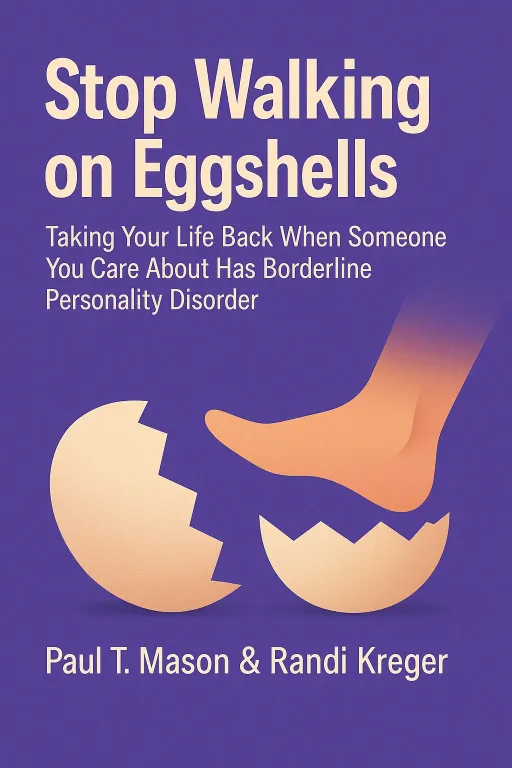
Nova: Exactly. And that's why we're so excited today. We're diving into the brilliant book, 'Stop Walking on Eggshells' by Paul Mason and Randi Kreger, to find a way out of that minefield. And I couldn't ask for a better person to explore this with than our guest, 4ryy462bp9. With over 15 years as an educator and a deep interest in emotional well-being, not to mention a self-professed 'Protector' personality, she brings such a unique and empathetic lens to this. Welcome!
4ryy462bp9: Thank you, Nova. It's a topic that I think resonates with so many people, especially those of us who are naturally drawn to caregiving roles.
Nova: I completely agree. So today, we'll tackle this from three angles. First, we'll step inside the emotional 'pressure cooker' to understand the 'why' behind these volatile behaviors. Then, we'll decode the confusing communication rules that make these relationships so challenging. And finally, and most importantly, we'll build a practical toolkit for taking your life back, with a special focus on those of us who are natural protectors.
Deep Dive into Core Topic 1: The Emotional Pressure Cooker
SECTION
Nova: So, 4ryy462bp9, let's start with that core feeling. The book describes people with Borderline Personality Disorder, or BPD, as being like someone with 'third-degree burns over 90% of their body.' The slightest touch, a casual comment, can feel like excruciating pain to them. What does that analogy bring up for you?
4ryy462bp9: It immediately creates a sense of empathy. It shifts the focus from 'this person is trying to hurt me' to 'this person is in immense pain.' As an educator, if a child is acting out, my first thought is always 'what's the pain behind this behavior?' That analogy brings the same perspective to an adult relationship. It doesn't excuse the behavior, but it helps to understand the source.
Nova: That’s a perfect way to put it. And that internal pain creates what the book calls a 'pressure cooker' for the people who love them. There's a story in the book about a man named Jon that just perfectly illustrates this. He described his courtship with his wife as a whirlwind romance, a total fantasy. She idolized him. But right after the wedding, a switch flipped.
4ryy462bp9: The classic bait-and-switch that so many people describe.
Nova: Exactly. Jon said his wife began criticizing him constantly, accusing him of wanting other women, and her moods would swing wildly. He said it was "heaven one minute, hell the next." He gives this one example that is just chilling. One day, his wife orders him to take the kids out because she needs time alone. He agrees, gets the keys, and as he's walking out the door, she suddenly screams at him, throws the car keys at his head, and accuses him of hating her and always wanting to leave her.
4ryy462bp9: Wow. The whiplash from that alone must be staggering.
Nova: Right? But here's the part that truly captures the 'eggshells' experience. When Jon and the kids come back a few hours later, his wife acts like absolutely nothing happened. She's cheerful, asks why he still seems upset, and accuses of holding onto anger.
4ryy462bp9: That story is so powerful because it captures the bewilderment. It's not just the anger; it's the complete disconnect from a shared reality that's so disorienting. As a 'Protector,' your instinct is to fix it, to find the right words to soothe the situation, to apologize even if you don't know what you did wrong. But this story shows that in that moment, there no right words. That's a terrifying realization.
Nova: It is. You're trying to solve a puzzle, but the pieces keep changing shape in your hands. And that leads us to one of the most mind-bending but crucial concepts in the book.
Deep Dive into Core Topic 2: Why Logic Fails
SECTION
Nova: The book explains that for a person with BPD, their internal world operates under a different rule: 'feelings create facts.' For most of us, facts inform our feelings. We see it's raining, so we feel a bit gloomy. For someone with BPD, the process is reversed. They feel an intense emotion, like rejection, and their mind unconsciously revises reality to justify that feeling.
4ryy462bp9: That's a huge lightbulb moment. It explains that feeling of being gaslit, where you start to question your own memory, your own sanity. It's not that they're necessarily 'lying' in the way we typically think of it. Their emotional reality is so powerful it literally rewrites the factual one.
Nova: Precisely. There's a story about a couple, Minuet and Will, that makes this crystal clear. Will, the husband, calls Minuet from work on a Friday and says, "Hey, I'm going to be a little late, I'm just having one beer with my colleagues." A perfectly normal situation.
4ryy462bp9: For most people, yes.
Nova: But Minuet, who has BPD, is instantly flooded with feelings of anxiety, jealousy, and abandonment. Her emotional mind screams, 'He's rejecting me!' But her logical mind needs a reason. So, her brain supplies one. The book says she unconsciously revises the facts. The thought process becomes: 'I feel this terrible, so he must be doing something terrible. He must have a drinking problem. He's a horrible person for choosing his friends over me.' When Will gets home, he's not walking into a discussion about being late; he's walking into an accusation of being a heartless alcoholic.
4ryy462bp9: That is fascinating and also heartbreaking. As an educator, it reminds me of how a young child's fear of a monster under the bed is completely real, regardless of the facts you present. The emotional truth overrides everything. The profound challenge here is that it's happening in an adult relationship, where you expect a shared foundation of reality to work from.
Nova: And our natural responses just make it worse. The book lists the 'Four Don'ts' when you're criticized like this: Don't Defend, Don't Deny, Don't Counterattack, and Don't Withdraw. But that's everything we're programmed to do! We want to say, "I don't have a drinking problem!" or "That's not what happened!"
4ryy462bp9: But you're not arguing against facts anymore. You're arguing against a feeling. And you can't win an argument with a feeling.
Nova: You can't. So if defending and denying doesn't work, what does? This is where the book shifts from just understanding to real, tangible action, and it's so empowering. It's about putting on your own oxygen mask first.
Deep Dive into Core Topic 3: The Protector's Toolkit
SECTION
4ryy462bp9: This is the part that I think gives people hope. It moves you from being a victim of the chaos to an agent of your own well-being.
Nova: Yes! The core message is: you cannot change the other person. You cannot cure them. You cannot force them into therapy. But you change the dynamic by changing your own actions. This starts with self-care and setting boundaries. The book calls it "detaching with love."
4ryy462bp9: I love that phrase. It's not "detaching with anger" or "detaching with indifference." It's an act of love, both for yourself and, in a way, for the other person, because it stops the toxic dance.
Nova: It really does. And the story of Sylvia and her adult son, John, shows this in action. For years, Sylvia's life revolved around John, who had BPD. She bailed him out of financial trouble, she let him live with her, she listened to his endless, raging tirades, and she blamed herself for his problems.
4ryy462bp9: She was the ultimate protector, but she was protecting him from the natural consequences of his own life, and it was destroying her.
Nova: It was. The turning point came when her husband had a heart attack, and she realized the stress was literally killing her family. She was losing herself, her marriage, everything. So, with the help of a therapist, she set new limits. She told John, "I love you, but I will no longer give you money, and I will hang up the phone if you start screaming at me."
4ryy462bp9: That must have been incredibly difficult. The fear of abandonment is so strong in BPD, he must have seen that as the ultimate rejection.
Nova: He did. He was furious and cut off all contact with his parents for three years. Sylvia was devastated, but she held her ground. And then, something amazing happened. After three years, John called. He had learned to manage his own life. He decided that a relationship with his parents that had limits was better than no relationship at all. Sylvia said she felt like a human being again, with her own goals and dreams.
4ryy462bp9: This is the heart of self-care, isn't it? It's not about being cold or selfish; it's about preserving yourself so you continue to love from a healthy place. The story of Sylvia is so hopeful because it shows that setting a boundary didn't destroy the relationship forever. It just made it healthier, even if it was strained. It forced John to grow, and it allowed Sylvia to live again. That's a powerful lesson for any 'Protector' to hear.
Synthesis & Takeaways
SECTION
Nova: It truly is. When we look back at our conversation today, it feels like a three-step journey. First, we have to develop empathy by understanding the intense pain that drives these behaviors—the 'third-degree burns.'
4ryy462bp9: Then, we have to become psychological detectives, decoding the alternate reality of 'feelings create facts' so we don't get lost in arguments that go nowhere.
Nova: And finally, the most crucial step: we build our own toolkit. We learn to detach with love and set firm, consistent boundaries, not to punish, but to protect our own peace.
4ryy462bp9: I think the book ultimately gives us permission. Permission to stop trying to be the perfect fixer, the one who can absorb all the pain and make it right. Instead, it gives us permission to become the faithful protector of our own peace, our own sanity.
Nova: Beautifully said. What's one final thought you'd like to leave our listeners with today?
4ryy462bp9: I think the most empowering thing is to realize you have choices. So maybe the question to leave with is: What is one small, non-negotiable boundary you can set this week, not for them, but for you? It could be as simple as 'I will not answer the phone after 10 p. m.' or 'I will take a walk by myself for 20 minutes every day.' It's a small step away from the eggshells and a small step back toward yourself.
Nova: A small step back toward yourself. I can't think of a better place to end. 4ryy462bp9, thank you so much for sharing your wisdom and insights with us today.
4ryy462bp9: It was my absolute pleasure, Nova. Thank you.