The Empathy Epidemic: Reclaiming Focus in a World of Distraction
Golden Hook & Introduction
SECTION
Atlas: Baraa, have you ever been in a room with someone you're caring for, physically present, but your mind is a million miles away—running through a checklist, worrying about the next task, feeling that pull from your phone?
Baraa: All the time. It’s a constant battle. You’re there, you’re doing the work, but part of your brain is already on the next three things. And there’s this wave of guilt that comes with it, you know? A feeling that you're not giving them your all.
Atlas: Exactly. That feeling. What if that feeling isn't a personal failure? What if your attention is being deliberately stolen?
Baraa: That’s… a provocative thought. I usually just blame myself for not being more disciplined.
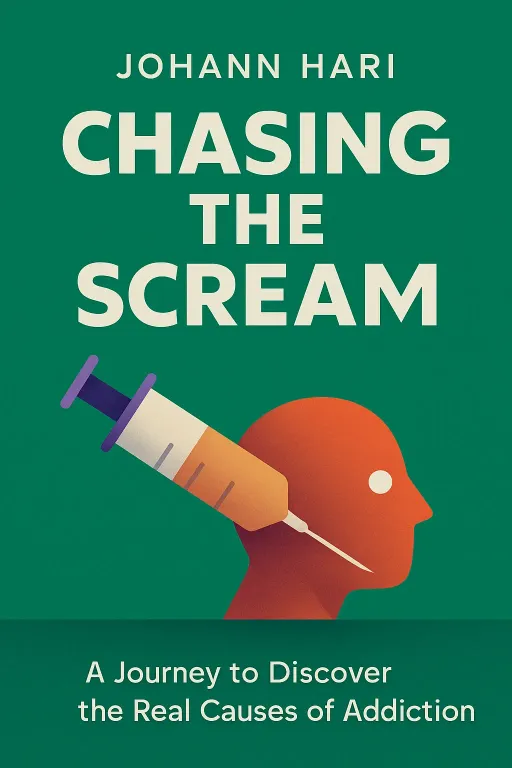
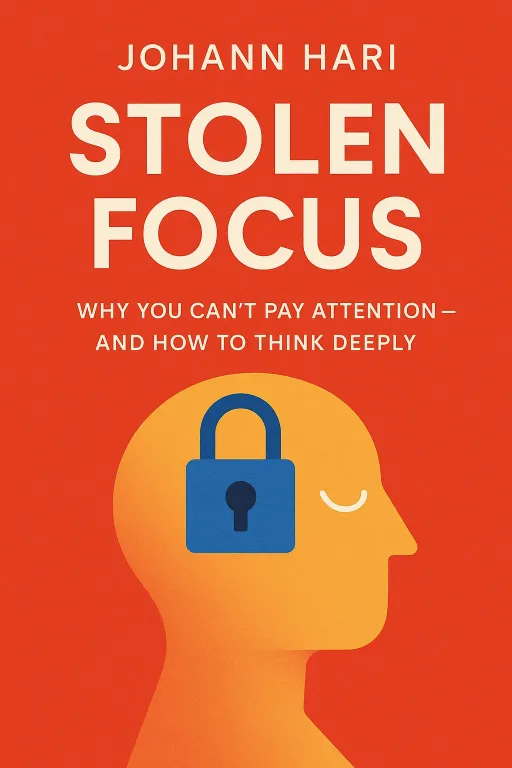
Atlas: Well, that's what we're tearing down today. In his book 'Stolen Focus,' Johann Hari argues that we're living through a massive crisis of attention, and it's not our fault. Today we'll dive deep into this from two powerful perspectives. First, we'll expose the great deception: the idea that your distraction is a personal failure.
Baraa: I’m already intrigued.
Atlas: Then, we'll uncover the biology of burnout, exploring exactly how stress steals your mind and your ability to be present for the people who need you most. Ready to jump in?
Baraa: Absolutely. Let's do it.
Deep Dive into Core Topic 1: The Great Deception
SECTION
Atlas: Alright. Let's start with that deception. Hari introduces this concept he calls 'cruel optimism.' It’s the idea that our culture sells us: "You can do it! Just try harder! Meditate! Download this focus app!" It tells us the power to focus is entirely within our individual control.
Baraa: Which sounds empowering on the surface. It’s the classic self-help message.
Atlas: It sounds empowering, but it's a trap. Because at the same time, we're living in an environment that is scientifically engineered to break our focus. Hari tells this incredible story about a guy named Nir Eyal. In the mid-2010s, Eyal wrote a book called 'Hooked,' which became a bible in Silicon Valley. It was literally a manual on how to design products—apps, websites, social media—to be as addictive as possible.
Baraa: So he taught them how to build the trap.
Atlas: He gave them the blueprint! Then, a few years later, as everyone is starting to freak out about digital addiction, what does Eyal do? He releases another book called 'Indistractable.' This one is for us, the users. And it’s all about how to build willpower, turn off notifications, and manage your own behavior to resist distraction.
Baraa: Wait. So the same person who taught companies how to addict us then wrote a book telling us it's our personal responsibility to not get addicted?
Atlas: That is the perfect summary. And that, right there, is cruel optimism in a nutshell. It places all the blame and responsibility on the individual, completely ignoring the multi-billion dollar industries designed to make you fail. It’s like teaching someone how to make super-addictive junk food and then shaming the public for being overweight.
Baraa: That resonates so deeply. In caregiving, and I think in healthcare generally, there's immense pressure to be empathetic and present 24/7. When you feel your focus slip, or you feel that compassion fatigue, the immediate reaction is guilt. You think, 'I'm not a good enough caregiver,' or 'I need to be stronger.'
Atlas: You blame yourself.
Baraa: Exactly. But what you're describing is that the system itself—the long hours, the emotional toll, the constant administrative burden, the understaffing—that system is the 'addictive app' in this scenario. It's designed for burnout.
Atlas: Yes! And Hari quotes someone in the book who says telling a stressed, overworked person to just 'meditate their way through it' is, and I'm quoting here, 'bullshit.' He says it’s advice that comes from a privileged position.
Baraa: It completely ignores the context. It's like telling a patient to just 'will themselves' to get better without addressing the root cause of their illness. As a caregiver, my job is to see the whole person, their environment, their support system. It seems we need to apply that same holistic diagnosis to our own well-being. It's not just about my personal mindset; it's about the ecosystem I'm operating in.
Atlas: That’s a perfect way to put it. It’s about the ecosystem. And that ecosystem doesn't just distract us. It actively wears us down.
Deep Dive into Core Topic 2: The Biology of Burnout
SECTION
Atlas: And that brings us to the most dangerous part of this system, especially for your line of work, Baraa. It's not just about the pings and notifications. It's about stress. Hari argues that stress is a direct, physical attack on your ability to think.
Baraa: I believe that. You can feel it. A kind of mental fog on a really tough day.
Atlas: You can feel it, and scientists have measured it. Hari tells one of the most powerful stories in the book about a study on sugarcane harvesters in India. Picture this: these are some of the poorest people on the planet. They get paid only once a year, right after the harvest. So for most of the year, they are in extreme financial distress. They're borrowing money, worrying about food, just barely surviving.
Baraa: A state of constant, chronic stress.
Atlas: Exactly. So a team of researchers, led by Sendhil Mullainathan, had a brilliant idea. They decided to give the farmers standard IQ tests at two different times of the year: once right before the harvest, when they were broke and stressed out of their minds, and again right after the harvest, when they had been paid and had a cushion of money.
Baraa: Okay, I'm fascinated to hear the results.
Atlas: The results are staggering. After the harvest, when the financial stress was gone, the farmers scored, on average, thirteen IQ points higher.
Baraa: Thirteen points? That's... that's a huge difference. That's the difference between being classified as 'average' and 'superior' intelligence, or 'average' and 'borderline deficient.'
Atlas: An extraordinary gap! And Hari is very clear: this has nothing to do with them actually being more or less intelligent. It's about cognitive capacity. It's about mental bandwidth. When your brain is consumed with worry—'How will I feed my kids? How will I pay my debt?'—it literally has less room for anything else. Less room for problem-solving, for planning, for focus. That state of constant alert is called hypervigilance.
Baraa: Wow. That is an incredible story. It puts a number on a feeling we see all the time in our patients. We call it 'brain fog' or 'chemo brain' in people under extreme physical or emotional stress. Their world shrinks to just surviving the next moment. But I've never thought about it as a measurable drop in cognitive function like that. It's not that they're less intelligent; their brain is just... full.
Atlas: Full. Exactly. And Hari's core point is that a brain in that state of hypervigilance focus. It cannot plan for the long-term. It cannot access deep empathy. He says, and this is so critical, "you need to feel safe to concentrate." Your brain's threat-detection system has to be switched off before it can allocate resources to higher-level thinking.
Baraa: And that's the paradox of caregiving, isn't it? Our entire job is to create a sense of safety for others. But the environment itself often puts us in a state of hypervigilance. We're constantly monitoring vital signs, listening for alarms, anticipating a patient's needs, watching for the risk of a fall. We are trying to give away a feeling of safety that we ourselves often don't have.
Atlas: You're running that threat-detection software all day long.
Baraa: All day. So of course your brain is 'full.' No wonder empathy can feel like a finite resource some days. It’s not a moral failing; it's a biological reality. My brain is using all its bandwidth just scanning for threats, and there's not much left for that deep, present connection. That study just gave me a whole new language for it.
Synthesis & Takeaways
SECTION
Atlas: So let's tie these two powerful ideas together. On one hand, we have a culture of 'cruel optimism' that relentlessly blames you for being distracted. On the other, we have high-stress environments—in your work, and in modern life generally—that biologically make it almost impossible to focus. It's a perfect storm for burnout.
Baraa: It completely reframes the entire conversation. It moves it from 'What's wrong with me?' to 'What is being done to me?'. And I think, more importantly, it opens the door to asking, 'What can we do about it?'. The theme we talked about, 'Sharing is caring,' feels different now. It's not just about sharing our empathy with a patient. It's about sharing the awareness of this problem with our colleagues, our managers, our friends, so we can collectively try to build a more caring, less frantic environment for everyone.
Atlas: I love that. It's about caring for the caregivers, too. It's about building what Hari calls 'Stadium Lights'—a collective awareness, seeing we're all in this together.
Baraa: Yes. Because when you realize the problem is systemic, you realize the solution has to be systemic, too. Or at least, it has to start with us protecting each other.
Atlas: Perfectly said. So the final question for everyone listening, inspired by your work, Baraa, is this: How can you create one small 'zone of safety' for your own attention this week? Not a huge life change, not a dramatic digital detox, but one small, achievable boundary.
Baraa: Maybe it's taking a real 15-minute break without your phone. Or deciding not to check work emails after a certain hour. Something that tells your brain, 'You can stand down. The threat level is zero right now.'
Atlas: Exactly. Because as Johann Hari's work shows us, protecting your focus isn't selfish. It's the essential first step to being truly present for the people you care about most. Baraa, thank you for bringing such a powerful and empathetic perspective to this.
Baraa: Thank you, Atlas. This has given me so much to think about. It feels like a weight has been lifted.