Commanding the Room with Executive Presence
Golden Hook & Introduction
SECTION
Nova: Did you know the first seven seconds of any presentation can determine its entire outcome? Before you even utter a word.
Atlas: Seven seconds? That's less time than it takes to find my coffee mug in the morning! So, how do we win that crucial first impression?
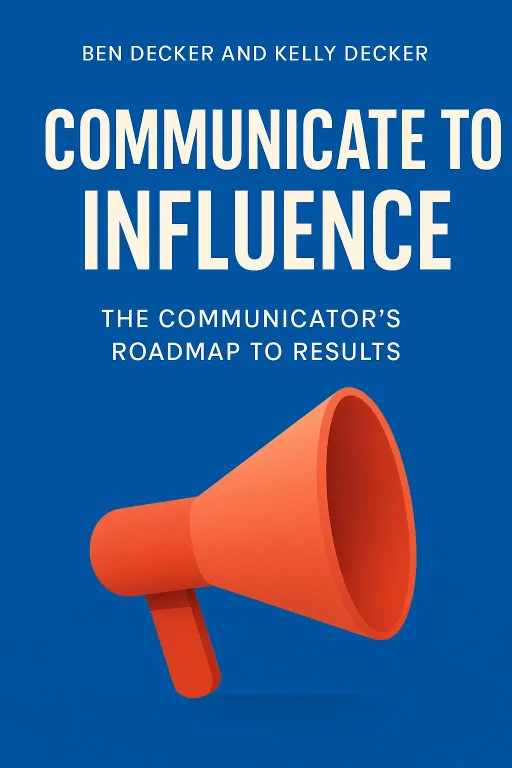
Nova: Exactly! And that’s just one piece of the puzzle we’re unpacking today. We’re diving into how powerful communication goes beyond just you say, into to the listener. We're pulling insights from Ben Decker and Kelly Decker's "Communicate to Influence," and Suzanne Bates' "Speak Like a CEO."
Atlas: So, it's about crafting an experience, not just delivering data. And then backing that up with that elusive 'Executive Presence.' Sounds like a potent combination for anyone looking to make a real impact.
Nova: Precisely. Bates, a renowned executive coach who has advised top CEOs, and the Deckers, who focus on forging deeper connections, offer us a roadmap. Today, we'll explore how to move from information dump to emotional resonance, and how to project confidence before you even open your mouth.
Atlas: Alright, I'm ready to learn how to communicate to influence speak like a CEO. Let's start with this 'experience' idea. It sounds like a big shift from just reciting facts.
The Experiential Nature of Communication
SECTION
Nova: It absolutely is. The Decker siblings, in "Communicate to Influence," make a compelling case that we often get stuck in an 'information dump' mode. We’re so focused on delivering all the data, all the bullet points, that we forget the human element. The core of their argument is that communication is not merely about transmitting information; it's about orchestrating an for the listener.
Atlas: An experience. That’s a powerful word. So, it’s not just about being understood, but about how the audience after engaging with your message?
Nova: Precisely. Think about it like this: you can read a recipe, which is pure information, or you can watch a master chef create a dish, feeling the passion, seeing the artistry, smelling the aromas. The recipe gives you instructions; the chef’s performance gives you inspiration and makes you the final product. The Deckers argue that leaders need to move from being recipe readers to being culinary artists of their message.
Atlas: I can see that. For someone focused on strategy and marketing impact, as many of our listeners are, that distinction is critical. If I'm presenting a new business strategy, just listing the market analyses and financial projections feels like a recipe. But if I can make people the excitement of that future market position, the of our new campaign… that’s a whole different ballgame, isn’t it?
Nova: Absolutely. It's about tapping into emotions, creating resonance. When you shift from 'here's the data' to 'imagine this future,' you're not just informing; you're inspiring. You're building a connection that makes people more receptive, more engaged, and ultimately, more likely to act. It’s about creating a memorable impression that sticks long after the facts have faded.
Atlas: So, what does a failed 'information dump' look like in practice? And what's a successful 'experiential' communication? Give us a stark contrast.
Nova: Imagine a CEO presenting quarterly results. The 'information dump' CEO stands at a podium, clicks through dozens of slides filled with charts and numbers, rattles off figures, and announces, 'Revenue is up 5%, net profit is down 2%.' It's factual, but it's dry. The listener might feel overwhelmed, bored, or even anxious about the profit dip, but they don't feel to the company's journey or motivated to change anything.
Atlas: Right, just a bunch of numbers on a screen. It’s hard to get invested in that.
Nova: Now, imagine a CEO who approaches it differently. They might start with a brief, compelling story about a customer whose problem was solved by the company's product or service that quarter – a story that evokes empathy. They'd use visuals that tell a story, not just display data. They might say, 'We saw a 5% increase in revenue, which means we were able to reach thousands more customers like Sarah, who finally found the solution she desperately needed. While our profit margin saw a slight adjustment due to reinvestment in innovation, that reinvestment is paving the way for even bigger breakthroughs next quarter.'
Atlas: Oh, I see the difference. The second CEO isn't just reporting numbers; they're weaving a narrative. They're showing the of the numbers, the human element behind the balance sheet. It makes me feel something for Sarah, for the company's mission. It makes me want to be part of that breakthrough.
Nova: Exactly! That’s the experiential shift. It’s about making your audience feel like they are part of a journey, a vision, or a solution, rather than just passive recipients of facts. This emotional connection is what truly influences and inspires action, which is paramount for anyone aiming for significant growth in their business strategy or marketing impact. It’s not just about sharing knowledge; it’s about sharing a feeling that drives progress.
Cultivating Executive Presence
SECTION
Atlas: That emotional connection is powerful. But you mentioned a second crucial element: 'Executive Presence.' How does that tie into crafting an experience, and for someone like the Focused Achiever, who's driven by tangible results and execution, how do we make time for something that sounds so… intangible?
Nova: That's where Suzanne Bates' work in "Speak Like a CEO" becomes incredibly valuable. She defines Executive Presence not as a single trait, but as a combination of three core pillars: substance, style, and character. It’s the whole package that makes people trust and follow you.
Atlas: Substance, style, and character. Okay, substance is pretty straightforward – it's what you know, your expertise, your competence. But style and character… that’s where it gets a bit more nuanced, especially when you're laser-focused on strategy and implementation. How do those play in?
Nova: Substance is your foundation – you need to know your stuff. Style is how you present yourself and your ideas. This includes your verbal communication, your non-verbal cues, your confidence, how you handle pressure. It’s the polish, the delivery. Character, on the other hand, is about your integrity, your authenticity, your values, your empathy. It’s who you are at your core. Bates emphasizes that all three must be in alignment for true executive presence to shine through.
Atlas: So, it's like a three-legged stool. If one leg is wobbly, the whole thing can fall over. For the 'Focused Achiever,' substance is often the primary focus. But Bates suggests that without the right style and character, that substance might not be heard or respected. Is that right?
Nova: Precisely. You could have brilliant ideas, the sharpest strategy, the most innovative marketing plan – that’s substance. But if your delivery is hesitant, your body language is closed off, or your integrity is questioned, your message won't land with the impact it deserves. People won't trust you, they won't buy into your vision, and your drive for growth will hit a ceiling.
Atlas: That makes sense. And this is where that 'First 7 Seconds' rule comes in, right? It’s all about the immediate projection of confidence before you even speak.
Nova: Exactly! The 'First 7 Seconds' rule is a brilliant, actionable takeaway from the world of executive presence. It states that before you even say your first word in a presentation or important meeting, your posture and eye contact should already be conveying confidence. This isn't about arrogance; it's about projecting competence and self-assurance.
Atlas: So, what does that look like? Is it standing up straight? Making direct eye contact? What are the non-verbal signals we should be sending?
Nova: It’s absolutely about standing tall, shoulders back, head held high – not rigidly, but with a sense of presence. It’s about making deliberate eye contact with individuals in the room, conveying that you see them and are ready to engage. It’s about having a calm, grounded stance. These signals communicate that you are in control, that you are prepared, and that you are confident in your message. It sets a positive tone before you even start speaking, making your audience more receptive to your substance.
Atlas: I can picture it. It’s that instant feeling you get when someone walks into a room – do they command attention, or do they shrink into the background? And you’re saying we can actively cultivate that initial impression?
Nova: Yes, and it’s surprisingly effective. Think about the inverse: someone walks in hunched over, looking at their shoes, avoiding eye contact. What impression does that give? It suggests uncertainty, perhaps a lack of preparation, or even a lack of respect for the situation. That’s a hard hurdle to overcome, no matter how brilliant your subsequent points are.
Atlas: It is. And this is a challenge in our increasingly remote world, isn't it? When we're on Zoom, much of that physical presence is diminished. How do we translate that 'First 7 Seconds' rule and overall executive presence into a digital space?
Nova: That’s a great question, Atlas, and it requires intentionality. On Zoom, your 'presence' is projected through your framing – are you centered? Is your background professional and uncluttered? It’s about your vocal delivery – speaking clearly, varying your tone, and projecting energy. And critically, it's about intentional eye contact with the camera, which simulates direct eye contact with your audience. Even in a digital space, the principles of substance, style, and character still apply, and the initial moments are crucial for establishing credibility.
Atlas: So, it’s about being deliberate with every aspect of your presentation, whether in person or online. It’s not just about having the strategy or the marketing idea, but about you present yourself as the architect of that strategy or idea. It’s about building trust and receptiveness from the very first second.
Nova: Exactly. When you combine the experiential approach to communication with a strong sense of executive presence – grounded in substance, polished by style, and anchored by character – you create a powerful synergy. You’re not just conveying information; you’re building trust, inspiring confidence, and making a lasting impression that drives influence and achievement. It’s the complete package for making your strategic vision a reality and amplifying your marketing impact.
Synthesis & Takeaways
SECTION
Nova: So, we’ve journeyed from the idea that communication is an art of experience, not just an act of information transfer, to understanding how executive presence – that blend of substance, style, and character – is the vehicle that delivers that experience effectively.
Atlas: And the practical takeaway is incredibly potent: the 'First 7 Seconds' rule. It’s a tangible way to start building that executive presence, to convey confidence before you even speak. For the Focused Achiever, this isn't about vanity; it's about efficiency. Projecting confidence upfront can make your subsequent strategic discussions, your marketing pitches, and your implementation plans land with far greater impact and receptivity. It unlocks more time and energy for what truly matters by getting buy-in faster.
Nova: That’s a perfect synthesis, Atlas. It’s about understanding that how you show up is as critical as what you bring to the table. The Decker siblings remind us to connect emotionally, and Suzanne Bates shows us the framework for projecting that connection credibly. When these two concepts merge, you move from merely communicating to truly influencing.
Atlas: It’s a profound insight. The journey to growth isn't just about acquiring knowledge, but about mastering how we present that knowledge and ourselves. Practicing that deliberate posture and eye contact in the first seven seconds is a small action, but it builds momentum. It’s a consistent step forward that truly counts towards making a significant impact.
Nova: Absolutely. It’s about being intentional. Being present. And making sure your audience experiences the full value of your substance, amplified by your style and character. It’s the foundation for commanding any room, whether it’s a boardroom or a virtual meeting.
Atlas: So, for our listeners aiming for growth in business strategy, marketing impact, and personal productivity, start with those first seven seconds. Be mindful, be confident, and let your presence amplify your message.
Nova: This has been a fantastic exploration into making our communication more impactful and our leadership more resonant.
Atlas: And that’s how you truly communicate to influence and speak like a CEO.
Nova: This is Nova.
Atlas: And this is Atlas.
Nova: This is Aibrary.
Atlas: Congratulations on your growth!