The Skincare Code: Beyond the Hype with Caroline Hirons' Playbook
Golden Hook & Introduction
SECTION
Prof. Eleanor Hart: Shayma, have you ever stood in front of your bathroom mirror, looking at a ridiculously expensive serum that promised to change your life, and just thought... 'Why isn't this working?' You've followed all the steps, you've been consistent, but the results are... underwhelming.
Shayma: All the time, Eleanor. It’s that feeling of being completely lost in a sea of information. You feel like you're doing everything right, but you're not getting the promised outcome, and you start to wonder if the problem is you, or the product.
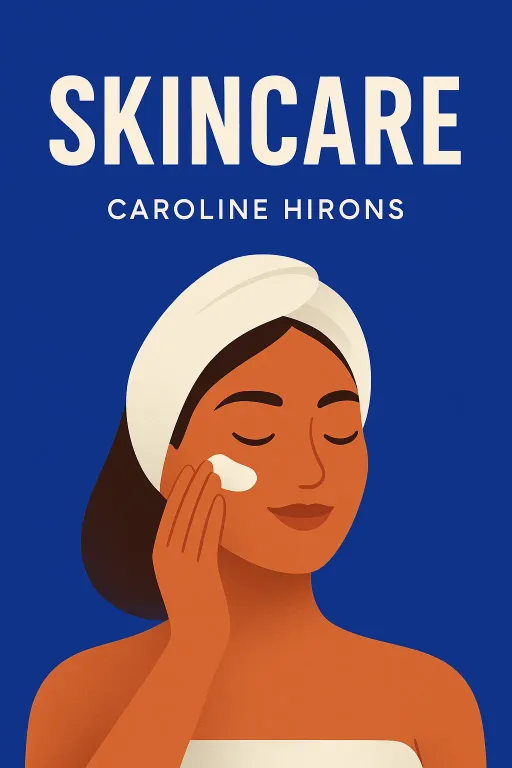
Prof. Eleanor Hart: Exactly. It’s a frustration millions of us feel, and it’s born from an industry that, as skincare guru Caroline Hirons says in her brilliant book, 'Skincare,' "makes a lot of money by confusing you."
Shayma: I love that directness. It’s so true.
Prof. Eleanor Hart: But today, we're fighting back with knowledge. Using Hirons' book as our guide, we'll dive deep into this from two perspectives. First, we'll establish the simple, unshakeable logic of a truly effective skincare routine. Then, we’ll put on our detective hats and learn to decode the marketing myths and ingredient list lies that cause so much confusion and wasted money. By the end, you'll never look at a bottle of lotion the same way again.
Shayma: I’m ready. Let’s crack the code.
Deep Dive into Core Topic 1: The Unbreakable Rules of Routine: Protect vs. Repair
SECTION
Prof. Eleanor Hart: So let's start with the foundation. Hirons argues that before we even think about specific products, we need to understand the of our routine. She boils it down to a simple, elegant mantra: 'AM is for Protect, PM is for Treat and Repair'.
Shayma: That already simplifies things so much. It gives every step a clear job.
Prof. Eleanor Hart: It really does. In the morning, your skin is going into battle against the world—UV rays, pollution, stress. So, your AM routine is its armor. This is where you use antioxidants and, most importantly, a dedicated, high-factor SPF. The evening, on the other hand, is when your skin is at rest, not fighting off aggressors. Hirons says this is when your skin gives you its 'full attention'. That's the time for the 'treat and repair' stage—using active ingredients like retinoids or exfoliating acids that work to correct and regenerate.
Shayma: So it’s a strategic approach. You’re not just throwing products at your face; you’re aligning your actions with your skin’s natural state throughout the day. Defensive in the morning, offensive at night.
Prof. Eleanor Hart: Precisely. And the most critical part of that nighttime, repair-focused routine is something Hirons is famous for championing: the double cleanse. This is especially true if you wear makeup or, crucially, SPF.
Shayma: I’ve heard about this, but I’ve always wondered if it was just a way to sell more cleanser.
Prof. Eleanor Hart: That's what a skeptic would think! But Hirons provides a compelling case. She tells a story that so many can relate to, what I call 'The Case of the SPF Breakout.' A person is convinced they are allergic to their sunscreen. Every time they wear it, they break out. They try different brands, different formulas, but the result is the same. They conclude, 'My skin just hates SPF.'
Shayma: I know people like that. They just give up on sunscreen because of it.
Prof. Eleanor Hart: But Hirons reveals the real culprit is almost never an allergy. It's a removal failure. Sunscreen and modern makeup are formulated to. They have ingredients that make them adhere to the skin. A single, quick wash with a foaming cleanser simply doesn't have the power to break them down fully.
Shayma: Ah, so you’re left with a thin film of residue. And if you apply your expensive nighttime repair serum on top of that...
Prof. Eleanor Hart: You're essentially just moisturizing your leftover SPF! Hirons says it's like trying to paint a masterpiece on a dirty canvas. The treatment products can't penetrate, and the leftover grime clogs your pores, leading to breakouts. The problem wasn't the SPF; it was the cleansing method.
Shayma: That’s a total lightbulb moment. It reframes the problem from 'my skin is reacting' to 'my process is flawed.' And it makes perfect sense from a basic chemistry perspective. The first cleanse, usually an oil or balm, acts as a solvent. It’s designed to dissolve other oil-based substances like makeup and sunscreen. The second cleanse, maybe a milk or gel, is the surfactant that actually washes the skin itself.
Prof. Eleanor Hart: Exactly! It’s a two-step chemical process. Hirons even draws a parallel to Old Hollywood stars who would use grease or cold cream to dissolve heavy stage makeup, and only then wash their faces with soap and water. It's the same logic.
Shayma: That analytical clarity is so much more helpful than just a rule like 'wash your face twice.' When you understand the —the science of solvents and surfactants—the habit sticks. It’s not a chore; it’s a necessary procedure.
Deep Dive into Core Topic 2: Decoding the Label: The Lies the Beauty Industry Tells You
SECTION
Prof. Eleanor Hart: And that analytical clarity, Shayma, is the perfect bridge to our second topic. Because once you have the right routine, you face the minefield of choosing the right products. This is where Hirons really shines, by exposing the marketing language designed to confuse us.
Shayma: The battlefield of buzzwords. 'Clean,' 'Natural,' 'Non-Comedogenic.' They're everywhere.
Prof. Eleanor Hart: And most of them are meaningless. Let's start with 'natural.' Hirons has this hilarious, and frankly, terrifying, example. She says because there is no legal or industry standard for the term 'natural,' she could theoretically take a cup of glue, spit a bit of aloe vera juice into it, mix it up, and legally label that product 'made with natural ingredients.'
Shayma: That's horrifying. But it perfectly illustrates the point. It's a textbook 'appeal to nature' fallacy. Our brains have a cognitive shortcut that equates 'natural' with 'safe' or 'better,' and the industry exploits that without any regulatory oversight.
Prof. Eleanor Hart: Completely. It's a marketing term, not a scientific one. But it gets even more insidious. Let's talk about a practice called 'angel dusting.'
Shayma: I'm almost afraid to ask.
Prof. Eleanor Hart: Imagine you see a new serum that proudly proclaims it has '25 Active Ingredients!' You think, 'Wow, this must be incredibly powerful.' The brand is counting on that reaction. 'Angel dusting,' Hirons explains, is when they add a minuscule, completely ineffective amount of an active ingredient—a mere sprinkle—just so they can legally list it on the label and use it in their marketing.
Shayma: So they're selling you the of the ingredient, not the actual benefit of it.
Prof. Eleanor Hart: Precisely. And Hirons gives us the detective tool to spot this. Ingredient lists, by law, must be in descending order of concentration. But that rule only applies down to 1%. After the 1% mark, brands can list the remaining trace ingredients in any order they want.
Shayma: So how do you find that 1% line?
Prof. Eleanor Hart: You look for the preservatives. Common ones like Phenoxyethanol are almost always used at a concentration of 1% or less. So, when you're reading an ingredient list, find the preservative. Any of those fancy 'actives' listed it are likely just 'angel dust'—present in such tiny amounts that they're doing absolutely nothing.
Shayma: That is a brilliant, practical tool for any analytical consumer. It cuts right through the marketing story. It also plays on our 'more is better' bias. Seeing '25 Actives!' feels impressive, but it's meaningless without concentration data. It's like a recipe that lists 25 exotic spices but only calls for a single grain of each. The final dish won't taste of anything.
Prof. Eleanor Hart: What a perfect analogy. And she applies the same sharp-eyed skepticism to the term 'non-comedogenic,' which supposedly means 'won't clog pores.' She notes that it’s based on outdated, unreliable tests. She shares that for her personally, lanolin—an ingredient often on 'do not use' lists for acne-prone skin—gives her huge whiteheads within hours. It proves that what clogs one person's pores is completely unique to their own skin chemistry.
Shayma: Of course. Our skin's microbiome and oil composition are as individual as our fingerprints. The idea of a universal 'won't clog pores' list is scientifically improbable. It should really be labeled 'less likely to clog pores for the average person in our very limited test group.'
Prof. Eleanor Hart: Exactly. It’s a rough guide at best, not a guarantee.
Synthesis & Takeaways
SECTION
Prof. Eleanor Hart: So, as we draw to a close, we've really seen two sides of the skincare coin today. First, the simple, powerful logic of a 'Protect and Repair' routine, anchored by a proper double cleanse. And second, the critical need to become a skincare detective, ignoring the marketing hype and learning to read the label for what it truly is.
Shayma: The big takeaway for me is about a fundamental shift in mindset, from being a passive consumer to an active investigator. The power isn't in the product's price tag or its beautiful packaging; it's in your knowledge. Understanding the of cleansing and the of marketing is far more valuable than any single 'miracle' cream.
Prof. Eleanor Hart: Beautifully put. It's about reclaiming your power in an industry that profits from your confusion. So, for our listeners, here's the challenge from Caroline Hirons' playbook: go to your bathroom shelf. Pick one product you love, or one you were disappointed by, and read the ingredient list.
Shayma: Find that preservative. See what 'actives' come after it.
Prof. Eleanor Hart: And ask yourself: are you paying for a formula, or are you paying for a story? It’s a small step, a small question, but it can change everything about how you care for your skin.
Shayma: A fantastic, empowering place to end.