The Psychology of the Pedestal: Unmasking the Narcissistic Brand
Golden Hook & Introduction
SECTION
Socrates: If a scorpion asks a swan for a ride across a wide river, promising not to sting because they would both drown, why does the swan agree, only to get stung anyway? Is it simple foolishness, or is it the power of a perfectly crafted pitch?
Flavia353: It is the ultimate pitch, Socrates. The scorpion doesn't just ask; he flatters. He targets the swan's identity as a benevolent, beautiful helper. As a marketing graduate, I look at that fable and see a masterclass in deceptive branding. The scorpion sells an illusion of safety, and the swan invests her trust based on that curated image rather than the scorpion's inherent nature.
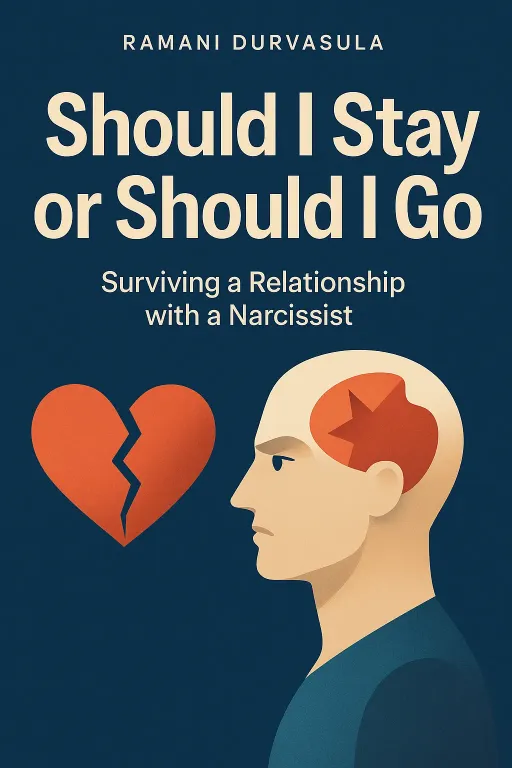
Socrates: A curated image indeed. But what happens when the brand we buy into in our personal lives turns out to be entirely hollow? Today, we are diving deep into Dr. Ramani Durvasula's clinical landmark,. We are going to tackle this book from three distinct, analytical angles. First, we will dissect the seductive personal branding of the narcissist and how they pitch themselves to us. Second, we will analyze the behavioral traps—like intermittent reinforcement and the rescue fantasy—that keep us investing in a failing asset. And finally, we will map out the strategic blueprint for leaving, exploring the profound systemic healing that occurs when we remove toxic forces from our lives. Flavia, when you read Dr. Ramani's analysis of how these relationships begin, what struck you about the initial alignment between the narcissist and their target?
Flavia353: It’s all about the positioning. Dr. Ramani points out that narcissists are expert showmen. They don't just enter your life; they launch themselves. They use what she calls the three C's: Charisma, Charm, and Confidence. To an analytical mind, or someone looking for stability and excitement, this looks like a high-value partnership. It’s a premium brand launch, but without the product depth to back it up.
Deep Dive into Core Topic 1
SECTION
Socrates: A premium launch with no product depth. How does that discrepancy manifest in the early stages of a relationship? Why do we ignore the warning signs?
Flavia353: Because the marketing is so good! Think about the case study Dr. Ramani shares of Rachel and John. Rachel was a highly successful marketing executive—someone trained to analyze data and see through spin. Yet, she fell hard for John, a handsome, charismatic physician. On paper, John’s brand was flawless. He was successful, attentive, and made grand gestures. But the red flags were there within the first three months. For instance, Rachel found a receipt from a bar on a night John claimed to be on call at the hospital. When she confronted him, he didn't apologize or explain calmly. He exploded into a rage, turning the accusation back on her.
Socrates: Ah, the classic pivot. Instead of addressing the data, they attack the analyst. Why did Rachel stay after such a glaring anomaly?
Flavia353: It’s what we call brand loyalty overriding product performance. Rachel's mother had told her to hold on to John because he would give her a good life—he had a steady job, he was handsome, he was fun. Societal expectations and external validation acted like positive reviews for a faulty product. Rachel silenced her own instincts because she wanted the lifestyle and the image John projected. She rationalized his neglect, telling herself, "You can’t expect someone to be Mr. Sunshine every day, right?" She was playing armchair psychologist, making excuses to protect the brand image she had invested in.
Socrates: We protect the image to avoid admitting the investment was a mistake. But Dr. Ramani mentions a modern amplifier of this phenomenon. She calls social media the "mothership" of the narcissist. How does that fit into this branding strategy?
Flavia353: Oh, social media is the ultimate tool for curated reality. Dr. Ramani explains that narcissism is fundamentally a disorder of superficiality and self-esteem. The narcissist needs constant validation—what clinicians call "narcissistic supply." Social media acts as a highly efficient distribution channel for this supply. They post the perfect vacation photos, the lavish dinners, the edited highlights of their relationship. For the partner, this creates a double bind. You are living in a cold, neglectful reality behind closed doors, but online, you are part of a highly envied, sparkling brand. It makes you feel like you're losing your mind because the public narrative is so vastly different from your private experience.
Socrates: A sparkling brand on the outside, but a hollow core. If the product is consistently failing to deliver empathy, why does the consumer keep paying the price of admission?
Deep Dive into Core Topic 2
SECTION
Flavia353: That brings us directly to the behavioral economics of toxic relationships. Why do we stay? Dr. Ramani talks about the myth of chemistry, but from an analytical perspective, it’s actually a system of intermittent reinforcement. Think of a slot machine. If a slot machine never paid out, you would walk away immediately. But because it pays out unpredictably—sometimes a small win, occasionally a jackpot, followed by long stretches of nothing—you keep pulling the lever.
Socrates: The slot machine of affection. A dangerous game. How does the narcissist use this unpredictability to control the partner's behavior?
Flavia353: They alternate between intense attentiveness and sudden, cold detachment. One day they are showering you with praise, and the next, they are ignoring your texts or mocking your insecurities. This unpredictability triggers a powerful psychological drive. You start obsessing over what you did wrong, trying to replicate the exact conditions of the last "jackpot" phase. You become hyper-focused on their needs, completely ignoring your own. It’s a state of learned helplessness, a concept Dr. Ramani connects to these dynamics. You feel like your actions have no predictable effect, so you stop trying to escape and just focus on surviving the next cycle.
Socrates: And what about the stories we tell ourselves during these dry spells? The narratives of redemption?
Flavia353: That is the "rescue fantasy," and it is incredibly stubborn. Dr. Ramani uses the classic story of as a cultural allegory for this trap. In the fairy tale, Belle’s love, patience, and kindness transform a literal beast into a handsome, loving prince. It’s a beautiful narrative, but in real life, Dr. Ramani warns us: if you kiss a beast, you just end up with a very angry beast. The rescue fantasy convinces us that if we are just perfect enough, patient enough, or loving enough, we can heal their childhood wounds and unlock their hidden empathy. But pathological narcissism is deeply ingrained. Genuine empathy cannot be taught to someone who refuses to acknowledge they are hurting others.
Socrates: So the beast remains a beast. But what if a person cannot leave immediately? What if financial constraints, children, or cultural pressures force them to stay? How do they manage the day-to-day operations of a failing partnership?
Flavia353: Dr. Ramani offers a brilliant, highly strategic tool for this called the Three-Part Rule. It’s essentially a communication protocol designed to protect your personal equity. The rule divides information into three categories: Good, Bad, and Indifferent.
Socrates: Good, bad, and indifferent. How do we allocate our data across these categories when dealing with a narcissist?
Flavia353: You have to completely change your sharing habits. First, the "Good" news. Normally, you want to share your successes with your partner. But a narcissist will often minimize, ignore, or even compete with your achievements because it threatens their spotlight. So, the rule is: do not share your good news with them first. Share it with supportive friends, family, or colleagues who can genuinely celebrate you.
Socrates: And the "Bad" news? The vulnerabilities?
Flavia353: Never share your deep vulnerabilities or bad news with them. To a narcissist, your pain is either an inconvenience or, worse, leverage to be used against you later. If you are having a crisis at work, they might criticize your handling of it rather than offering comfort, just like John did to Rachel. So, you take your bad news to a therapist or a trusted support network.
Socrates: That leaves only the "Indifferent." What constitutes the indifferent zone?
Flavia353: The indifferent zone is the safe harbor of superficiality. You talk about the weather, the grocery list, the oil change, or neutral news stories. It sounds unromantic, but it is a survival strategy. By keeping the conversation strictly in the indifferent zone, you starve the narcissist of the opportunity to criticize or manipulate you, while maintaining the peace required to co-exist. It’s about accepting what Dr. Ramani calls the "Cold Lasagna" reality.
Socrates: Cold lasagna? Tell me about that metaphor.
Flavia353: It’s a story about adaptation. Rachel got so used to John showing up hours late for dinner that she started eating her lasagna cold. Eventually, she internalized this and began to believe that lasagna was actually meant to be eaten at room temperature. That is what happens in these relationships. You adapt to neglect and disrespect until you normalize it. The Three-Part Rule is about recognizing that the lasagna is cold, stopping the struggle to heat it up, and finding your warmth elsewhere.
Socrates: A powerful realization. But what if the partner decides they can no longer live on cold lasagna? What if they decide it is time to divest entirely?
Deep Dive into Core Topic 3
SECTION
Flavia353: Leaving is a high-stakes operation. Dr. Ramani warns that you must prepare for "narcissistic rage." When you decide to leave, you are inflicting a "narcissistic injury" on them. You are challenging their grandiose self-image and rejecting their brand. They will not react with quiet sadness; they will react with retaliation, pettiness, and often extensive, exhausting litigation if divorce is involved.
Socrates: Because their survival depends on maintaining the illusion of superiority. How does one prepare practically and psychologically for such a storm?
Flavia353: You need a meticulous, data-driven exit strategy. Practically, you document everything. You secure your financial assets, change your passwords, and build a tight, confidential support network. Psychologically, you have to let go of the quest for justice or a heartfelt apology. You will never get closure from a narcissist. They will compartmentalize the relationship, put it in a box, and move on to their next source of supply, often rewriting history to make themselves the victim. Your closure cannot depend on their confession. Your closure is simply getting your life back.
Socrates: Reclaiming your own equity. You know, this reminds me of a fascinating biological study Dr. Ramani references—Robert Sapolsky’s longitudinal research on baboons in Kenya.
Flavia353: Yes! The baboon study is a perfect scientific parallel to this psychological liberation. Sapolsky was studying a troop of baboons where the dominant, highly aggressive "alpha" males ruled through violence, bullying, and constant stress-induction on the lower-ranking males and females.
Socrates: A toxic corporate culture, in primate form. What happened to disrupt this hierarchy?
Flavia353: A tuberculosis outbreak occurred because the troop found a dumpster near a tourist lodge containing tainted meat. Because the aggressive alpha males were the ones who dominated the dumpster and ate the meat, they were the ones who contracted the disease and died. The remaining troop consisted of the females and the gentler, lower-ranking males.
Socrates: And how did the social architecture of the troop adapt to the absence of these dominant forces?
Flavia353: The transformation was astonishing. The remaining baboons did not replace the aggressive alphas with new tyrants. Instead, the entire culture of the troop shifted. They became highly cooperative. They displayed significantly more affection, mutual grooming, and social bonding. Most importantly, researchers measured their hormone levels and found that their physiological stress levels had plummeted. The troop became healthier, more peaceful, and more resilient.
Socrates: The "baboon effect." It suggests that toxicity is not an inevitable default of a system, but a condition maintained by dominant, destructive individuals.
Flavia353: Exactly! When you remove the toxic "alpha" from your life, your entire internal ecosystem begins to heal. Your stress hormones decrease, your cognitive clarity returns, and you open up space for genuine, cooperative, and empathetic connections. It is proof that leaving is not just an emotional decision; it is a vital health intervention.
Synthesis & Takeaways
SECTION
Socrates: A vital health intervention indeed. As we look back at the territory we've covered today—from the deceptive branding of the narcissist to the behavioral traps of the investment model, and finally to the systemic healing of the baboon effect—what is the ultimate synthesis of Dr. Ramani's work for someone looking to navigate these complex human dynamics?
Flavia353: The ultimate takeaway is that we must stop analyzing the potential of a person and start analyzing the reality of their patterns. In marketing, we look at consumer behavior data, not just the focus group promises. In relationships, we must do the same. If the pattern is consistently harmful, no amount of clever positioning or hopeful investment will change the product.
Socrates: We must align our expectations with the evidence. And for those who carry the scars of these relationships?
Flavia353: Dr. Ramani has a beautiful perspective on this. She says we should "wear the bruise as a badge of honor, a life fully lived, and lessons learned." It’s about reclaiming your narrative. You are not a victim of a failed investment; you are an analyst who has successfully divested from a toxic asset and reclaimed your personal equity.
Socrates: A profound reframing. Let us leave our listeners with a question to ponder as they evaluate their own social and personal portfolios: In your life right now, are you investing your precious emotional capital into a genuine partnership, or are you merely funding the maintenance of someone else's pedestal?
Flavia353: That is the ultimate audit, Socrates. Thank you for this incredibly deep and analytical dive.
Socrates: Thank you, Flavia. Until next time, keep questioning the pitch.