The Grand Chessboard: Why Geography Still Rules Global Power.
Golden Hook & Introduction
SECTION
Nova: Atlas, if I told you that the reason countries go to war, the reason alliances form, and even the very shape of our global economy can be boiled down to a mountain range, a river, or a coastline, what would you say?
Atlas: I'd probably say, "Come on, Nova, we're in the 21st century! We have satellites, drones, and the internet. Surely we're past the days of being dictated by dirt and water?" It sounds… almost medieval.
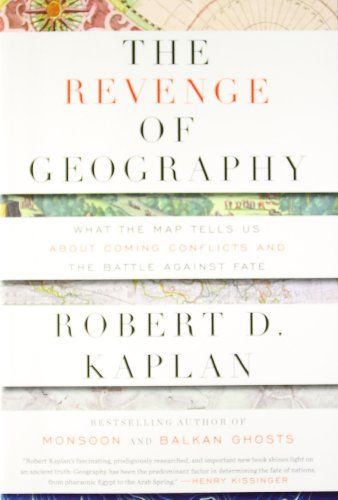
Nova: Exactly! That's the modern illusion, isn't it? But today, we're diving into a fascinating, and dare I say, slightly unsettling idea, championed by brilliant minds like Robert D. Kaplan in his acclaimed work,, and Tim Marshall in. These authors, known for their sharp geopolitical analyses and often provocative insights, argue that geography isn't just a backdrop for human events. It's the director, the puppeteer, the unseen hand shaping everything. Kaplan, for instance, has always been drawn to how ancient patterns of power reassert themselves, almost as if history is rhyming because the stage remains the same. He's often explored remote, volatile regions firsthand, giving his work a gritty, on-the-ground feel that really underscores the physical constraints.
Atlas: That’s a bold claim, especially when we often attribute global power shifts to ideologies, economies, or technological leaps. Are you saying we've been missing the forest for the trees, or in this case, the mountains for the geopolitics?
Nova: Precisely. And it's not just modern thinkers. We'll also touch upon the enduring insights of Alfred Thayer Mahan, whose classic fundamentally shaped how empires understood naval dominance centuries ago. It's a testament to geography's timeless influence that his ideas still resonate so powerfully today. What we’re exploring is a foundational truth that, once acknowledged, completely reframes how we view contemporary international conflicts and alliances.
Geography as Destiny: The Unseen Hand
SECTION
Nova: So let's start with that core idea: 'Geography as Destiny.' Robert D. Kaplan argues that physical features—mountains, rivers, coastlines—don't just influence nations; they their destinies, their conflicts, and their strategic choices. He calls it "the revenge of geography" because, despite all our technological advancements, these ancient forces keep reasserting themselves.
Atlas: Wait, so you’re saying a country's entire future could be predetermined by whether it has a good port or a mountain range on its border? That sounds a bit deterministic, almost fatalistic.
Nova: It’s not about fate in the mystical sense, but about profound, enduring constraints and opportunities. Take Russia, for example. For centuries, its vast, open plains have made it vulnerable to invasion from the West—think Napoleon, Hitler. This geographical reality has instilled a deep-seated strategic paranoia, pushing them to seek buffer states, to expand their influence into Eastern Europe. It's a historical pattern driven by the sheer lack of natural barriers. The expansive, flat terrain dictates a defensive posture, always pushing outwards for security.
Atlas: Oh, I see. So it’s not just about what a country, but also what it. A lack of natural defenses forces a certain kind of behavior. It’s like being in a house with no locks, you’re always going to be looking for ways to secure the perimeter.
Nova: Exactly. And then consider China. Its geography is a fascinating paradox. To its west, the formidable Himalayas and vast deserts historically protected it from land invasions, allowing its civilization to develop largely in isolation. But to its east, the Pacific Ocean presented both a barrier and an immense opportunity. Its long coastline is crucial for trade, but also a potential point of vulnerability. Its strategic focus on controlling the South China Sea, for instance, isn't just about resources; it's about securing vital trade routes and projecting naval power into its maritime backyard, a direct consequence of its coastal geography.
Atlas: So the Himalayas aren't just pretty mountains, they're geopolitical walls. And the Pacific isn't just an ocean, it's a strategic highway and a potential battleground. That makes me wonder, how does this 'revenge of geography' play out in smaller, perhaps less obvious ways?
Nova: Consider a country like Switzerland. Nestled in the Alps, its mountainous terrain has historically provided natural fortifications, enabling its long-standing neutrality and making it incredibly difficult to invade. This isn't just a cultural choice; it's a geographical advantage that allowed that choice to flourish. Or look at the Nile River in Egypt: it created a fertile strip of land in an otherwise arid region, dictating where people settled, where cities rose, and how power was consolidated. The river literally shaped the civilization.
Atlas: That’s a powerful point. It’s like the land itself is whispering strategic advice to its inhabitants, whether they realize it or not. I imagine a lot of our listeners, especially those who think about long-term planning or historical trends, can really connect with this idea of deep-seated, persistent influences. It’s not about fleeting policies; it’s about underlying currents.
Nova: It absolutely is. And it’s why understanding geography is crucial for anyone trying to decipher global politics. Tim Marshall, in, really drives this home by showing how leaders, regardless of their ideology, are often trapped by their maps. Their decisions are constrained by the physical realities of their nations.
Atlas: So, even if a leader wants to pivot strategically, the mountains or oceans might just say, "Nope, not that way."
The Maritime Imperative: Sea Power and Global Dominance
SECTION
Nova: That naturally leads us to the second key idea we need to talk about: the enduring, often underestimated, power of maritime control. This is where Alfred Thayer Mahan comes in. His 19th-century work,, was revolutionary because it systematically laid out why naval dominance and control of sea lanes are absolutely critical for global empires and geopolitical power.
Atlas: Ah, sea power. It sounds like something from an old naval history book. With modern air power and digital warfare, is controlling the seas still as relevant as it was when wooden ships ruled the waves?
Nova: That's a great question, and the answer is a resounding yes. Think of it this way: 90% of global trade still travels by sea. The internet cables that carry our digital information often lie on the ocean floor. If you control the sea lanes, you control the arteries of global commerce and communication. Mahan understood that a nation with superior naval power could project influence far beyond its borders, protect its trade, and cut off its enemies.
Atlas: So it's not just about big battleships; it's about controlling the flow of everything that keeps the world running. Like a global shipping and data magnate, but with cannons?
Nova: Precisely! Consider Great Britain's rise as a global empire. An island nation, its survival and prosperity were inextricably linked to its navy. By controlling the seas, it could access resources from distant colonies, transport goods, and project military might across the globe. Its geographical position, coupled with its mastery of sea power, allowed it to become the dominant global force for centuries. It's a classic case study of Mahan's theories in action.
Atlas: That makes sense for an island, but what about landlocked nations? Are they just out of luck in this maritime game?
Nova: Not entirely out of luck, but certainly at a disadvantage. Their access to global trade and influence becomes dependent on the goodwill or infrastructure of their neighbors. This often drives landlocked nations to seek warm-water ports, or to forge strong alliances with coastal powers. It’s a geographical reality that shapes their foreign policy. Look at Russia again; its historical drive for warm-water ports, whether in the Black Sea or elsewhere, is a direct manifestation of this maritime imperative.
Atlas: So, for a nation, having unfettered access to the ocean is like having direct access to the global marketplace, without having to go through a middleman. That's a huge strategic advantage. It reminds me of how important supply chains became during the pandemic. If you can't move goods, your economy stalls.
Nova: Absolutely. And this isn't just historical. Look at the strategic importance of choke points today: the Strait of Hormuz, the Suez Canal, the Strait of Malacca. These narrow waterways are vital for global shipping. The nation that can influence or control these points holds immense leverage over global trade and energy supplies. It’s a direct application of Mahan’s principles in the 21st century, proving that while the ships might look different, the fundamental strategic logic remains the same.
Atlas: It really puts into perspective why certain regions are constantly in the news for geopolitical tensions. It's not just random; it’s deeply rooted in the physical map.
Synthesis & Takeaways
SECTION
Nova: So, what we've really uncovered today is that while we might focus on the daily headlines, the immutable forces of geography are quietly, yet relentlessly, dictating the grand strategy of nations. It's the silent, ever-present architect of power.
Atlas: It’s a powerful realization. It means that to truly understand international conflicts and alliances, we need to look beyond the immediate political rhetoric and examine the underlying geographical realities. It’s like trying to understand a game of chess without knowing the shape of the board.
Nova: Exactly. And for anyone who seeks understanding, who wants to probe below the surface of current events, recognizing the 'revenge of geography' offers a profound lens. It encourages us to connect the dots between ancient patterns and modern conflicts, revealing a foundational truth about why the world works the way it does. It's a reminder that some truths are simply timeless.
Atlas: It’s a humbling thought, actually. That despite all our innovation, we’re still, in many ways, prisoners of geography. But acknowledging that, as you said, allows us to approach global challenges with a much deeper, more comprehensive understanding. It's about seeing the world with new eyes.
Nova: Absolutely. It’s about embracing the nuance, understanding that not all answers are absolute, and that the journey of exploring these foundational truths is the real insight.
Atlas: A truly thought-provoking discussion today, Nova.
Nova: This is Aibrary. Congratulations on your growth!