Wisdom Through the Ages: Historical & Philosophical Journeys
Golden Hook & Introduction
SECTION
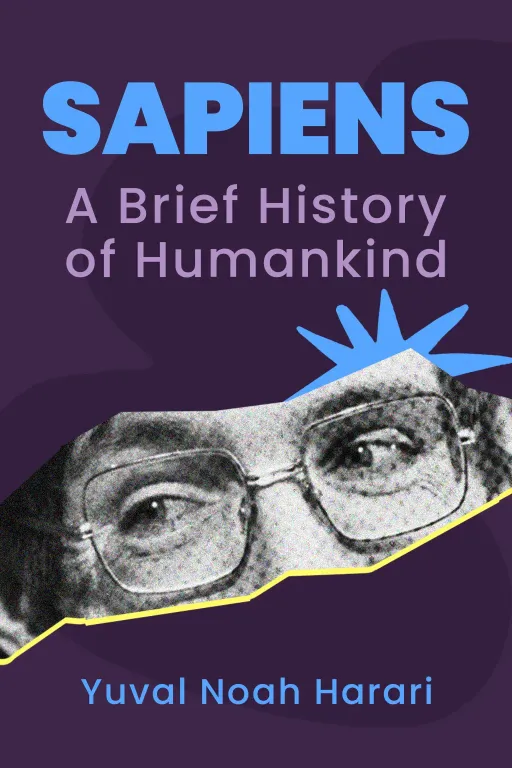
Nova: Atlas, I'm going to throw two truly monumental books at you. Give me your five-word review for each. First up: Yuval Noah Harari’s "Sapiens."
Atlas: Humans. Stories. Chaos. Progress. Huh.
Nova: "Huh" is a great addition there. Alright, next, Marcus Aurelius’s "Meditations."
Atlas: Emperor. Duty. Control. Inner. Peace.
Nova: Spot on for both! We are indeed diving into Yuval Noah Harari's groundbreaking "Sapiens: A Brief History of Humankind" and Marcus Aurelius's profoundly personal "Meditations." What's fascinating is their origin stories. Harari's book, for instance, didn't start as a global bestseller; it began as a series of lectures for his students at the Hebrew University of Jerusalem, which then exploded onto the global stage, challenging conventional views of history and becoming a genuine literary phenomenon.
Atlas: That’s amazing, to think something so academic could spark such a massive cultural conversation.
Nova: Absolutely. And then you have "Meditations," which Marcus Aurelius never intended for publication. It was his private journal, a series of philosophical exercises he wrote to himself to live a better life, to steel his own mind, even while ruling the vast Roman Empire. It’s like peeking into the soul of a leader.
Atlas: So, one was designed to reshape our understanding of the world, and the other was a secret weapon for personal resilience. That's a powerful contrast right there.
Nova: It truly is. And that contrast sets us up perfectly to explore how these two seemingly disparate works actually illuminate each other, helping us understand not just humanity's grand narrative, but also our individual place and power within it.
The Power of Shared Fictions & Narrative
SECTION
Nova: Let's start with Harari. His central thesis in "Sapiens" revolves around what he calls the "Cognitive Revolution." This wasn't just about bigger brains; it was about our unique ability to create and believe in shared fictions.
Atlas: Shared fictions? Like, myths and legends? Or are we talking something bigger, something that impacts our everyday life?
Nova: Something much, much bigger. Imagine a world without money. Without nations. Without human rights, corporations, or even laws. These aren't tangible things you can pick up; they exist purely in our collective imagination. They are "intersubjective realities" – real because we they're real. Harari argues this ability to believe in shared fictions is what allowed Sapiens to cooperate flexibly in large numbers, far beyond the small bands of other hominids.
Atlas: So you’re saying money isn't "real" in the same way a rock is real? That sounds a bit out there. How does that connect to, say, a student trying to achieve peak performance in their studies or sports? Because money certainly feels real when tuition is due!
Nova: That’s a great question, and it's precisely the point Harari makes. Money real in its effects because we all believe in its value. Nations are real because millions believe they belong to one, and are willing to fight for it. These fictions aren't lies; they're incredibly powerful tools for cooperation. Consider a modern corporation. It's a legal fiction, a "person" in the eyes of the law, that can own property, sue, and be sued. It has no physical body, but it organizes millions of people.
Atlas: Okay, so it's like the rules of a game – they're made up, but if everyone agrees to them, they become incredibly powerful. And if you understand those rules, you can play the game better, or at least understand why the game is structured the way it is. Is that what Harari is getting at? Understanding the underlying code of human society?
Nova: Exactly! It’s about understanding the invisible operating system of human civilization. Harari shows how these fictions create our sense of purpose, our social hierarchies, our economic systems, and even our ethical frameworks. They are the grand narratives that shape everything we perceive as "normal" or "true." From ancient gods to modern capitalism, it's all built on stories we tell ourselves.
Atlas: That makes me wonder about the narratives we tell ourselves about success, or failure, or even what it means to be "disciplined" or "talented" in a sport or academic pursuit. Are those also just fictions, albeit personal ones, that we choose to believe and then live by?
Nova: Precisely. And often, those personal fictions are heavily influenced by the collective fictions around us. We buy into societal definitions of success, for instance, without always questioning their origins or whether they truly serve us. And that, my friend, is a perfect segue to Marcus Aurelius, who, while operating within the grandest fiction of all – the Roman Empire – focused intensely on individual truth and resilience.
Cultivating Inner Resilience & Control
SECTION
Nova: Marcus Aurelius, through his "Meditations," offers us the profound wisdom of Stoicism. At its core, Stoicism is about distinguishing what is within our control from what is not.
Atlas: That sounds incredibly powerful, especially for someone facing constant challenges – whether it's intense training, academic pressure, or just the daily grind of being a student. But wait, isn't that just telling people to accept everything? Isn't there a risk of becoming passive, or just giving up on trying to change things?
Nova: Oh, that's a very common, and very important, misconception about Stoicism! It’s anything but passive. Stoicism is about of what you cannot change, so you can then what you. It's about directing your energy wisely, not squandering it on things beyond your sphere of influence. Marcus Aurelius was an emperor fighting wars, dealing with plagues, political intrigue – he was hardly passive! He wrote "Meditations" to steel his own mind, to find inner peace and clarity amidst immense external chaos.
Atlas: I like that – active acceptance. So, if a workout isn't going well, or an exam result isn't what you hoped, instead of getting frustrated or blaming external factors, you acknowledge the circumstances, and then focus on your form, your effort, your mindset for the next rep or the next study session? That's the inner citadel he talks about, right?
Nova: Absolutely. It’s about building that inner fortress, that "inner citadel," where your peace isn't dependent on external victories or defeats, but on your own virtue, reason, and judgments. It's the ultimate mental game, a form of mental training. You control your perceptions, your actions, and your will. Everything else is external.
Atlas: That’s a game-changer for anyone trying to master their craft, whether it's academics or athletics. It means you’re not a victim of circumstance; you’re the master of your internal response. And how does that connect back to Harari's big narratives? If we're all living inside these massive collective fictions, does Stoicism give us a way to maintain our individual purpose and ethical responsibilities within them, without being swept away?
Synthesis & Takeaways
SECTION
Nova: Yes, Atlas, it absolutely does. Harari shows us the grand stage, the elaborate props, the collective script that humanity has written for itself over millennia. He reveals the immense power of these shared fictions – nations, money, religions, ideologies – in shaping our world. Marcus Aurelius, on the other hand, gives us the internal compass, the mental training, and the philosophical framework to perform our role with integrity, with virtue, and with tranquility, regardless of the script's twists and turns.
Atlas: So, the grand narratives give us context, the playing field, but our individual purpose and ethical responsibilities are forged in how we choose to react to them, what we choose to believe, and where we choose to direct our energy.
Nova: Exactly. Harari illuminates the external forces that shape us, while Aurelius empowers us to shape our internal world. The "Tiny Step" for our listeners, especially students balancing academics, training, and personal growth, would be to reflect on a recent personal challenge – maybe a tough exam, a disappointing performance, or even a social interaction.
Atlas: And then ask: What part of this challenge is a "shared fiction" I'm buying into, or an external circumstance beyond my control? And what part is truly within my control to influence with my mindset, my effort, my judgment?
Nova: Precisely. And to recognize that even our personal narratives of "success" or "failure" are, in a way, fictions we construct. Stoicism helps us choose empowering fictions and discard disempowering ones. It's about agency within the grand story of humanity.
Atlas: That's actually really inspiring. It means you're not just a character in someone else's epic; you're the author of your own internal narrative, choosing how to react to the external plot twists. It's about finding freedom within the system. You’re not just understanding the rules of the game, you’re mastering your own internal playbook.
Nova: And that's the profound wisdom these books offer, connecting the macro to the micro, the sweep of history to the stillness of the individual mind.
Atlas: Aibrary listeners, that's a powerful thought to carry into your week. What narratives are you challenging, and what inner control are you exercising? We'd love to hear your reflections on our social media channels. Share how these ideas resonate with your own journeys, whether in your studies, your workouts, or your personal growth.
Nova: This is Aibrary. Congratulations on your growth!