The Unseen Hand: How History Shapes Your Local Landscape Today
Golden Hook & Introduction
SECTION
Nova: History isn't just something that happened. It's actively happening to you, right now, shaping your street, your neighbors, even your morning coffee ritual.
Atlas: Whoa, that's a bold claim, Nova. I always thought of history as, well, ancient scrolls and dusty museums. You're saying it's more like... a continuous, invisible force field around us?
Nova: Exactly, Atlas! We often view history as this distant, finished thing, right? But the truth is, the echoes of the past deeply shape the local customs, the social norms, and even the architecture of any community you step into today. And understanding that, truly grasping those historical roots, is how you begin to make sense of the present.
Atlas: I know that feeling. When you're new to a place, there's always this sense of wading through unspoken rules or seeing things that just 'are,' without ever knowing the 'why.' It's like everyone else got a memo you missed.
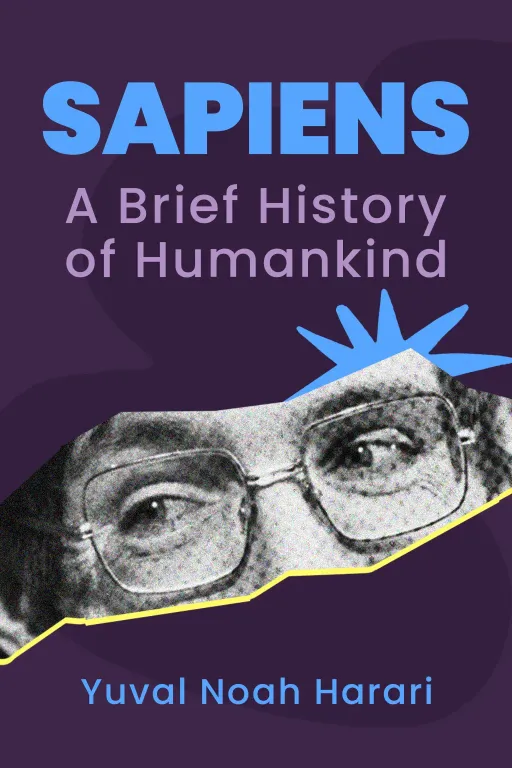
Nova: And that's precisely what we're tackling today, using two truly groundbreaking books as our guides. We're diving into Yuval Noah Harari's monumental work, "Sapiens: A Brief History of Humankind," and Jared Diamond's Pulitzer Prize-winning "Guns, Germs, and Steel." Harari, a historian with a sweeping, interdisciplinary approach, challenged how we think about human progress and societal organization. Diamond, a geographer and ornithologist, brought an entirely unique environmental lens to history, arguing that geography, not superiority, shaped civilizations. Both works profoundly shifted how we understand our past and, by extension, our present.
Atlas: So, they're helping us decode that memo, essentially. I'm curious, how do these big, global histories actually connect to the specifics of my local bakery or the way people greet each other on the street?
Nova: That's the magic. They shift your view from mere observation to a deep appreciation of how these powerful historical forces continue to play out in every single detail around you. And to start, let's talk about those invisible forces: the shared stories.
The Invisible Threads: How Shared Stories Weave Local Culture
SECTION
Nova: Harari, in "Sapiens," makes a compelling case that what truly binds large human societies together, what allows millions of strangers to cooperate, are not just laws or economics, but shared myths and collective beliefs. He calls them "inter-subjective realities"—stories we all agree to believe, even if they're not physically tangible.
Atlas: So you're saying that even something as modern as a town's identity, or why everyone participates in a specific local event, is built on these ancient, invisible stories? That sounds a bit out there. Like, my town has this annual 'Lantern Festival' where everyone floats little lights down the river. Are you telling me that's a 'myth'?
Nova: It absolutely could be, Atlas! Not a myth in the sense of 'false story,' but in the Hararian sense of a powerful, collective narrative. Think about it: Does the Lantern Festival commemorate a specific historical event? A founding family's journey? A collective prayer for a good harvest from centuries ago? Perhaps a time when the community faced a great darkness, and these lanterns symbolized hope or remembrance.
Atlas: Hmm. I always just thought it was a pretty tradition. But now that you mention it, there’s an old tale about the town being saved from a great flood by a flash of light in the night sky, and the founders vowed to honor that light every year.
Nova: Exactly! That's it. That flood story, whether literal or embellished over centuries, becomes a foundational myth. It’s an invisible thread. It instills values like resilience, community spirit, or gratitude. It explains why people feel compelled to participate, why it's 'just what we do.' These narratives aren't written down in a town charter necessarily, but they're woven into the social fabric, passed down through generations, shaping everything from local customs to unspoken rules about hospitality or civic duty.
Atlas: That makes me wonder, how does someone new to a community even begin to 'read' these invisible threads? Because when you move somewhere, you're not given a handbook on the local myths. You just feel the weight of them.
Nova: That's where the "Root Seeker" in you comes alive. It's about observation and curiosity. It's asking people do things, not just they do. Why is the town square always bustling on Saturday mornings, even if there's no official market? Perhaps it's an echo of ancient communal gathering points, a place where people traditionally exchanged news and built trust. Or why is there a specific way people address elders, even casually? It could stem from a long-held cultural value of respect for lineage or wisdom, born from a time when elders held crucial knowledge for survival. These are the narratives that underpin your local social fabric.
Atlas: So, understanding these deep stories isn't just academic; it helps you connect, to build bridges. It's not about being an outsider anymore, but about finding your place within the ongoing narrative.
Nova: Precisely. It's moving from simply observing a custom to understanding its profound historical and emotional resonance for the people around you. It's the first step towards truly belonging.
Land's Legacy: Geography, Environment, and the Shaping of Your Town
SECTION
Nova: Now, while Harari opens our eyes to the invisible stories, Diamond, in "Guns, Germs, and Steel," reveals another powerful, often overlooked force: the very ground beneath our feet. He argues that geography and environmental factors have fundamentally shaped civilizations, determining why certain regions developed particular customs, economic structures, or even dominant personalities.
Atlas: Okay, so if the Lantern Festival is about an invisible myth, what about something more tangible? Like, the reason my new town, nestled in a valley, has so many old stone houses, or why everyone seems to value self-reliance and farming. How does geography play into that?
Nova: That's a perfect example, Atlas. Diamond's work would suggest that the valley itself, its soil, its access to water, its climate — these are not just backdrops, they are active characters in your town's story. If it was a fertile valley, it would naturally attract early settlers for agriculture. The stone houses? Perhaps the valley was rich in suitable stone, making it the most accessible and durable building material for centuries. This wasn't a choice of aesthetics initially; it was a response to the environment.
Atlas: I see. So the land dictated the resources, which dictated the building materials, which dictated the architecture. And even the "self-reliance" could be a legacy of farming life, where you had to depend on your own hard work and the land's bounty.
Nova: Absolutely. Consider a town built on a major river bend. That river isn't just a scenic feature; historically, it was likely a crucial trade route, a source of power, or a defensive barrier. This geographical advantage would have made it a hub for commerce, attracting diverse populations, leading to a more cosmopolitan culture, perhaps different architectural styles to accommodate merchants, or a history of specific industries like shipping or milling. Compare that to a remote mountain village, where isolation might have fostered strong, tight-knit communal bonds and a fierce preservation of unique traditions, simply because external influences were limited.
Atlas: Wow. So the reason my town has this specific industry, or even why the people have a certain temperament—like being very pragmatic or very open—could actually be traced back to its early geography and environmental challenges? That's incredible. It makes me look at every street corner differently.
Nova: That's the "Wise Observer" emerging. These aren't just quaint historical facts; they’re living legacies. A town’s original access to resources, its defensibility, its climate – these things set trajectories centuries ago that continue to influence urban planning today, property values, even the local economy. The legacy of a fertile valley might be a thriving farmers’ market, while a former mining town might still grapple with environmental remediation but possess a deeply rooted sense of community resilience.
Atlas: So you're saying that the physical landscape around us isn't just static; it's a living archive of historical decisions made in response to nature. And by understanding that, we don't just observe our community, we understand why it the way it is.
Nova: Exactly. You start to see the unseen hands that have sculpted your world, giving it its distinct character.
Synthesis & Takeaways
SECTION
Nova: So, whether it's the invisible threads of shared stories from "Sapiens" or the tangible legacies of geography and environment from "Guns, Germs, and Steel," history is never truly distant. It's a constant, active force.
Atlas: I'm really seeing that now. It's like peeling back layers to truly see a place, not just observe it. It moves beyond just recognizing a tradition to understanding the profound reasons it exists, and how it shapes the people and the place. It gives you a deeper sense of context, a deeper sense of... belonging.
Nova: And that's the ultimate takeaway. For anyone seeking to grasp the essence of their new world, to connect more deeply, these books offer powerful lenses. Instead of feeling like you're missing the memo, you start to read the deep history embedded in everyday life.
Atlas: So, what's a practical step our listeners, especially those new to a community, can take? How do they start this journey of discovery?
Nova: It's simple, yet profound. Next time you notice a local tradition, a peculiar custom, or even a distinctive architectural style in your community, don't just accept it. Ask yourself: "What historical event or belief might have given rise to this?" Start a journal. Document your daily observations and feelings. Each new piece of information, each "why" you uncover, is a step closer to home.
Atlas: That's actually really inspiring. Embracing that journey of discovery, seeing each observation as a step closer to home. That's a powerful way to integrate and truly feel a part of a place.
Nova: Absolutely. It transforms passive observation into active understanding and meaningful connection. We'd love to hear what historical echoes you discover in your local landscapes. Share your insights with the Aibrary community.
Atlas: This is Aibrary. Congratulations on your growth!