The Overlooked Art of Observation: Seeing What Others Miss
Golden Hook & Introduction
SECTION
Nova: Atlas, quick question for you: When was the last time you looked at something, really, truly looked at it, and then realized you'd completely missed the entire point?
Atlas: Oh, man, Nova, that's like asking me when was the last time I tried to assemble IKEA furniture without looking at the instructions. Which, for the record, was Tuesday. So, pretty much constantly. My observational skills are, let's just say, a work in progress. Why? Are we going to dissect my spatial reasoning again?
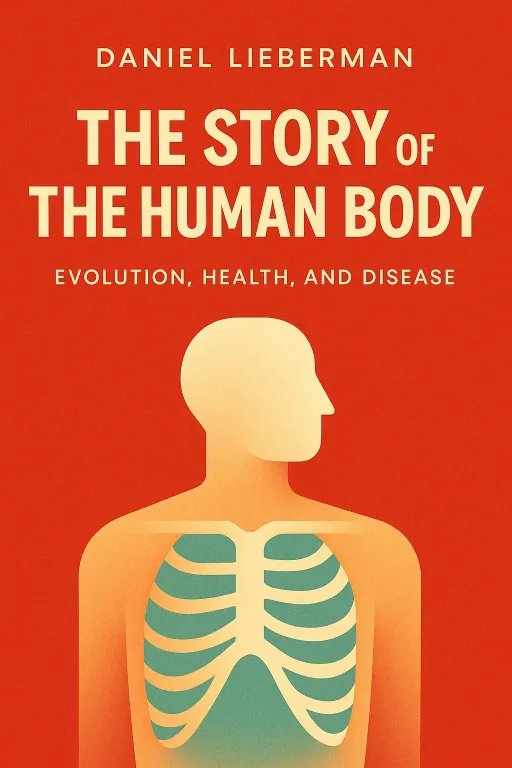
Nova: Not your spatial reasoning, thankfully for all of us. But we are diving into the fascinating, and often overlooked, art of observation. It's about seeing what others miss, moving beyond the superficial. Today, we're drawing insights from two truly groundbreaking books: Daniel E. Lieberman's "The Story of the Human Body" and Yuval Noah Harari's global phenomenon, "Sapiens."
Atlas: Sapiens, yes! That book blew my mind. I remember hearing Harari started that as a university course, and it just exploded, translated into dozens of languages, influencing everyone from academics to world leaders. It’s wild how one book can shift so many perspectives.
Nova: Absolutely. And that's precisely what we're exploring today: how these authors train us to develop a deeper kind of observation, to see the patterns and underlying forces that most people simply glance over.
The Blind Spot: Why We Look But Don't Truly See
SECTION
Atlas: I guess that makes sense. So often, we're just skimming the surface, right? Like, I walk through my city every day, and I see buildings, traffic, people. But what am I actually? What's the "blind spot" you're talking about?
Nova: Well, let's imagine you're walking through, say, an ancient Roman forum. You might see crumbling pillars, broken statues, maybe a tourist taking a selfie. That’s looking. But a deeper observer sees not just the stone, but the echoes of bustling markets, political debates, the clash of empires, the daily lives of citizens, their beliefs, their struggles. They see the that once held that society together, now only hinted at by the ruins.
Atlas: Oh, I see. So it's not just about what's physically there, but the layers of meaning and history beneath it. Could you give me an example that's a bit more... everyday? Like, where do do this without realizing it?
Nova: Absolutely. Think about something as fundamental as money. We use it every day, we earn it, we spend it. We look at it as a tangible thing, a dollar bill, a number in a bank account. But what Harari reveals in "Sapiens" is that money, nations, human rights – these are all "invisible fictions." They aren't biological realities or physical laws. They are shared myths, stories we collectively believe in.
Atlas: Wait, so money isn't "real"? Because my landlord certainly thinks it is!
Nova: That's a great point, and it’s where the nuance lies. The power of these fictions is precisely that we believe in them. Because we collectively agree that a piece of paper or a digital number has value, it real in its consequences. It allows two complete strangers, who might otherwise distrust each other, to cooperate on a massive scale. You can buy coffee from someone you've never met, simply because you both believe in the fiction of currency.
Atlas: That's a bit mind-bending, actually. It makes me wonder about all the other invisible rules I'm operating under, or the systems I take for granted. It’s like the air we breathe, it’s always there, but we rarely consciously notice it unless something goes wrong.
Nova: Exactly. These invisible fictions drive human history and behavior far more profoundly than we often acknowledge. Our blind spot isn't just missing a detail; it's missing the entire operating system of our societies.
The Observational Shift: Unveiling Hidden Forces
SECTION
Nova: And that mind-bending realization about invisible fictions naturally leads us to how we can actually ourselves to see these hidden forces, moving from that 'blind spot' to a 'shift' in observation. This is where Daniel Lieberman's "The Story of the Human Body" comes in, offering a different but equally profound lens.
Atlas: Okay, so Harari opened my eyes to the invisible stories. What does Lieberman want me to see?
Nova: Lieberman trains us to look at our own bodies, not just as they are today, but as products of millions of years of evolution. He teaches us to observe the "tiny, everyday biological adaptations" that tell a larger story, often about our ancient past. For example, think about your feet. They're designed for walking barefoot on varied, uneven terrain for miles every day.
Atlas: My feet are designed for walking barefoot? Mine are usually encased in sneakers or squished into dress shoes. And they often ache after a long day.
Nova: Precisely! Your aching feet are a perfect example of a hidden force at play. Our modern environment—concrete, shoes, chairs—is fundamentally at odds with the biological design our bodies evolved for. Lieberman suggests that many modern ailments, from back pain to flat feet, aren't just random occurrences; they're mismatches between our ancient biology and our contemporary lifestyle.
Atlas: So, our bodies are essentially time capsules, telling a story we're too busy to read? That's fascinating. But how does observing my aching back help me understand history or culture, like Harari does?
Nova: That's a brilliant question, Atlas, and it highlights the core connection. It's about the of observation. Harari looks at shared myths; Lieberman looks at shared biology. Both reveal deep, underlying forces that shape our existence. For instance, the very act of sitting at a desk all day—a cultural artifact driven by our societal fictions—is constantly at odds with our ancient biological design. Seeing that tension, understanding how culture and biology are perpetually interacting, that's seeing a hidden force at work.
Atlas: That’s a powerful connection. So, the 'shift' isn't just about you look at, but you look, right? Like, zooming in on the small details, whether it's a social construct or a biological adaptation, to see the much larger, often invisible, big picture. It’s about recognizing the historical echoes in our present.
Nova: Exactly! It's about developing an X-ray vision for the world. Harari helps us see the invisible threads of collective belief that weave our societies together. Lieberman helps us see the ancient blueprints etched into our very bones and muscles, constantly reacting to our modern lives. Both fundamentally solve the problem of superficial understanding by revealing these powerful, hidden forces. It’s about cultivating a relentless curiosity about the "why" behind everything, not just the "what."
Synthesis & Takeaways
SECTION
Nova: So, whether we're talking about the invisible fictions that govern our societies or the ancient adaptations that shape our physical well-being, these books teach us that true understanding comes from looking beyond the obvious. It’s about developing a profound sensitivity to the subtle cues and underlying patterns.
Atlas: It makes me think about that deep question you posed earlier: Where in our daily lives do we find ourselves looking, but not truly seeing the underlying forces at work? I’m going to be looking at my commute differently now, wondering what ancient biological urges are fighting my desire to sit in traffic.
Nova: I love that. And that's precisely the challenge we want to leave our listeners with. Next time you're frustrated by a system, a habit, or even a pain in your own body, pause and ask yourself: what invisible fiction or ancient biological adaptation is at play here? What story are you missing?
Atlas: It’s about constantly challenging our assumptions and digging a little deeper. That's where the real insight happens, and where we start to truly understand the world and ourselves. It’s a journey of continuous learning, which is what being a curious learner is all about.
Nova: Absolutely. It's a journey of growth, of continuous unveiling. Keep observing, keep questioning, and keep discovering the hidden forces that shape your world.
Nova: This is Aibrary. Congratulations on your growth!