The Narrative Architect's Secret: Unlocking Deeper Meaning Through Myth.
Golden Hook & Introduction
SECTION
Nova: Atlas, five words to describe the most powerful story you've ever encountered.
Atlas: Shaping, binding, challenging, growing, human.
Nova: Ooh, I love 'binding.' Mine would be: Echoes, patterns, meaning, purpose, self. And those words, Atlas, really lead us right into our topic today. We're diving into what we're calling "The Narrative Architect's Secret," all about unlocking deeper meaning through myth, drawing heavily from the incredible insights of Joseph Campbell and Yuval Noah Harari.
Atlas: Oh, I love that. And Campbell, specifically, his work isn't just for academics, is it? I mean, his 'Hero's Journey' has basically become the unofficial bible for Hollywood screenwriters and storytellers across the globe.
Nova: Exactly! Campbell wasn't just a scholar; he was a cultural alchemist. He spent his life immersed in mythology, literature, and psychology, weaving together this incredible tapestry of human experience. He saw these universal patterns that others missed, the deep structures beneath all our stories. That's what allows him to reveal the 'monomyth.'
The Monomyth as a Universal Blueprint
SECTION
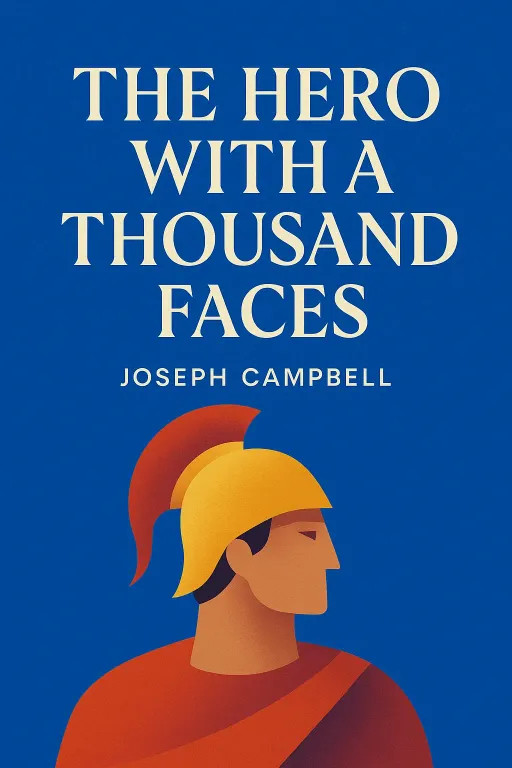
Nova: Which brings us to our first core idea: the monomyth as a universal blueprint. You know, sometimes we feel our stories are disconnected from a larger human truth. We're constantly searching for novelty, for something new, when these ancient patterns actually hold profound power. Campbell, in his monumental work, "The Hero with a Thousand Faces," really cracked that code.
Atlas: Wait, so you're saying that every hero, from ancient epic to modern blockbuster, is essentially following the same script? How can that be true across such diverse cultures and thousands of years of storytelling? That sounds a bit out there.
Nova: It’s not that it's a rigid script, but rather a deeply ingrained structural pattern. He found that heroic tales across all cultures and times share a common journey. Think of it as a narrative DNA. It starts with the 'Call to Adventure' – that moment when our ordinary world is disrupted. Then, often, there's a 'Refusal of the Call' because change is scary. But eventually, a 'Mentor' appears, offering wisdom or a magical gift.
Atlas: Right, like the old wizard showing up just when you need him. I see that.
Nova: Exactly! Then the hero crosses a threshold into an unknown world, faces 'Tests, Allies, and Enemies,' endures a supreme 'Ordeal' – often a life-or-death confrontation – and emerges transformed, gaining a 'Reward.' Finally, they undertake the 'Road Back' and 'Resurrection' before returning with the 'Elixir' to their ordinary world, now changed and ready to share their wisdom.
Atlas: That makes sense. It's like the fundamental architecture of human transformation. Can you give us an example that really nails it?
Nova: Oh, absolutely. Let's take Luke Skywalker from. His journey is almost a textbook example. He's a farm boy on a desert planet – his ordinary world. The 'Call to Adventure' arrives with the droids and Princess Leia's message. He initially 'Refuses the Call,' saying he can't leave.
Atlas: But then Obi-Wan Kenobi shows up, the ultimate mentor, right?
Nova: Precisely. Obi-Wan gives him his father's lightsaber, shares wisdom, and helps him cross the threshold. Luke faces trials, battles stormtroopers, rescues the princess, and eventually confronts Darth Vader in that epic lightsaber duel – his supreme ordeal. He returns, not just with the plans to the Death Star, but as a budding Jedi, ready to fight for the rebellion. He's transformed.
Atlas: That's incredible! It’s like George Lucas had Campbell's book open while writing, or perhaps Campbell was just articulating something deeply embedded in our collective consciousness. But for someone who's an empathetic leader, trying to guide a team through a challenge, how does understanding Luke Skywalker's journey actually help them unlock deeper meaning in their story, or their team's story?
Nova: That’s a brilliant question, Atlas. It's about finding resonance. When we understand these patterns, we can look at our own personal challenges – whether it's a career pivot, a major project setback, or even a personal crisis – and see them not as random obstacles, but as stages in our own unique hero's journey. It reframes the struggle, giving it purpose and a sense of progression. It helps us find meaning when we're in the 'ordeal' stage, knowing there's a 'reward' and a 'return' ahead. It shifts our perspective from victimhood to authorship.
Shared Fictions: Myths as Societal Glue
SECTION
Nova: And while Campbell shows us the individual journey, another brilliant mind, Yuval Noah Harari, takes this idea of narrative power and scales it up to all of humanity. In his groundbreaking book, "Sapiens: A Brief History of Humankind," Harari emphasizes how shared fictions and collective myths aren't just entertainment; they're the invisible architecture that allowed our species to cooperate on a massive scale.
Atlas: Shared fictions... so you mean like, companies? Or nations? Are you saying our entire society is built on a kind of collective myth-making? That sounds a bit cynical, almost like we're all just living in a lie.
Nova: Not cynical at all, Atlas, just deeply insightful. Harari argues that what sets apart is our unique ability to believe in shared fictions. A chimpanzee troop can only cooperate in small numbers because they need direct trust. But humans? We can organize millions, even billions, around abstract concepts. These aren't 'true' in a physical, tangible sense, but they are incredibly 'real' because we collectively agree to act they are.
Atlas: Okay, so give me an example of one of these 'shared fictions' that's so powerful it binds us all together. Like, how does this actually work?
Nova: The perfect example is money. Think about it: a piece of paper, or a number on a screen, has no inherent value. It's just ink and pixels. But billions of people, from Tokyo to Timbuktu, collectively believe in its value. This shared fiction allows us to trade goods, build cities, fund scientific research – all because we've collectively agreed that this abstract symbol represents something meaningful. Without that shared belief, money is just worthless paper.
Atlas: Wow, that's a mind-bender. So, as a cultural navigator, trying to bridge diverse perspectives, it sounds like understanding these underlying shared fictions is absolutely crucial. But how do you even begin to identify these invisible threads that bind people, especially when those fictions might be clashing?
Nova: That's where the real navigation comes in. It's about recognizing that every culture, every nation, every company, every social group, operates within its own set of deeply held, often unconscious, shared fictions. For a cultural navigator, it means asking: What are the stories these people tell themselves about who they are, what they value, what their purpose is? When you understand those foundational narratives, you can then start to see where the common ground is, or where the friction points are, enabling you to bridge those diverse perspectives more effectively. It’s not about judging the fiction, but understanding its power.
Synthesis & Takeaways
SECTION
Nova: So, bringing it all together, Atlas, we see that from the individual's heroic quest to the grand narrative of human civilization, myths and shared stories are not just reflections of our reality, but the very architects of it. They provide the blueprints for our personal growth and the glue for our collective action.
Atlas: That’s a powerful realization. So what's the big takeaway for our listeners who are trying to lead with empathy and build connections? Is it about finding the one 'true' myth, or recognizing the power in all of them?
Nova: It's definitely the latter. It's about becoming a more conscious narrative architect in your own life. Recognizing the patterns in your personal challenges, understanding that your 'blind spots' might actually hold ancient wisdom. And as a cultural navigator, it's about seeing the profound impact of those shared fictions that bind us, even when they differ. It’s about cultivating that integrative mind you possess – connecting the dots between your own story and the grand human story.
Atlas: So, whether you're facing a personal 'ordeal' or trying to unify a diverse team, the secret might just be in understanding the myths that shape us. I'd encourage everyone listening to reflect on a challenge you're currently facing. Can you see elements of a mythic journey in it? And what 'shared fiction' is underpinning your team or community right now?
Nova: Exactly! Let us know what you discover.
Atlas: This is Aibrary. Congratulations on your growth!