The Illusion of Progress: Why History Isn't a Straight Line
Golden Hook & Introduction
SECTION
Nova: What if the very idea that things are constantly getting better—that history is an upward march—is actually holding us back from understanding the world around us?
Atlas: Whoa, that's a bold claim right out of the gate, Nova. Holding us back? I mean, we've got smartphones, space travel, medicine... isn't that progress? It certainly feels like a straight line sometimes.
Nova: It absolutely does, Atlas, and that's precisely the "illusion" we're talking about today. That comforting narrative of inevitable, linear progress can be our biggest blind spot. When we assume things always improve, we often miss the deep, cyclical patterns that actually define human history.
Atlas: So, we're talking about history not as a ladder, but maybe more like a spiral? Or even a rollercoaster?
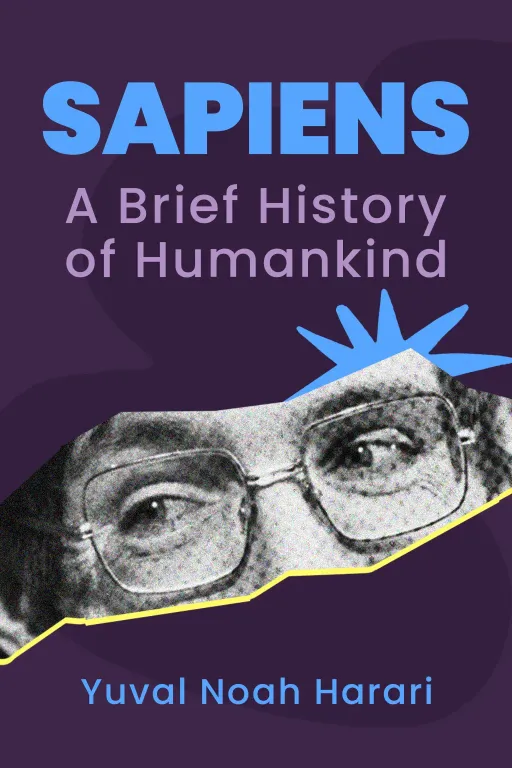
Nova: Exactly! And to unpack this profoundly important idea, we're drawing insights from two monumental works: Will and Ariel Durant's timeless classic, "The Lessons of History," and Yuval Noah Harari's globally acclaimed "Sapiens: A Brief History of Humankind."
Atlas: Ah, the Durants! Their "Story of Civilization" is just an incredible undertaking, isn't it? What's so special about "The Lessons of History" in particular?
Nova: It truly is. "The Lessons of History" isn't a history book in the traditional sense; it's a profound distillation of their entire multi-volume "Story of Civilization" into a concise, philosophical meditation. It’s their attempt to draw universal patterns and truths from millennia of human experience. It’s quite literally a lifetime of wisdom packed into a slim volume, making it incredibly ambitious and insightful.
Atlas: And Harari's "Sapiens" felt like it exploded onto the scene, challenging everything we thought we knew. I remember the buzz around it.
Nova: It did, and for good reason. "Sapiens" captivated millions by radically re-examining humanity's story, often sparking intense debate and critical discussion about its bold claims and sometimes provocative interpretations of human evolution and societal development. Both books, in their own unique ways, force us to step back and question the narratives we tell ourselves about human advancement.
The Cyclical Nature of History and Enduring Human Patterns
SECTION
Nova: So, let's start with the Durants. Their central argument, after studying thousands of years of human civilization, is that human nature changes at an incredibly slow pace. And because of that, we see recurring patterns in governance, in economics, in morals, over and over again. It’s like the seasons, or the tides – they might look different each time, but the underlying forces are constant.
Atlas: But isn't that a really pessimistic view? If human nature barely changes, doesn't it suggest we're just doomed to repeat the same mistakes indefinitely? That sounds a bit out there.
Nova: Not pessimistic, Atlas, realistic. The Durants weren't saying we're doomed; they were saying we need to be aware. Think about the rise and fall of empires, a pattern as old as civilization itself. The cause-and-effect chain is remarkably consistent: a strong leader or group unites a people, they conquer and expand, wealth accumulates, leading to internal divisions, corruption, and often external overextension. Then, the empire eventually crumbles, making way for a new power to rise and begin the cycle anew.
Atlas: I mean, that sounds familiar. We see echoes of that in so many historical periods, from Rome to more recent colonial powers. But what historical pattern do you see repeating in today's world that really reflects this slow-changing human nature? Something that would make our listeners pause and think, "Wait, I've seen this before."
Nova: Absolutely. Consider the ongoing oscillation between centralized power and individual liberty. We've seen it play out in countless forms, from ancient city-states debating democracy versus oligarchy, to the Enlightenment's push for individual rights, to modern political debates about government intervention versus personal freedom. The specific issues change – it might be data privacy today, or economic regulation – but the underlying tension between the collective and the individual, the desire for security versus the desire for autonomy, that's an enduring human struggle.
Atlas: That makes sense. It’s not about the technology or the specific law, but the fundamental human desires and fears driving the debate. So, if human nature is so constant, how can we even hope for genuine progress if we're just stuck in these cycles? What's the point of striving for something better if it just comes back around?
Nova: Well, that's where the awareness comes in. The Durants weren't saying progress is impossible. They were saying true progress comes from recognizing these enduring truths, not from ignoring them. It's about understanding the deep currents, so we can navigate them more wisely, rather than being constantly surprised when the same challenges resurface. It's about preparedness, not prediction.
The Paradox of Progress: Benefits and Burdens
SECTION
Nova: And that naturally leads us to Harari's "Sapiens," which provides a crucial lens on what we even mean by progress. Harari challenges our assumptions about advancement, asking us to look critically at the true cost of our celebrated revolutions.
Atlas: Harari's work is so widely read, and it's definitely polarizing for some. What's the core "paradox" he uncovers about progress? What's the hidden cost that we often overlook?
Nova: His most famous example is often the Agricultural Revolution. On the surface, it seems like humanity's greatest leap forward – we stopped being hunter-gatherers, settled down, and started farming. More food, bigger populations, complex societies! But Harari argues that for the, it was a raw deal.
Atlas: A raw deal? That sounds like a bit out there. More food seems like a good thing.
Nova: It did bring more food, yes, but it often meant harder, more monotonous labor, a less varied and nutritious diet, and a higher risk of disease due as we lived in denser, less sanitary conditions. The cause-and-effect was clear: people transitioned from a relatively free, diverse hunter-gatherer lifestyle, where they hunted and gathered a wide variety of foods, to a settled, arduous farming life, often focused on a single crop. This led to back-breaking work, nutritional deficiencies from a less diverse diet, and the rapid spread of diseases in newly crowded communities. It created complex societies but not necessarily happier, healthier individuals.
Atlas: Wow, so what we celebrate as a giant leap forward was actually a step backward for many of the people living through it. That’s incredible. What about the Scientific Revolution? Did that also come with a hidden cost?
Nova: Absolutely. While the Scientific Revolution unlocked immense power, knowledge, and technological capabilities, it also fueled colonialism, environmental exploitation on an unprecedented scale, and new forms of social control and surveillance. The cause-and-effect here is that scientific advancements led to technological superiority, which in turn enabled European powers, for example, to dominate vast parts of the world, extract resources, and impose their will, often with devastating consequences for local populations and the environment. It gave us incredible tools, but also amplified our capacity for destruction and inequality.
Atlas: That makes me wonder, given the user's interest in connecting history to current events: are we making the same mistake today with things like AI, or genetic engineering, or even just our hyper-connected digital world? Are we creating new forms of suffering or unforeseen social costs in the name of progress right now?
Nova: That's the million-dollar question, isn't it? Harari's work encourages us to ask precisely that. Every technological leap, every societal shift, needs to be examined not just for its immediate benefits, but for its long-term, systemic impacts on individual well-being, equality, and the environment. We have to look beyond the shiny surface.
Synthesis & Takeaways
SECTION
Nova: So, bringing these two powerful perspectives together, true progress isn't just about technological advancement or accumulating more stuff. It's about recognizing these enduring human truths, understanding the cyclical nature of our history, and critically evaluating the full cost of our innovations. Awareness of these cycles and paradoxes allows us to make more conscious, informed choices about the future we're building.
Atlas: That’s actually really inspiring. So, it's about shifting our perspective from a naive belief in "always better" to a more critical, informed understanding of human trajectories? For our listeners, especially those with an analytical mind, what's one thing they can do to apply this perspective to their daily lives or their understanding of current events?
Nova: I'd say, first, question narratives of inevitable progress. When you hear about a new "breakthrough," look for the 'shadow' side, the potential unseen costs or inequalities it might create. Second, actively look for historical echoes in current events. When a political debate or social trend emerges, ask yourself: "Where have I seen this pattern before?" Understanding its roots can illuminate its potential trajectory.
Atlas: That's powerful. It's about moving from being a passive observer of history to an active, critical participant in shaping it, by understanding its rhythms. It’s a profound shift in perspective.
Nova: Indeed. It's about understanding that while the stage changes, and the costumes evolve, the fundamental human drama often repeats. And by seeing that, we gain agency. What historical pattern do see repeating in today's world, and how might understanding it change your approach? This is Aibrary. Congratulations on your growth!