The Human Tapestry: A Journey Through Cultural Anthropology
Golden Hook & Introduction
SECTION
Nova: Alright, Atlas, five words. What's the one thing you think defines human history?
Atlas: Oh, I love this kind of challenge. Hmm. Stories. Power. Change. Adapt. Repeat.
Nova: Interesting! Very concise. Mine would be: "We're all making it up!"
Atlas: Whoa. That’s a bold claim right out of the gate! Are you saying everything, like, everything we know about our past and present is just... constructed?
Nova: Well, not entirely constructed in a deceitful way. More like, collectively agreed upon. And that’s exactly the fascinating terrain we're exploring today. We're diving into the very fabric of human civilization, how we got here, and what stories we tell ourselves about it.
Atlas: That makes me wonder about the narratives we’ve been handed versus the ones we might actually want to create. What histories are we digging into to spark this kind of conversation?
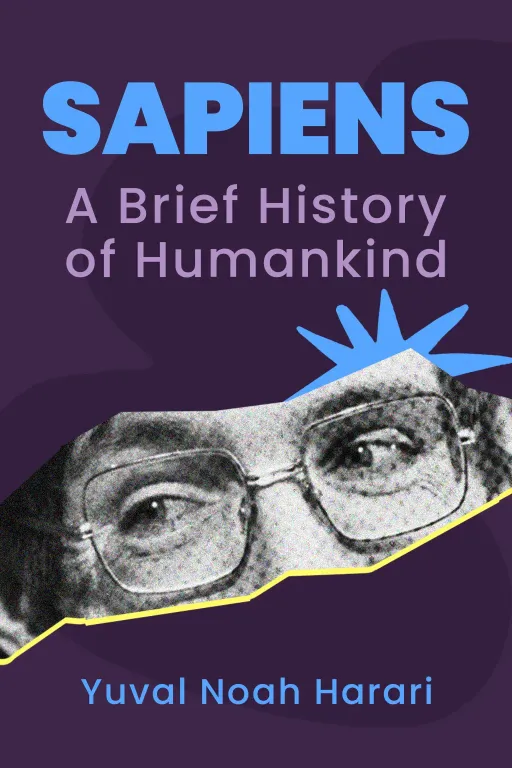
Nova: Today, we’re looking at two monumental works that have profoundly reshaped our understanding of humanity. First, Yuval Noah Harari’s global phenomenon, "Sapiens: A Brief History of Humankind." Harari, a historian from Israel, wrote a book that became an absolute sensation, selling millions and translated into dozens of languages. It really shifted how countless people view history itself, praised for its sweeping narrative, though also critiqued for its broad generalizations.
Atlas: I can see how a book like that would resonate, especially for curious explorers who want to connect the dots across vast stretches of time. But what about the 'making it up' part? Is that where Harari comes in?
Nova: Absolutely. Harari posits that our ability to believe in shared fictions is what truly differentiates Homo sapiens and allowed us to dominate the planet. And then, we’re going to pivot to a more recent, equally ambitious work that directly challenges some of those narratives: "The Dawn of Everything: A New History of Humanity" by anthropologist David Graeber and archaeologist David Wengrow. This book, tragically, was published shortly after Graeber’s passing, and it's a massive endeavor that asks us to rethink everything we thought we knew about early human societies.
Atlas: So basically, one book says we got here because of shared stories, and the other says, "Hold on, those stories about how we got here might be wrong." That’s going to resonate with anyone who feels like they’re constantly trying to sharpen their perception of the world. I'm curious how these seemingly contrasting views actually illuminate each other.
The Power of Collective Fictions
SECTION
Nova: Precisely. Let's start with Harari’s revolutionary idea in "Sapiens." He argues that what truly made us superior to other hominin species, and indeed, to all other animals, isn't our big brains or our opposable thumbs. It’s our unique capacity to create and believe in what he calls "collective fictions" or "shared myths."
Atlas: Okay, so that’s where your "we're all making it up" comes from. Collective fictions. What exactly does that mean? Is it like, Santa Claus? Or the Tooth Fairy?
Nova: That’s a good analogy, but much, much bigger. Think about things like money, nations, religions, laws, human rights, or even corporations. None of these exist objectively in the physical world. You can’t touch "France" as a single entity, or shake hands with "justice," or hug "Google" as a physical being.
Atlas: Right, I can't just stumble upon "the economy" while walking through a forest. It’s a concept.
Nova: Exactly! They are intersubjective realities. They exist because vast numbers of people collectively believe in them and act as if they are real. This ability to cooperate flexibly in large numbers, based on shared belief in things that don't physically exist, is Harari’s central explanation for human dominance. No other animal can get millions of strangers to cooperate to build a pyramid, launch a space shuttle, or create a global financial system, all based on shared stories.
Atlas: That’s amazing. It gives me chills, actually. So you’re telling me that this massive, intricate world we live in, with all its institutions and rules, is essentially built on a foundation of… shared imagination? It sounds almost fragile, but it’s clearly incredibly powerful.
Nova: It is incredibly powerful. Consider a corporation. Legally, a corporation is a "legal person." It can own property, sign contracts, sue, and be sued. But where is this "person"? It’s a story, a legal fiction, that we’ve all agreed to believe in. This fiction allows millions of investors, employees, and customers to coordinate their activities. Without that shared belief, the corporation simply ceases to exist as anything more than a building or some scattered individuals.
Atlas: So basically, you’re saying that the very structures that hold our societies together, from our economic systems to our governments, are powerful precisely because we collectively imbue them with meaning and reality. That definitely challenges my preconceived notions about… well, everything! But what about the downside? If we're all just believing in these stories, what happens when the stories change, or when some people stop believing them?
Nova: That’s where the power, and sometimes the danger, lies. When a shared fiction breaks down – say, a currency collapses, or faith in a government evaporates – the consequences can be catastrophic. But conversely, the ability to or is also how societies adapt, evolve, and sometimes even revolutionize themselves. It’s how we move from monarchies to democracies, or from barter to digital currency. It’s a constant process of storytelling and collective belief.
Atlas: That’s a really profound insight. It makes me think about how much of our daily lives are governed by these invisible threads of shared belief. It’s not just about facts; it’s about what we to be true, and then act upon.
Challenging Conventional Progress
SECTION
Nova: And that naturally leads us to the second key idea we need to talk about, which often acts as a counterpoint to what Harari describes. If our societies are built on these powerful collective fictions, what about the biggest fiction of all: the story we tell ourselves about human history itself? This is where "The Dawn of Everything" steps in, challenging the very narrative of human progress that many of us have internalized.
Atlas: Oh, I'm ready for this. My inner "Empathetic Seeker" is always looking for different perspectives. What kind of narrative are they challenging?
Nova: Graeber and Wengrow take aim at what they call the "standard narrative" of human history. This story typically goes like this: humans started in small, egalitarian hunter-gatherer bands, then invented agriculture, which led inevitably to settled life, population growth, and then, boom, hierarchical states, cities, and civilization as we know it. It's often presented as a linear, almost pre-ordained progression.
Atlas: Yeah, I’ve heard that story. It’s taught in schools. It implies that hierarchy and state-level organization are just the natural, unavoidable outcome of human development.
Nova: Exactly. But "The Dawn of Everything" presents mountains of archaeological and anthropological evidence to suggest that early human societies were far more diverse, complex, and experimental than this simple narrative allows. They weren't just progressing along a single track.
Atlas: So, the story we've been told about humanity's inevitable march to states and hierarchies... it's not the only story? Can you give an example?
Nova: Absolutely. They highlight societies that actively different paths, or even rotated between different social structures seasonally. For instance, some Indigenous peoples in North America, like the Nambikwara of Brazil or the Great Basin peoples, would live as egalitarian hunter-gatherers during certain seasons but then coalesce into larger, more hierarchical groups for specific purposes, like bison hunts or ceremonies, only to disperse again.
Atlas: That’s fascinating! It’s like they had different operating systems they could switch between depending on the needs of the moment. That’s a far cry from a fixed, linear progression.
Nova: Right. Or consider the evidence from early Mesopotamia, often seen as the cradle of civilization and the first states. Graeber and Wengrow argue that early Mesopotamian cities, for a significant period, might have been surprisingly egalitarian, even democratic, with councils and assemblies playing a much larger role than previously acknowledged, before the rise of kings and centralized states. They suggest that humans were actively experimenting with different forms of governance.
Atlas: That completely upends the idea that once agriculture came along, hierarchy was just a done deal. It implies agency, choice, and a lot more political sophistication in our ancestors than we typically give them credit for. It's like they were running social experiments for millennia!
Nova: Precisely. They weren’t just passive subjects of historical forces. Our ancestors were actively designing, debating, and living under a vast array of social arrangements. This challenges the notion that hierarchy is somehow "natural" or that complex societies be unequal. It opens up a whole new way of thinking about human potential and the choices we’ve made – and can still make – about how we organize ourselves.
Atlas: So, if we’re not locked into this inevitable march towards states and hierarchies, and if our current societies are built on these collective fictions, what does that mean for us today, the "Practical Learners" in the audience? What’s the real-world implication of understanding these deeply historical, anthropological concepts?
Synthesis & Takeaways
SECTION
Nova: That’s the million-dollar question, Atlas. Both "Sapiens" and "The Dawn of Everything" push us to critically examine the stories we tell ourselves about human nature and society. Harari shows us the incredible power of shared beliefs in shaping our reality, for better or worse. Graeber and Wengrow then reveal that the "story" of human history itself is far richer and more diverse than we’ve often been led to believe, demonstrating that our ancestors had a much broader toolkit of social organization than we assume.
Atlas: So, it’s not just about understanding history; it’s about understanding the of history, and how those narratives influence our present choices. It really makes you question the inevitability of things.
Nova: Absolutely. The deep question here is: how do the narratives we tell ourselves about our past influence the societies we build today? If we believe hierarchy is inevitable, we might not challenge it. If we understand that diverse, egalitarian forms of organization were not just possible but practiced for millennia, it expands our sense of what's possible in the future.
Atlas: That’s a hopeful thought, especially for someone driven by a desire for connection and empathy. It suggests we have more agency than we sometimes realize to shape our collective fictions for the better.
Nova: Indeed. For a tiny step this week, I’d encourage listeners to observe a cultural ritual or tradition – whether your own or one you encounter – and consider its underlying purpose and impact on community. What shared story is it reinforcing? What kind of cooperation does it enable? It’s a way to see these "collective fictions" in action, right in your everyday life.
Atlas: That’s a fantastic, practical way to engage with these ideas. It brings it from the abstract "history of humankind" right down to our human experience. It makes me think about what other stories we might be living by without even realizing it.
Nova: It’s a powerful realization that our past isn't a fixed, linear path but a tapestry woven with countless choices and narratives. And understanding that gives us the power to perhaps weave new ones. What narratives are you living by, and are they serving the future you want to create?
Nova: This is Aibrary. Congratulations on your growth!