The Hidden Threads: How Narratives Shape Your Worldview
Golden Hook & Introduction
SECTION
Nova: Atlas, if I told you that the very fabric of our reality, from the money in your pocket to the nation you call home, is built on something entirely made up, something we collectively to believe in, what would you say?
Atlas: I'd say, 'Tell me more, Nova, because my bank account could use a good story right about now!' But seriously, it sounds like we're about to pull back the curtain on some fundamental illusions.
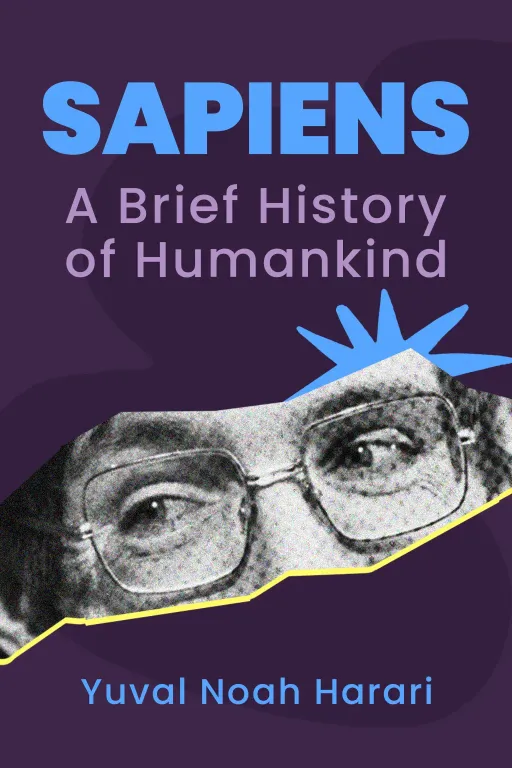
Nova: Exactly! And we're doing it through the lens of two incredible thinkers: Yuval Noah Harari, the historian whose book became a global phenomenon, challenging our most basic assumptions about what it means to be human. Harari, a professor at the Hebrew University of Jerusalem, became a global sensation almost overnight with, which, despite its academic rigor, resonated with millions by offering a sweeping, provocative narrative of human history.
Atlas: And that book definitely sparked some lively debate, especially with its grand generalizations.
Nova: It absolutely did. And we’re pairing that with Jonathan Gottschall, a literary scholar and evolutionary psychologist, who, in, shows us that we are, quite literally, wired for narrative. Gottschall, with his background in both humanities and science, offers this fascinating bridge, making complex cognitive processes incredibly accessible.
Atlas: So, Harari gives us the macro, the big picture of shared fictions, and Gottschall brings it down to the micro, how our individual brains process and need stories. That’s a powerful combo.
Nova: It is. Today we'll dive deep into this from three perspectives. First, we'll explore the 'narrative blind spot' that makes us believe stories over objective truth. Then, we'll discuss how 'shared fictions' are the very glue of human cooperation. And finally, we'll focus on how storytelling acts as a primary cognitive tool for making sense of our incredibly complex world.
The Narrative Blind Spot: Why We Believe Stories Over Truth
SECTION
Atlas: Okay, so you mentioned this 'narrative blind spot' right off the bat, Nova. What exactly do you mean by that? Are you saying we're all just walking around, making decisions based on fiction?
Nova: Well, in a way, yes. Our minds are deeply wired for stories. We often believe our understanding of the world is purely rational, right? We think we process facts, weigh evidence, and then make logical decisions.
Atlas: That's certainly the story I tell myself.
Nova: Exactly! But this narrative bias, this powerful blind spot, can subtly shape our beliefs and decisions, making it harder to see objective truth. Jonathan Gottschall really hammers this home. He explains that storytelling isn't just entertainment; it's a fundamental cognitive tool. We constantly make sense of the world by fitting events into narratives, often simplifying complex realities.
Atlas: So, when I hear a personal anecdote, even if it contradicts a mountain of data, it’s more likely to stick with me? That sounds kind of… dangerous.
Nova: It can be. Think about a political debate. One candidate might present a detailed policy plan with statistics and projections. The other might tell a compelling story about a single family struggling, a narrative that evokes strong emotions. Which one do you think often resonates more with voters?
Atlas: Oh, I know that feeling. The story about the family, every time. It’s like my brain just latches onto it and forgets all the numbers.
Nova: Precisely. It's not about being unintelligent or easily fooled; it's about how our brains are designed to process information. Stories provide a framework, a beginning, middle, and end, a sense of meaning and connection that raw data often lacks. Gottschall suggests we're 'storytelling animals' because it helps us organize the chaos of information around us. We create mental models, often in narrative form, to predict and navigate our environment.
Atlas: So, this isn’t about being irrational, it’s about a deeply ingrained cognitive wiring? It’s like our brains are constantly trying to write a novel, even when they should be writing a spreadsheet.
Nova: That’s a brilliant analogy, Atlas! And the problem arises when the novel is more compelling than the truth. This narrative bias can lead us to overlook crucial information, dismiss inconvenient facts, or even double down on beliefs that are demonstrably false, simply because they fit a more satisfying or familiar story. It's why conspiracy theories can gain so much traction. They offer a coherent, albeit false, narrative that explains complex events in a simple, often emotionally resonant way.
Atlas: That makes me wonder, how often are we operating under a convenient narrative that just isn’t true, simply because it feels right or because it’s the story we’re comfortable with?
Nova: More often than we'd like to admit. Recognizing this narrative blind spot is the first step towards critical thinking. It allows us to pause and ask: "Is this truly objective, or am I being swayed by a compelling story?"
Shared Fictions & Human Cooperation: The Power of Collective Storytelling
SECTION
Nova: And this individual tendency to gravitate towards stories, Atlas, scales up to something truly monumental: the shared fictions that hold our entire civilization together.
Atlas: Okay, shared fictions. Are we talking about Santa Claus and the Tooth Fairy, or something a bit more… adult?
Nova: Much more adult, though the underlying mechanism isn't entirely dissimilar. Yuval Noah Harari argues that our unique ability to create and believe in shared fictions – from money to nations to human rights – is what allowed humans to cooperate on a large scale and dominate the planet. These narratives are not 'true' in a biological sense; you can't touch 'money' in its abstract form, or physically point to 'France' as a single entity separate from its geography. But they are incredibly powerful.
Atlas: So, the dollar bill in my wallet is just a really, really good story that everyone agrees to believe?
Nova: Precisely! Or a corporation. A corporation isn’t a physical thing; it’s a legal fiction, a story we've collectively agreed has rights and responsibilities. Lions can cooperate because they're genetically programmed to do so in small groups. But how do millions of strangers cooperate to build a city, a global economy, or send a rocket to Mars? They do it by believing in the same shared stories, the same fictions.
Atlas: That’s wild. It’s like humanity is just one giant, ongoing improv show where we all agree on the rules and plot points.
Nova: In a way, yes! Harari suggests that without these shared fictions, human societies as we know them wouldn't exist. We'd still be living in small, tribal groups. The very concept of a nation, for example, is a shared fiction. People are willing to fight and die for their nation, not because it's a biological reality, but because they believe in the narrative of their shared history, culture, and destiny.
Atlas: So, if these narratives are so powerful, how do we critically examine them? I mean, if they're the glue holding everything together, pulling at the threads seems risky.
Nova: That's the deep question, isn't it? Harari isn't saying these fictions are bad; he's saying they are. But recognizing them as fictions, rather than objective truths, gives us agency. It allows us to ask: Is this story still serving us? Could we create a better one? Every major societal shift, every revolution, every innovation started with a compelling new story that captured the collective imagination and replaced an older, less functional one. Think about the story of divine right of kings versus the story of democracy.
Atlas: So, the Enlightenment was essentially a massive narrative rewrite?
Nova: A profound one, yes. It demonstrates that while these stories are incredibly powerful, they are not immutable. We have the capacity, and perhaps the responsibility, to update and refine the narratives that underpin our collective existence.
Storytelling as a Cognitive Tool: Making Sense of a Complex World
SECTION
Atlas: Okay, so we've got the narrative blind spot and the shared fictions that bind societies. But what about the stories we tell ourselves, the ones that help us navigate the everyday chaos of our personal lives?
Nova: That's where Gottschall's work truly shines, bringing it back to the individual. Storytelling is a fundamental cognitive tool we use to cope with the overwhelming complexity of information and events around us. We're constantly trying to make sense of things, and stories are our brain's preferred method.
Atlas: So, when my doctor explains a diagnosis, and she tells me a little narrative about how the medication works in my body, I'm more likely to grasp it than if she just gives me a list of chemical reactions?
Nova: Absolutely. A good doctor understands this. Instead of overwhelming you with medical jargon, they'll often create a simple, cause-and-effect narrative that helps you understand what's happening and what you need to do. We remember events better when they're framed as a story because stories provide structure, meaning, and emotional context. They help us simplify, organize, and even rehearse for life's challenges.
Atlas: That's actually really inspiring. It’s like our brains are constantly trying to find the plot in our lives. So, what core 'story' about the world are you currently operating under, and how might it be limiting your perspective? That's a deep question from our source material.
Nova: It really is. Think about personal narratives. Someone might tell themselves, "I'm not a morning person," or "I'm just naturally bad at math." These are stories we adopt, and while they might have some basis in experience, they often become self-fulfilling prophecies, limiting our potential.
Atlas: I've definitely heard people say, "I'm just not a creative person," and it becomes this ironclad rule they live by.
Nova: Exactly. Recognizing these personal narratives, these stories we tell ourselves about who we are and what we're capable of, is incredibly empowering. It allows us to challenge them, to rewrite them if they're no longer serving us. Nova's take on this is spot on: recognizing the narrative structures that underpin our reality allows us to critically examine the stories we're told and the ones we tell ourselves. It’s about gaining agency over our own internal operating system.
Synthesis & Takeaways
SECTION
Nova: So, what we've really uncovered today, Atlas, is that narratives aren't just a pleasant diversion; they are the fundamental operating system of our minds and societies. From how we individually process information to how billions of us cooperate, stories are the hidden threads shaping our worldview.
Atlas: And the profound implication of all this is that understanding this power allows us to critically examine the narratives we're told, whether from media, politicians, or even our own internal monologue. It gives us a chance to step outside the story and see the broader picture.
Nova: It's about recognizing that every major societal shift, every revolution, every innovation started with a compelling new story that captured the collective imagination. And on a personal level, it’s about understanding that the stories we tell ourselves about who we are and what’s possible are not fixed truths, but narratives we can choose to revise or even completely rewrite.
Atlas: So, if our world is built on stories, what new story are we going to choose to believe in, or even better, create, for ourselves and for our collective future?
Nova: A powerful question, Atlas. And one that puts the power of narrative back into our hands.
Nova: This is Aibrary. Congratulations on your growth!