The Hidden Logic of Culture: Why Your Environment Shapes Everything
Golden Hook & Introduction
SECTION
Nova: Atlas, if I told you the single most powerful force shaping your success, your team's performance, and even global society was invisible, intangible, and often dismissed as 'fluff,' what would you say?
Atlas: I'd probably say, "Sounds like my last job's HR department trying to justify the office ping-pong table." But I'm listening. That's a bold claim.
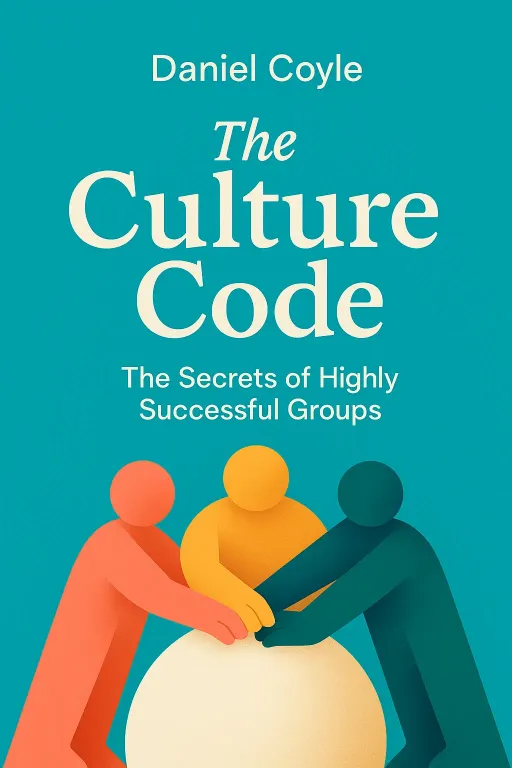
Nova: Well, it's a claim we're going to unpack today by looking at some incredibly insightful work, particularly from Daniel Coyle's The Culture Code and Yuval Noah Harari's Sapiens.
Atlas: Oh, interesting pairing!
Nova: Right? Coyle, a journalist who spent years embedded with elite teams, didn't just report on culture; he meticulously dissected its mechanics. Harari, a historian whose work often challenges our fundamental assumptions about humanity, shows us the ancient roots of its power. Both offer profound insights into why culture isn't accidental; it’s built, often subconsciously, on deep psychological principles and shared narratives.
Atlas: So, less about the ping-pong table and more about the invisible forces at play. I'm intrigued.
Culture as an Invisible Force and Strategic Asset
SECTION
Nova: Exactly. And the core of it starts with what we call 'the blind spot.' We often treat culture as this soft, intangible thing—nice to have, maybe, but not truly critical. But it's actually a powerful, almost invisible force that shapes everything. Not understanding its deep roots can lead to immense frustration in teams, organizations, and even society.
Atlas: Okay, but isn't culture just 'how we do things around here'? How can it be a strategic asset if it's so fuzzy and hard to define? It feels like something that just 'happens.'
Nova: That’s the misconception we need to challenge. Culture, rather than being soft, is a deeply logical system of shared assumptions and behaviors. Think of it like gravity. You can't see it, you can't touch it, but it dictates everything from how you walk to how planets orbit. Culture is the social gravity of a group. It’s what makes people act a certain way even when no one is explicitly telling them to.
Atlas: That’s a powerful image. But for someone leading a team, how do you even begin to 'manage' social gravity? It sounds overwhelming, like trying to wrestle with something you can't even grasp.
Nova: The key is understanding its hidden logic. It’s not about controlling every individual action, but about shaping the environment. Coyle, in The Culture Code, gives an incredible example of a struggling sports team. They weren't losing because they lacked talent; their culture was toxic. Players were afraid to make mistakes, trust was low, and communication was guarded.
Atlas: So, the unspoken rules were actually them from performing?
Nova: Precisely. Their coach, instead of just focusing on new plays, deliberately started implementing small, consistent rituals designed to build trust and shared identity. Things like having team members explicitly acknowledge each other's contributions in meetings, or creating safe spaces for discussing failures without judgment. The process was slow, but the outcome was dramatic: a complete turnaround in performance, not because they got new players, but because they reshaped their social gravity.
Atlas: Wow, so it's not just about 'good vibes,' it's about observable behaviors and reactions that create a self-reinforcing system. That's a huge shift in perspective from just saying "we need better culture."
The Building Blocks of High-Performing Cultures: Safety, Vulnerability, and Purpose
SECTION
Nova: Exactly. And that naturally leads us to the specific building blocks Coyle identified in The Culture Code for these high-performing cultures: building safety, sharing vulnerability, and establishing purpose.
Atlas: Safety, vulnerability, purpose... I can see safety. People need to feel secure. But vulnerability? That sounds counterintuitive for a high-performing team. Isn't that a weakness? You want people to be strong and confident, right?
Nova: That's a common misconception. Psychological safety isn't about being nice or avoiding conflict. It's about feeling safe enough to take risks, to admit mistakes, to offer half-baked ideas, and to ask 'dumb questions' without fear of retribution or looking foolish. It's the foundation. And vulnerability is the catalyst for trust.
Atlas: So, it's not about leaders being weak, but about them showing they don't have all the answers?
Nova: Precisely. It’s leaders modeling the behavior of asking for help, admitting their own struggles, or acknowledging uncertainty. That's how real bonds form, and how teams become truly resilient and adaptive. Coyle observed that the most effective leaders weren't necessarily the most charismatic, but the ones who created space for others to be fully human, flaws and all.
Atlas: Ah, so it's about being human and creating space for others to be human too. That’s a fundamentally different approach to leadership. How does purpose fit into this?
Nova: Purpose connects everyone to a meaningful shared goal. It's the 'why' behind the 'what.' Coyle gives an example of a company that was struggling with employee engagement. Their mission statement was generic, focused on market share. They revamped it, emphasizing how their product genuinely improved people's lives. The shift wasn't just words; it was a rallying cry that gave employees a reason to be vulnerable, to take risks, and to truly care about the outcome.
Atlas: So, it's about creating a container where people feel safe, connect authentically through vulnerability, and then aim for a meaningful shared goal. That makes a lot of sense, but it still feels very 'modern business.' Where do these deeper cultural roots come from? This can't be entirely new, can it?
Shared Myths and Collective Fictions: The Deep Structure of Culture
SECTION
Nova: That's a fantastic question, and it's where Harari's Sapiens provides a mind-bending historical lens. He argues that our ability to cooperate in massive numbers – far beyond what any other animal can do – comes from our unique capacity to believe in 'shared myths' or 'collective fictions.'
Atlas: Shared myths? Like ancient gods and dragons? What does that have to do with my company's culture or my team's performance?
Nova: Exactly! Think about it. What is a company? What is a nation? They're not physical entities in the way a tree or a human is. They are legal fictions, stories we all agree to believe in – with shared values, a mission, a brand identity, a national narrative. These are our modern myths. Harari explains how these shared fictions, whether they're about gods, nations, or corporate values, enable us to trust strangers and work towards common goals, even if we'll never meet everyone involved.
Atlas: Whoa, so you're saying the 'culture' of a modern tech startup isn't that different from an ancient tribe united by belief in a rain god? Both are held together by shared stories we agree are real, even if they're not physically tangible?
Nova: Precisely. And understanding that deep human wiring – that we are fundamentally story-believing, myth-making creatures – changes how you approach culture. It's not just about rules, or even just safety and vulnerability; it's about the narratives that bind us, the unspoken rules, the 'collective fictions' that dictate how we behave when no one's watching, how we define our 'us' versus 'them.'
Atlas: That's incredibly powerful. It makes culture feel less like a 'management task' and more like understanding fundamental human psychology and our species' unique ability to create shared realities.
Synthesis & Takeaways
SECTION
Nova: It is. The profound insight here, from both Coyle and Harari, is that culture isn't a nebulous, accidental byproduct. It's a deliberately, or often subconsciously, constructed system of shared beliefs and behaviors, whether those are the explicit skills of safety and vulnerability that Coyle identifies, or the deeper, implicit shared myths and collective fictions that Harari shows allow us to cooperate at scale.
Atlas: So, the 'hidden logic' is that culture is designed, not discovered. And if we understand that, we can actively shape it. It's not just about a mission statement; it's about the stories we tell, the safety we build, and the vulnerability we allow to foster trust. That's a game-changer for anyone trying to build a better team or even just understand their own social dynamics. It makes the invisible visible.
Nova: Absolutely. And for our listeners, we want to leave you with this thought: Think about a group you belong to, big or small – your family, your workplace, your community. What are its unspoken rules, its shared stories, its collective fictions? How do they shape its actions, for better or worse? Recognizing them is the first step towards intentionally shaping them towards a better, more effective future.
Atlas: That's a powerful challenge. Because once you see the hidden logic, you can't unsee it, and you're empowered to change it. This isn't just about work; it's about how we interact with the world and build our shared human experience.
Nova: Indeed. And that's all for today's deep dive into the hidden logic of culture.
Atlas: This is Aibrary. Congratulations on your growth!