The Echoes of History: Finding Your Footing in a Fast-Changing World
Golden Hook & Introduction
SECTION
Nova: Here's a thought that might just shake you a little: your biggest, most unique problem right now? The one that keeps you up at night, feeling utterly unprecedented? It's probably been solved before, centuries ago. You just haven't looked in the right place.
Atlas: Oh, I love a good shake-up, Nova, but "solved before"? That sounds a bit out there for, say, navigating the complexities of AI ethics or the sheer scale of climate change. Are you telling me ancient Sumerians had a playbook for cryptocurrency?
Nova: Not a direct playbook, Atlas, but a profound lesson in pattern recognition. We're talking about the echoes of history, a concept that completely transforms how we find our footing in this fast-changing world. Our problems often feel singular, unique to our moment, but history, when viewed through the right lens, shows us enduring human conditions, recurring challenges, and surprising solutions.
Atlas: Right. History isn't just dates and names, it's a profound teacher for modern dilemmas.
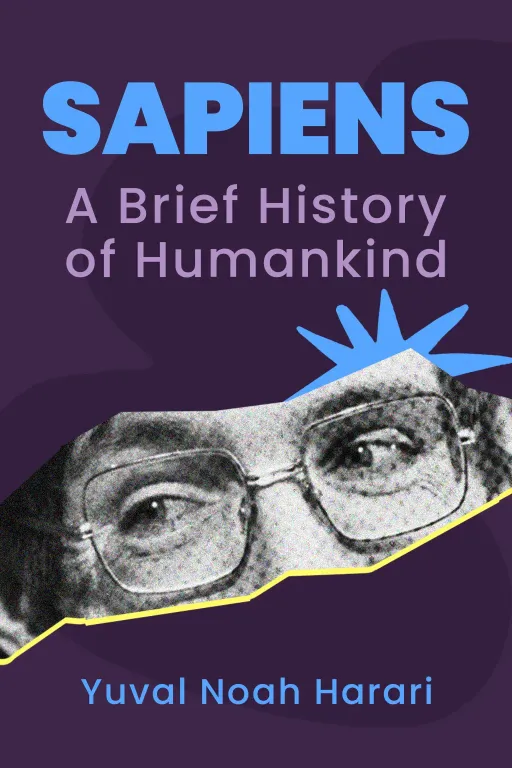
Nova: Exactly! And today, we're diving into that idea, drawing heavily from the insights in "The Echoes of History" and two monumental books that exemplify this shift in perspective: "Sapiens: A Brief History of Humankind" by Yuval Noah Harari, and "Guns, Germs, and Steel" by Jared Diamond. Harari, a medieval historian, burst onto the global scene by daring to write a sweeping, accessible history of humanity, making complex academic ideas an overnight sensation. And Diamond, well, his interdisciplinary approach, pulling from everything from geography to biology, earned him a Pulitzer Prize and fundamentally changed how many of us view global disparities.
Atlas: That's a powerful claim, and these books definitely have a reputation, but it makes me wonder, Nova, why do we keep missing these echoes? Why do we constantly feel like we're reinventing the wheel when history might hold the blueprint?
Nova: That, Atlas, is what we call "The Blind Spot."
The Blind Spot: Why We Ignore History's Echoes
SECTION
Nova: It's the common human tendency to perceive our current challenges as entirely novel, overlooking the recurring patterns and timeless wisdom that history has laid out for us. We get so caught up in the immediate, the unprecedented headlines, that we lose sight of the long game.
Atlas: I can definitely relate to that. When you're in the thick of a problem, whether it's a personal challenge or a global crisis, it feels like it's different. This time, the stakes are higher, the variables are new.
Nova: And that's precisely the blind spot. Let me give you a vivid example: the Great Horse Manure Crisis of 1894.
Atlas: Oh, I've heard whispers of this. It sounds… fragrant.
Nova: It was, indeed. Picture London, late 19th century. The city is booming, and the primary mode of transport is the horse-drawn carriage. Millions of horses. And with millions of horses comes... millions of pounds of manure every single day.
Atlas: Okay, so the cause is clear: rapid urbanization and horse power.
Nova: Exactly. The process was this: city streets became literally clogged. Manure piled up, attracting flies, spreading disease. Experts at the time held the First International Urban Planning Conference in New York, and their collective wisdom was grim. They predicted that by the mid-20th century, cities like London would be buried under nine feet of horse dung. Nine feet! It was an existential urban crisis.
Atlas: Wow, that's kind of heartbreaking, but also, for our listeners who are managing high-pressure teams, this concept might feel impossible to implement, but wait, so people genuinely thought they'd drown in horse poop? That sounds almost comically short-sighted, but I guess it's easy to judge from our vantage point. I imagine a lot of our listeners feel like their current challenges around, say, information overload or the future of work, are utterly unprecedented.
Nova: They do! And the outcome is the crucial part of this story. The crisis didn't happen. Why? Because an unforeseen technological solution emerged: the automobile. It completely negated the problem. No one at that 1894 conference could have predicted it, because they were too focused on the immediate problem within their current framework.
Atlas: So basically you’re saying that every generation has its "horse manure crisis" – a seemingly intractable problem that feels completely new, but often has historical parallels in terms of how society adapted or innovated? That’s going to resonate with anyone who struggles with feeling overwhelmed by current events.
Nova: Precisely. Our proximity to a problem often limits our perspective, making us believe its uniqueness. But the long arc of history often reveals solutions or at least pathways not visible in the immediate present. It shows us that human ingenuity, adaptation, and unforeseen shifts have consistently resolved crises that once seemed insurmountable.
History as a Navigational Tool: Unpacking the Long Game
SECTION
Nova: Exactly. And understanding that pattern is where books like "Sapiens" and "Guns, Germs, and Steel" become invaluable. They offer us a wider lens, helping us see the "long game" of human history and how ancient decisions still echo today.
Atlas: I'm curious, how do they do that? Like, how does understanding early human history or geographic factors help us navigate, say, the complexities of globalization or technological disruption today?
Nova: Let's start with Harari's "Sapiens." He masterfully connects ancient cognitive and agricultural revolutions to our current dilemmas. One of his most profound insights is about "fictional realities." He argues that what truly sets Homo sapiens apart is our ability to believe in shared fictions – things like money, nations, corporations, even human rights. These aren't tangible, but our collective belief in them allows for mass cooperation on an unprecedented scale.
Atlas: So you're saying our entire modern society, from our economy to our sense of national identity, is built on stories we all agree to believe? That’s a bit like imagining a lot of our listeners navigating the stock market or a political landscape, where the rules are often unwritten but universally accepted.
Nova: Absolutely. Consider the invention of corporate entities. Before them, trade was limited by personal trust. But a corporation, a legal fiction, allowed for large-scale projects, global trade, and economic systems far beyond individual relationships. This ability to create and believe in these fictions is a historical force that shapes everything from economics to our sense of purpose even today.
Atlas: Okay, I see how "fictional realities" link ancient cooperation to modern global structures. But what about "Guns, Germs, and Steel"? How does Jared Diamond's work fit into this "long game" perspective?
Nova: Diamond takes it a step further, explaining certain societies were able to develop these complex "fictional realities" and technological advantages faster than others. He unpacks the geographic and environmental factors that shaped human societies, revealing deep historical forces still influencing global disparities today.
Atlas: So, it's like a scientific explanation for why some places got a head start in this global game of Monopoly, rather than it being about inherent superiority?
Nova: Precisely. Diamond shows how factors like the availability of domesticable plants and animals, or the east-west orientation of continents facilitating the spread of agriculture and innovation, led to agricultural surpluses. Those surpluses freed up people to specialize, leading to the development of writing, metallurgy, and complex political structures. And crucially, exposure to domesticated animals also brought diseases, giving early agricultural societies immunity that later proved devastating to isolated populations.
Atlas: Whoa, that gives me chills. So it's not just about what humans, but they were and what resources they had, that set the stage for millennia? That makes me wonder, how does understanding ancient fictions or geographic luck help someone navigating, say, a volatile stock market or a disruptive tech industry today? It feels so far removed. Like, is knowing about early Mesopotamian agriculture really going to help me understand crypto?
Nova: It's not about finding a direct answer in the past, Atlas, but understanding the that shaped the past, to better predict and navigate the forces shaping our present. It's about discerning the underlying currents, not just the individual waves. "Guns, Germs, and Steel" helped many understand why certain regions developed faster, challenging purely racial or cultural explanations, though it also faced some criticisms for its deterministic leanings, which sparked important academic debates. Recognizing these deep historical forces influencing wealth distribution, technological adoption, and even our collective psychological responses to change—that's the long game.
Atlas: I see. So it's not about finding a direct answer in the past, but understanding the that shaped the past, to better predict and navigate the forces shaping our present. It's about seeing the currents, not just the waves. That’s a powerful distinction.
Synthesis & Takeaways
SECTION
Nova: Exactly. It's moving beyond the blind spot to actively use history as a navigational tool. It’s about recognizing that while the specifics of our challenges may be new, the underlying human condition, the patterns of cooperation and conflict, innovation and stagnation, are often echoes of what's come before.
Atlas: So, for our listeners, what current challenge are they facing that might be better understood by looking at similar patterns in history, rather than seeing it as entirely new? Whether it's a personal career pivot, a societal shift, or a global crisis, there’s likely a historical echo.
Nova: I’d encourage everyone to ask themselves that very question. Adopt a "long game" perspective. Pick up "Sapiens" or "Guns, Germs, and Steel," or simply pause when faced with a seemingly unprecedented problem and ask: "Where have I seen this pattern before? What historical forces might be at play here?"
Atlas: Honestly, that’s actually really inspiring. It means we're not just flailing in the dark with unique problems, but we have this vast library of human experience to draw from. It’s like having cheat codes for life, if you know where to look. It transforms feeling overwhelmed into feeling empowered.
Nova: And that's the true power of "The Echoes of History." It's about finding your footing, not by ignoring the past, but by embracing its profound lessons to illuminate your present and future.
Atlas: That’s a truly insightful way to frame it, Nova.
Nova: This is Aibrary. Congratulations on your growth!