Beyond the Lab Bench: How Science Shapes Your Everyday Reality
Golden Hook & Introduction
SECTION
Nova: Most of us think of science as something happening in a lab, far away from our lives, right? Beakers, test tubes, complicated equations. But what if I told you that 'scientific thinking' is actually the most powerful personal development tool you're probably not using?
Atlas: Whoa. Hold on. Nova, are you telling me that my struggle to choose between oat milk and almond milk for my coffee can be solved with a scientific hypothesis? Because honestly, that feels a bit out there. My daily life isn’t exactly CERN.
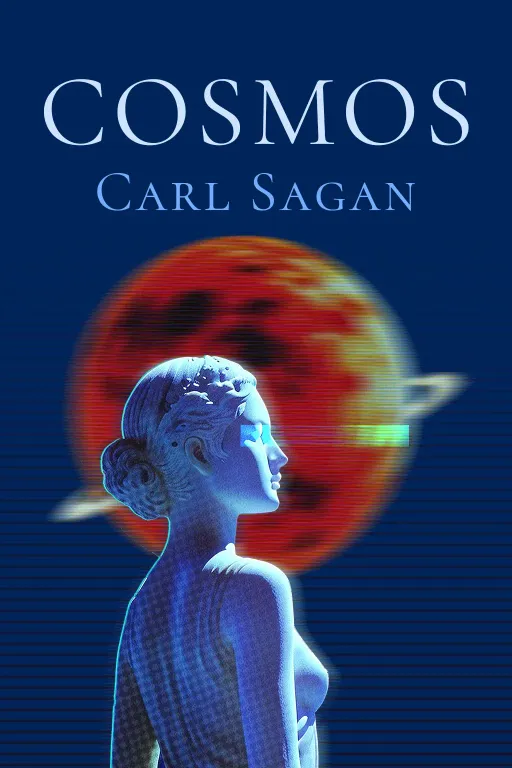
Nova: Not exactly CERN, no, but the apply. Today, Atlas, we’re diving into how science profoundly shapes our everyday reality, not just in the grand cosmic sense, but in the most personal ways imaginable. We’re drawing inspiration from two monumental works: Carl Sagan’s iconic and Yuval Noah Harari’s groundbreaking.
Atlas: That’s a fascinating pairing. I remember from childhood, just this incredible journey through the universe. And truly shifted my perspective on, well, everything human.
Nova: Exactly! What’s so remarkable about both Sagan and Harari is their shared genius for making the universe, and our place in it, accessible. Sagan, with his poetic prose and deep understanding of astrophysics, brought the wonders of the cosmos into millions of homes, transforming abstract science into a shared cultural story. Harari, a historian with a background in medieval warfare, unexpectedly synthesized vast scientific and historical data to explain human dominance in a way that resonated globally, sparking immense debate and critical acclaim. They didn't just present facts; they wove narratives that fundamentally changed how we see ourselves.
Atlas: Right. And for a curious learner, someone who enjoys deep thinking, these aren't just books; they're invitations to rethink reality. But how do these grand narratives actually shape our "everyday reality" beyond just, you know, feeling small in the face of the universe?
From Abstract Facts to Grand Narratives: The Power of Science as Storytelling
SECTION
Nova: That’s the core of what we’re exploring. We often have this "blind spot" when it comes to science. We see it as distant facts, a collection of data points, rather than the continuous, awe-inspiring narrative of everything. Sagan, through, absolutely obliterated that blind spot. He didn’t just teach astronomy; he connected the birth of stars to the atoms in our bodies, the evolution of life to our current consciousness. He made you understand that you are literally star-stuff, that cosmic history your history.
Atlas: Oh, I love that. The "cosmic calendar" analogy, where the entire history of the universe is compressed into a single year, and human civilization is just the last few seconds of December 31st. It’s humbling, but also incredibly unifying.
Nova: Precisely. It expands our sense of wonder and place. It’s not about making us feel insignificant, but about making us feel connected to a story far grander than ourselves. And then, we have Harari with, who takes that grand narrative and zooms right into humanity. He uses scientific and historical data to explain how our species, Homo sapiens, came to dominate the planet.
Atlas: And he does it by introducing this concept of "shared fictions." That was a game-changer for me.
Nova: Absolutely. Harari argues that our unique ability to believe in abstract concepts – things like money, nations, religions, laws – these "shared fictions" that don't physically exist but are collectively agreed upon, are what allowed us to cooperate on a massive scale. It's not just a historical observation; it’s an insight grounded in evolutionary biology and anthropology, exploring how our brains evolved to create and believe these stories. This collective belief, this shared fiction, is our superpower, allowing millions of strangers to work together towards common goals, something no other animal can do.
Atlas: So you’re saying everything we believe in, all our societal structures, are just made up? That sounds a bit cynical, doesn't it? Like it strips meaning away.
Nova: Not cynical at all, Atlas. It's profoundly insightful. Harari isn't saying these fictions are "lies" in a derogatory sense. He’s showing they are essential, complex frameworks that enable human cooperation and progress. Without the shared fiction of a nation, there’s no society. Without the shared fiction of money, there’s no global economy. These aren't just abstract ideas; they're the operating system of our reality, shaped and understood through a scientific lens of human behavior and evolution. They are powerful, necessary inventions that allow us to build cities, create complex technologies, and yes, even podcast.
Atlas: That makes sense. It’s not about them being false, but about understanding their and – how they scientifically allow us to achieve things far beyond individual capability. It gives you a whole new perspective on daily interactions, doesn’t it? Like, why we trust a piece of paper with a number on it.
Nova: Exactly! It’s a powerful story of collective belief, underpinned by scientific understanding of human psychology and social dynamics. Both Sagan and Harari, in their own ways, bridge that gap between abstract science and personal meaning, helping us see the grand tapestry we are part of, and how we ourselves are woven into it.
The Scientific Mindset: A Toolkit for Everyday Challenges
SECTION
Atlas: Okay, so we've got the grand narrative; the universe is incredible, and shared fictions explain human society. But for someone like me, or our listeners, who might be facing a genuinely tough personal challenge right now – maybe a career decision, a relationship hurdle, a health goal – how does 'thinking scientifically' actually help? It can feel a bit abstract to apply lab principles to my messy life.
Nova: That’s a brilliant question, and it’s where the power truly lies. The scientific mindset isn't just for scientists in labs; it's an inquiry-driven approach to problem. It means moving beyond gut feelings or assumptions and adopting a systematic way of thinking. You define the problem clearly, you form hypotheses about potential solutions, you test those assumptions, and you gather evidence to see what works and what doesn't.
Atlas: So, instead of just panicking about a personal setback, I should... observe the variables? Identify controllable factors? That sounds like a lot of work when I just want to curl up with ice cream.
Nova: It can feel that way initially, but it becomes incredibly empowering. Let’s take your career decision example. Instead of just agonizing, you apply the scientific method. First, define the problem: "I'm unhappy in my current role and considering a switch." Next, form hypotheses: "Hypothesis A: Switching to X industry will make me happier because of Y factors. Hypothesis B: Staying in my current industry but changing companies will solve Z problems."
Atlas: Okay, I’m following. So then I… experiment? I don't just quit my job to test a hypothesis.
Nova: Exactly! You design small, low-risk experiments. For Hypothesis A, your "experiment" might be: talk to five people already in X industry, take an online course related to X to gauge interest, or volunteer for a related project on the side. You’re collecting data, not making a leap of faith. For Hypothesis B, you might update your resume, network with recruiters in your current industry, and analyze what specifically makes you unhappy in your current company versus the industry itself.
Atlas: That makes sense! It’s about taking the emotion out of it and looking at it like a problem to be solved, not just a feeling to be endured. It’s like being your own personal scientist, gathering data before making a major life decision. But what if my "experiments" fail? What if the online course is boring, or the people in X industry seem just as stressed?
Nova: Ah, that's where the scientific mindset truly shines. A "failed experiment" in science isn't a failure; it’s data. It tells you something important: that hypothesis was incorrect, or at least incomplete. So, you learn from it, refine your hypothesis, and design a new experiment. You iterate. This process builds immense resilience and objectivity. You stop viewing setbacks as personal failures and start seeing them as valuable information guiding your next, more informed step. It’s about being curious about the outcome, not attached to a specific one.
Atlas: That’s actually really inspiring. It shifts the entire perspective from "I'm stuck" to "I'm gathering data to find the best path." It gives you agency, even when things feel uncertain. I imagine a lot of our listeners who are navigating complex career changes or personal growth journeys would find that incredibly useful.
Nova: It’s about bringing that same spirit of inquiry and evidence-based decision-making from the grand cosmic narrative down to the daily minutiae of our lives. It’s how we move from simply being part of the story to actively writing our own.
Synthesis & Takeaways
SECTION
Nova: So, in essence, the grand narrative of science, whether it's Sagan revealing our cosmic origins or Harari dissecting our collective human story, gives us profound perspective and fuels our sense of wonder. It shows us the 'what' and the 'why' of existence.
Atlas: And then, the scientific mindset gives us the 'how.' How to navigate our personal lives with the same kind of curiosity, objectivity, and iterative learning that scientists use to unlock the universe’s secrets. It’s about moving from passive awe to active inquiry.
Nova: Precisely. It’s not just about knowing facts; it’s about embracing a way of thinking that empowers you to understand the world, and yourself, more deeply. It allows you to challenge assumptions, test your own biases, and continuously refine your understanding, making you a more effective and resilient individual in every aspect of life.
Atlas: That’s such a hopeful way to look at it. It gives you a framework for approaching anything, big or small. For our listeners who love to learn and think deeply, this is truly a high-value insight.
Nova: Absolutely. Our challenge for you this week is to identify one current personal challenge you’re facing, big or small. Now, instead of just worrying, try to approach it with a scientific mindset. Define the problem, form a hypothesis about a solution, and design a small, low-risk experiment to test it.
Atlas: And hey, we’d love to hear about your personal "experiments" and insights. Share them with us on social media! Let’s build a community of inquiry.
Nova: Because understanding isn't just about what's out there; it's about what you do with that knowledge right here, right now. This is Aibrary. Congratulations on your growth!