Beyond the Buzzwords: Understanding Culture Through Its Hidden Mechanisms
Golden Hook & Introduction
SECTION
Nova: Atlas, If I asked you to sum up 'company culture' in one word, what would it be?
Atlas: Oh, man. 'Buzzword-bingo'? Or maybe 'HR-mandated fun'? Definitely something that makes me roll my eyes. I mean, it’s usually either vague promises or a list of values nobody actually lives by.
Nova: Exactly! That's the trap, isn't it? We often talk about culture as if it's a fixed entity, something you write on a wall or print in a handbook. But what if that perspective is actually our biggest blind spot?
Atlas: Hold on, you're saying culture isn't just about "innovation" and "collaboration" written in fancy fonts? My world is crumbling.
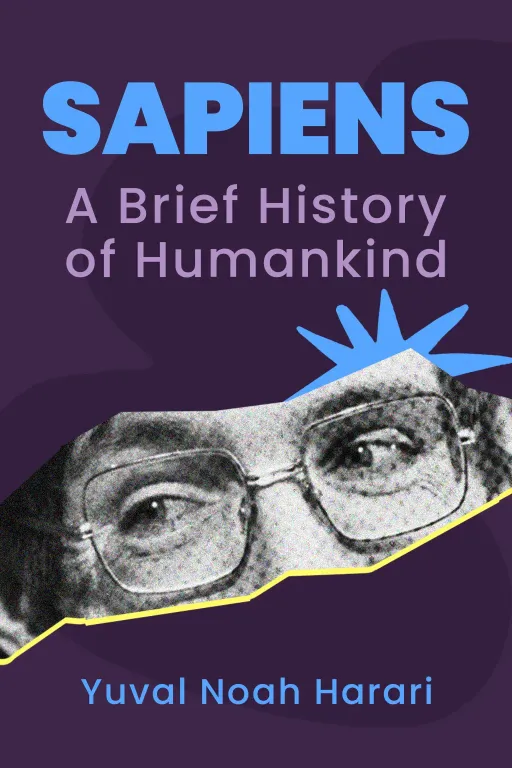
Nova: Well, your world is about to get a lot more interesting. Today, we're going beyond those buzzwords to understand culture through its hidden mechanisms. We’re drawing on the profound insights of intellectual giants like Yuval Noah Harari, whose book dramatically reshaped our understanding of human cooperation, and Avinash K. Dixit and Barry J. Nalebuff, who brought game theory to a wider audience with.
Atlas: I remember! That book was a phenomenon, praised for its sweeping, multidisciplinary approach to history, though I recall some lively debates about its broad generalizations. Dixit and Nalebuff, on the other hand, made game theory surprisingly accessible.
Nova: Precisely. We're looking at how their ideas, though from different fields, converge to show us that culture is far from static. It's a vibrant, emergent system, subtly orchestrated by shared fictions and the strategic dance of individual choices. And to really grasp that, we first have to tackle our collective blind spot.
Culture as Emergent Systems: Beyond Static Values
SECTION
Nova: So, the blind spot: we view culture as a static entity. A list of company values. But what if culture is actually more like a weather system, constantly changing, emergent from countless tiny interactions? It's shaped by shared myths, incentives, and the strategic interactions of individuals within it.
Atlas: That makes sense. I mean, my office claims to value "work-life balance," but everyone still checks emails at 10 PM. The stated value is one thing, the actual behavior is another.
Nova: Right? And that's where Harari comes in. He argues that human cooperation on a grand scale – the very fabric of our societies, our nations, our corporations – is possible because of what he calls 'inter-subjective realities,' or shared fictions.
Atlas: Shared fictions? Are you saying we're all just living inside a giant lie?
Nova: Not a lie in the sense of deception, but a story we all agree to believe. Think about it: a nation, a religion, a company – these aren't physical things you can touch. They exist because millions of people collectively believe in their existence and their rules. Money is a perfect example. A piece of paper, or a number on a screen, has no inherent value. But because we all agree it does, it can buy you a house. That collective belief, that shared fiction, shapes our entire economic culture.
Atlas: Wow. So the dollar bill isn't just paper; it's a piece of a collective story we've all signed on to. That's actually really profound. But how does that translate to, say, the culture of a startup?
Nova: In a startup, the shared fiction might be "we're changing the world," or "we're a family, not just a company." These aren't literally true in a tangible sense, but if everyone believes them, they drive behaviors – long hours, loyalty, a willingness to take risks. The belief itself becomes the framework for how people interact, what they prioritize, and ultimately, what the culture becomes.
Atlas: So it's like a collective hallucination, but a productive one?
Nova: Precisely! It's the invisible glue. It's less about what people they believe, and more about how they implicitly understand and respond to the world around them, based on these shared, often unexamined, fictions. And that leads us to the next layer of this cultural architecture.
The Power of Shared Fictions and Game Theory in Shaping Culture
SECTION
Nova: Because once you have these shared fictions, individuals then begin to play a subtle game within them. This is where Dixit and Nalebuff's work on game theory becomes incredibly illuminating. They show how individual choices, anticipating others' actions, shape collective outcomes and cultural norms, often without explicit design.
Atlas: Okay, so we've got the collective story, and now we're talking about the individual moves within that story? Give me an example.
Nova: Imagine a company where the stated culture is "work-life balance," but the unwritten rule, the game, is "always be busy." No one explicitly says you to work late, but you observe your colleagues staying, sending emails at 8 PM. You anticipate that if you leave at 5 PM, you might be perceived as less dedicated. So, you stay, or at least send an email at 8 PM from home.
Atlas: Oh man, I know that feeling. It’s like everyone’s playing a game of chicken with their productivity, but everyone loses because they're all just trying to look good.
Nova: Exactly! The individual choice to stay late, made in anticipation of how others will perceive you, contributes to a collective outcome: a culture of presenteeism, regardless of actual productivity. It's a classic game theory scenario, where individual self-interest, or avoiding negative perception, leads to a sub-optimal collective culture. It's not designed; it emerges from these strategic interactions.
Atlas: That’s a bit like the Prisoner's Dilemma, but for office hours. Each person acts in their perceived best interest, and the collective result is a culture that nobody explicitly wanted, but everyone contributes to.
Nova: You've got it. So, culture is not just the shared fictions that define what's real or important, but also the emergent patterns from how we play within those fictions, predicting and reacting to each other's moves. It’s a constant, dynamic interplay.
Atlas: So if we understand these fictions and these games, does that mean we can actually change the culture? Or are we just puppets in a larger, invisible play?
Nova: That's the profound insight here, Atlas. Understanding these mechanisms is the first step towards conscious cultural design. It's about recognizing that culture is less about what people say they believe, and more about how they implicitly understand and respond to the world around them, guided by these invisible forces. Once you see the matrix, you can start to hack it.
Synthesis & Takeaways
SECTION
Nova: So, what we've unpacked today is that culture, whether it's in a nation, an organization, or even a friend group, is a deeply complex, emergent system. It's the dynamic interplay between the shared fictions we collectively believe in—those inter-subjective realities Harari talks about—and the strategic, game-theory-driven interactions of individuals navigating those fictions, as Dixit and Nalebuff illustrate.
Atlas: It’s like we’re all part of this massive, ongoing improvisational play, where the stage, the props, and even the core storyline are built on collective agreement, and our individual lines are delivered based on anticipating what the other actors might do. It’s mind-bending.
Nova: And the profound takeaway is that this isn't just academic theory. It means that the unwritten rules, the subtle incentives, the stories we tell ourselves, often have far more power in shaping behavior than any mission statement or value proposition. We’re often operating within systems we don’t even consciously perceive.
Atlas: So, for our listeners, whether they're trying to understand their workplace, their community, or even their family dynamics, it’s about looking beyond the surface. It’s about asking: What unwritten rules or 'shared fictions' currently govern your interactions, and how might they be subtly guiding your behavior? That’s a powerful question to sit with.
Nova: It absolutely is. Because once you start observing those hidden mechanisms, you gain a new kind of literacy, a new kind of power to understand and even influence the cultural currents around you. It's about seeing the invisible architecture that shapes our world.
Atlas: That gives me chills. A truly illuminating way to look at something we all experience every day but rarely truly understand.
Nova: This is Aibrary. Congratulations on your growth!