Beyond Textbooks: The Power of Story in Learning.
Golden Hook & Introduction
SECTION
Nova: What if everything you thought about learning, about how we truly absorb and remember information, was fundamentally flawed?
Atlas: Flawed? That’s a strong claim, Nova. Are we talking about the entire educational system here, or just my personal struggle with remembering historical dates?
Nova: Well, Atlas, both! Today, we're diving into the powerful insights from a concept we're calling "Beyond Textbooks: The Power of Story in Learning." It's an idea that challenges the traditional, often dry, approach to education and instead champions the oldest, most effective tool for human understanding: stories.
Atlas: That resonates deeply. As someone who's always curious and loves to learn, I've often felt a disconnect between complex subjects and how they’re presented. So, how does this idea of story power help a curious learner like me truly grasp and retain those intricate topics?
Nova: Precisely. Our core argument is that human beings are wired for stories. When we neglect that narrative, we miss a profound tool for engagement, memory, and understanding. It makes learning feel disconnected, uninspiring, and frankly, a lot harder than it needs to be.
The Primal Power of Narrative: Why Our Brains Crave Stories
SECTION
Nova: Imagine, for a moment, our ancestors gathered around a campfire. They weren't reciting bullet points or memorizing facts from a scroll. They were telling stories. Stories of the hunt, of their lineage, of the stars. This wasn't just entertainment; it was survival. It was how knowledge was passed down, how dangers were understood, how their world made sense.
Atlas: Oh, I love that image. It makes so much sense. We’re literally built for narrative. But when we look at, say, a history class, it often feels like a parade of names, dates, and events. How does a story make that any less dry or overwhelming?
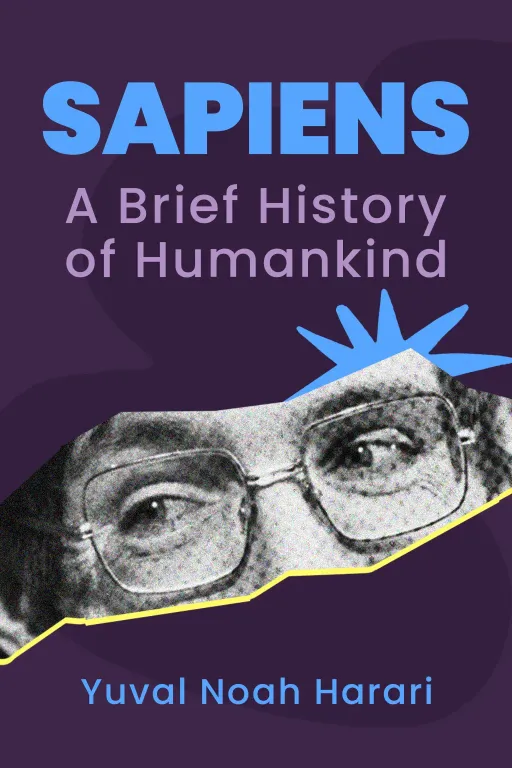
Nova: That's where we turn to a master, Yuval Noah Harari, and his globally acclaimed book,. Harari, a historian who brilliantly blends science and philosophy, doesn't just list historical events. He weaves a grand narrative, creating an epic saga of humanity.
Atlas: Right, I remember that book. It got a lot of buzz. He doesn't just tell you happened, he tells you it mattered, and how it shaped us.
Nova: Exactly. Harari introduces concepts like the Cognitive Revolution or the Agricultural Revolution not as isolated academic terms, but as pivotal plot points in the human story. He shows how narratives, even fictional ones like money or nations, aren't just abstract ideas, but powerful shared fictions that bind societies and drive progress. He’s essentially saying our entire civilization is built on stories we tell ourselves.
Atlas: Wow, that's mind-blowing. So, he's not just recounting events; he's constructing an overarching narrative that gives meaning to everything. That's a completely different way to approach history. It’s like he’s not just giving you the ingredients, he’s showing you the whole feast and how it came together.
Nova: And that's what makes it so memorable. Think about it: our brains are designed to remember sequences, characters, conflicts, and resolutions. When Harari frames the rise of agriculture as a "trap," it’s not just a historical fact; it’s a compelling twist in humanity's story. It evokes an emotional response, a sense of drama, which helps us understand and retain the complex implications.
Atlas: That makes me wonder, how many of us, as curious learners, have struggled through textbooks that strip away all that inherent human drama? We're fighting against our own cognitive wiring when we try to learn from dry facts alone. It's not just about engagement; it’s about making the information unforgettable.
Architecting Understanding: How to Build Impactful Learning Narratives
SECTION
Nova: Speaking of unforgettable, if Harari shows us the power of grand narratives, how do we apply that on a smaller scale, to make everyday learning stick? Because not everything is the story of humanity, right?
Atlas: That's the million-dollar question. I mean, I can get behind the idea of stories for big history, but how do I take, say, a quarterly sales report, a complex scientific theory, or even just a new software feature, and turn that into a compelling saga? It sounds like a lot of work.
Nova: That’s where Cole Nussbaumer Knaflic’s widely adopted book,, comes in. While her focus is on data visualization, her principles are universally applicable to constructing clear, engaging narratives for information. She spent years at Google, helping people communicate complex data simply, and her methods are incredibly practical.
Atlas: So she's not just giving a philosophy, she's giving us a toolkit? That's what a lot of our listeners, especially those in fast-paced environments, are probably craving.
Nova: Absolutely. Knaflic teaches us how to identify the core message, understand our audience, eliminate clutter, and then build a narrative arc. It’s about transforming raw information into a journey with a clear beginning, middle, and end. She argues that even a simple chart can tell a powerful story if you know how to frame it.
Atlas: Can you give an example? Let’s say I’m trying to teach someone about the process of photosynthesis. It’s crucial, but often presented as a series of chemical reactions. How would Knaflic’s approach guide me to find the "story" there?
Nova: Good question! Instead of just listing inputs and outputs, you could frame photosynthesis as the epic struggle of a plant. The beginning: a tiny seed, vulnerable, needing sunlight and water. The middle: the sun, the water, the CO2 become like characters, interacting within the plant’s cells – a tiny internal drama. The conflict is the plant's need for energy, the resolution is the creation of glucose, sustaining life, and releasing oxygen.
Atlas: Oh, I see! So it's about seeing the information not just as isolated facts, but as characters, conflicts, and plot points that lead to a meaningful conclusion. You're giving the listener something to root for, a journey to follow.
Nova: Precisely. It’s about making the invisible visible, the abstract concrete. By intentionally weaving narratives into teaching and learning, we can make even the most complex subjects more accessible and memorable, fostering deeper emotional and intellectual connections. It’s about leveraging our innate human capacity for story to unlock understanding.
Synthesis & Takeaways
SECTION
Nova: From Harari’s sweeping epics binding civilizations to Knaflic’s precise data narratives making insights undeniable, the message is clear: stories are our most powerful learning tool. They're not just for bedtime or entertainment; they are the fundamental architecture of human understanding.
Atlas: It really drives home that initial point about neglected narrative. We're fighting against our own wiring when we make learning feel like a chore. It makes me reflect on all the times I’ve tried to just brute-force memorize something, when I could have just found the story within it.
Nova: And the tiny step for this week is incredibly actionable. Just identify one key concept you want to teach or learn, and try to frame it as a concise story. Give it a beginning, a middle, and an end. It could be anything: a work process, a historical event, a scientific principle.
Atlas: So it's not about becoming a novelist overnight; it's about consciously applying a natural human tendency. It's almost like a mental hack. I imagine a lot of our listeners, especially those who feel overwhelmed by information, will find this incredibly empowering.
Nova: Exactly. This isn't just about making learning easier; it's about making it more human, more intuitive, and ultimately, more profound. It's about tapping into that primal campfire connection.
Atlas: That’s actually really inspiring. It redefines what 'learning' can be.
Nova: This is Aibrary. Congratulations on your growth!