The Growth Trap: Why More Effort Doesn't Always Mean More Progress.
Golden Hook & Introduction
SECTION
Nova: Working harder doesn't just fail to guarantee growth; sometimes, it actively works against it. What if your 'hustle' is secretly sabotaging your breakthrough?
Atlas: Oh, I know that feeling all too well. It’s like we’re programmed to believe that the more hours we put in, the more successful we’ll be. But then you hit a wall, and all that effort just feels… wasted. It’s a brutal realization, especially in fast-paced environments where the pressure to perform is constant.
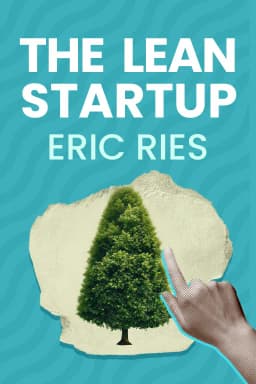
Nova: Absolutely. And that’s precisely the "growth trap" we're dissecting today. We're diving into two incredibly insightful books: Eric Ries's seminal work, The Lean Startup, and Ash Maurya's brilliant practical guide, Running Lean. Ries, interestingly, came to these ideas after experiencing a dramatic startup failure himself. He poured years into a product nobody wanted, and that painful lesson birthed the entire 'validated learning' movement.
Atlas: Wow, so it came from a place of deep, personal experience, not just theory. And Maurya then took that concept and made it truly actionable?
Nova: Exactly. Maurya's book is almost like the practical field guide to Ries's vision. It’s about taking those big ideas and boiling them down into steps you can take today. And the core of it is moving beyond this illusion that sheer effort automatically translates into progress. We’re going to explore why that belief often leads to burnout instead of breakthroughs.
The Illusion of Effort: Why 'More' Doesn't Equal 'Growth'
SECTION
Nova: So, let's talk about this illusion of effort. Many startups, many ambitious individuals, they operate under the assumption that if they just push harder, if they just build more features, if they just work longer hours, growth is inevitable.
Atlas: Right, like the old adage, "If you build it, they will come." It’s ingrained in our entrepreneurial DNA, isn’t it? For anyone building a 0-1 growth strategy, that initial vision feels so compelling, you just want to run with it.
Nova: It absolutely is. But Ries, through his own painful experience, realized that this kind of relentless pushing, without a clear, validated direction, is often a recipe for disaster. He saw companies spending years, sometimes millions of dollars, developing what they thought was a revolutionary product. Only to launch it and find… crickets. No one wanted it, or they wanted something fundamentally different.
Atlas: That sounds rough. I imagine a lot of our listeners, especially those in high-growth tech, constantly feel that pressure to deliver. How do you even know if you’re caught in this trap? What are the red flags that you’re just pushing, not actually progressing?
Nova: That's a great question, and it's where Ries introduces the concept of "vanity metrics." These are numbers that make you feel good but don't actually tell you if you're creating value. Imagine a company celebrating a million app downloads. Sounds amazing, right?
Atlas: Sounds fantastic! That’s a huge win in most books.
Nova: On the surface, yes. But if those users download the app once and never open it again, or if they delete it within a day, those downloads are a vanity metric. They don't reflect actual engagement, retention, or most importantly, true customer value. You're putting in massive effort to acquire users who aren't sticking around. You’re building something nobody wants.
Atlas: I see. So it's about looking beyond the superficial numbers. But wait, for someone building something from scratch, that initial vision, that passion, it feels like it to be enough to drive you. Are you saying passion isn't enough to achieve growth?
Nova: Passion is absolutely crucial, Atlas. It's the fuel. But without a steering wheel and a map, that fuel just leads you to drive around in circles, or worse, into a ditch. The problem comes when passion blinds us to the need for feedback, for validated learning. It’s about channeling that incredible energy into a smart process, which leads us directly to the antidote to this illusion of effort.
Validated Learning: The Lean Path to Sustainable Growth
SECTION
Nova: The antidote, as Ries and Maurya brilliantly lay out, is "validated learning." It’s about replacing that blind, relentless pushing with rapid experimentation and iterative learning.
Atlas: Validated learning. So, it's about proving our assumptions are correct before we go all in? Like, instead of building the whole mansion, you build a tiny model first?
Nova: Exactly! It's about designing your efforts to as quickly and cheaply as possible. Ries champions the "Minimum Viable Product," or MVP. Think of it this way: instead of spending a year building a complex social media platform, a team might launch just one core feature – say, a photo-sharing tool – to a small group of early adopters.
Atlas: So, you're putting something out there before it’s "perfect." That feels counter-intuitive for many creators who want to polish every detail.
Nova: It does, but that's the genius of it. The goal isn't perfection; it's learning. They observe how users interact with that single feature, gather feedback, and then decide what to build next, or even if they should pivot completely. I remember a story of a startup that wanted to build a complex online food delivery service. Instead of coding everything, they started with a simple website, took orders manually over the phone, and had their team physically pick up and deliver food.
Atlas: Wait, they were literally just taking phone orders and delivering it themselves? That sounds incredibly basic.
Nova: Incredibly basic, and incredibly smart. They weren't building a complex tech stack; they were testing the fundamental assumption: "Do people want to order food online for delivery from a variety of restaurants?" They validated the before investing heavily in the. This "build, measure, learn" loop became their engine.
Atlas: That makes sense for validating demand. But for a busy team, let’s say in an AI-native edtech startup, where we’re constantly innovating and building 0-1 strategies, how do we apply this 'smallest possible experiment' idea? The stakes feel high for every feature we develop. And how do we "measure what truly matters," as Maurya emphasizes?
Nova: That’s where Ash Maurya's "Running Lean" becomes incredibly powerful. He pushes us to identify our riskiest assumptions, not just general ideas. For an AI edtech company, instead of building a full AI tutor right away, your riskiest assumption might be: "Students want AI feedback on their essays."
Atlas: Okay, so the assumption is the key.
Nova: Precisely. Then, instead of building the AI, Maurya would suggest designing the smallest, cheapest experiment to test. That might mean manually providing AI-like feedback on a few essays for a small group of students, or even just showing students mock-ups of AI feedback and gauging their interest. You're not building the AI; you're just simulating its core value proposition.
Atlas: Wow, that’s so simple, yet so profound. You're testing the desirability of the outcome, not the complexity of the tech solution.
Nova: Exactly! And Maurya's focus on "measure what truly matters" means defining clear, actionable metrics for each experiment. For our edtech example, it's not about how many lines of code were written, but about whether students found the feedback useful enough to want more, or if it improved their grades. It's about achieving product-market fit by truly understanding what your users need and are willing to use, thereby conserving precious resources and preventing that burnout from building something nobody wants.
Synthesis & Takeaways
SECTION
Nova: So, what we’re really talking about today is a profound shift in mindset. It's moving from a world where we believe that sheer, unguided effort is the path to growth, to one where smart, validated learning is the true engine of sustainable progress.
Atlas: It’s almost like a form of intellectual liberation, isn't it? Instead of feeling like you have to have all the answers upfront, you embrace this process of discovery. It turns potential failure into learning. For anyone trying to build something new, especially in a rapidly evolving field like AI, this iterative approach feels like the only sane way forward.
Nova: It truly is. It's about de-risking innovation, making progress intentional, and ensuring that every ounce of effort you expend is actually moving you closer to a breakthrough, rather than deeper into a "growth trap." And the tiny step you can take today, directly inspired by these books?
Atlas: Tell me. I'm ready.
Nova: Identify one key assumption you hold about your current growth strategy – just one. And then, design the smallest possible experiment to test whether that assumption holds true. Don't build the whole product; test the core hypothesis. It's about taking that first, smart, iterative step.
Atlas: That’s actually really inspiring. It frames growth not as a brute-force battle, but as a series of clever, informed experiments. It makes the whole journey feel more manageable and, honestly, more exciting.
Nova: Absolutely. It transforms the act of building into an act of continuous, validated discovery. This is Aibrary. Congratulations on your growth!