Stop Guessing, Start Building: The Guide to Product-Market Fit
Golden Hook & Introduction
SECTION
Nova: POV: You've poured your heart, soul, and every last dime into building something brilliant. You launch with a bang, only to hear... crickets. Sound familiar?
Atlas: Ouch. That's a gut punch a lot of founders know intimately. The dream turns into a nightmare pretty fast when that happens.
Nova: Exactly. And it’s a scenario that plays out far too often in the startup world. That silent building, that hope that your initial vision is just.
Atlas: Yeah, I imagine a lot of our listeners, especially those in early stages, are nodding along right now, maybe with a little shiver. The pressure to get it right the first time is immense.
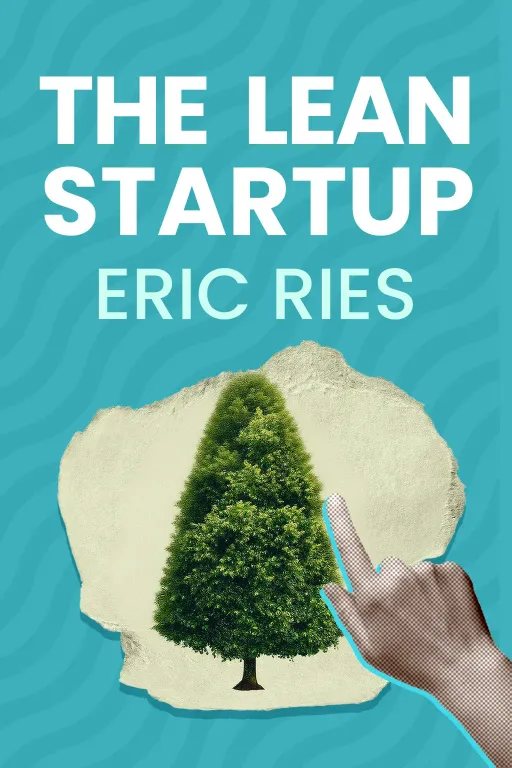
Nova: It absolutely is. And that's precisely why today we're diving into how to avoid that exact situation. We're drawing wisdom from two foundational texts: by Eric Ries and by Ash Maurya.
Atlas: Ries, the guy who basically codified the entire lean startup movement, and Maurya, who then gave us the practical playbook. It’s like having the philosopher and the engineer in one room, giving you both the 'why' and the 'how'.
Nova: It’s a powerful combination. Ries, an ex-entrepreneur himself who spent years observing and advising Silicon Valley startups, really distilled the essence of what makes ventures succeed or fail. Maurya, on the other hand, is a seasoned practitioner who created tools to operationalize Ries's ideas.
Atlas: That makes sense. But why are these books still so relevant? Startup culture moves at light speed. Aren't there newer, shinier methodologies?
Nova: That’s a great question. The core principles these books lay out are timeless because they address a fundamental human tendency: the desire to build in isolation, to perfect something before anyone sees it. And in entrepreneurship, that’s often a death sentence.
Golden Hook & Introduction
SECTION
Nova: POV: You've poured your heart, soul, and every last dime into building something brilliant. You launch with a bang, only to hear... crickets. Sound familiar?
Atlas: Ouch. That's a gut punch a lot of founders know intimately. The dream turns into a nightmare pretty fast when that happens.
Nova: Exactly. And it’s a scenario that plays out far too often in the startup world. That silent building, that hope that your initial vision is just.
Atlas: Yeah, I imagine a lot of our listeners, especially those in early stages, are nodding along right now, maybe with a little shiver. The pressure to get it right the first time is immense.
Nova: It absolutely is. And that's precisely why today we're diving into how to avoid that exact situation. We're drawing wisdom from two foundational texts: by Eric Ries and by Ash Maurya.
Atlas: Ries, the guy who basically codified the entire lean startup movement, and Maurya, who then gave us the practical playbook. It’s like having the philosopher and the engineer in one room, giving you both the 'why' and the 'how'.
Nova: It’s a powerful combination. Ries, an ex-entrepreneur himself who spent years observing and advising Silicon Valley startups, really distilled the essence of what makes ventures succeed or fail. Maurya, on the other hand, is a seasoned practitioner who created tools to operationalize Ries's ideas.
Atlas: That makes sense. But why are these books still so relevant? Startup culture moves at light speed. Aren't there newer, shinier methodologies?
Nova: That’s a great question. The core principles these books lay out are timeless because they address a fundamental human tendency: the desire to build in isolation, to perfect something before anyone sees it. And in entrepreneurship, that’s often a death sentence.
The Peril of Silent Building & Build-Measure-Learn
SECTION
Nova: The cold fact is, many founders build in silence, hoping their idea will stick. They get so caught up in their brilliant initial vision, they forget to ask the most important question: Does anyone actually this?
Atlas: Hold on. Isn't a strong vision what you need? What’s wrong with focusing on your craft, perfecting your product before you expose it to the harsh realities of the market? Isn't that what distinguishes great products?
Nova: That’s a common misconception, Atlas. A strong vision is crucial, but it's a starting point, not the finished map. The problem isn't the vision itself, it's the that your vision, in its pure form, will magically align with market needs. Think of it like building a magnificent, intricate bridge in your garage, perfectly engineered, only to realize when you roll it out that there’s no river to cross, or the river is in the wrong place.
Atlas: That’s an expensive bridge to nowhere. So, how do you avoid that kind of monumental misstep?
Nova: That's where Eric Ries's genius comes in with. He introduces the "Build-Measure-Learn" feedback loop. It's a continuous cycle designed to help you quickly validate your ideas with real customers, reducing waste and uncertainty.
Atlas: So, Build-Measure-Learn. Can you break that down? What does each step actually involve for, say, an early-stage founder with limited resources?
Nova: Absolutely. 'Build' isn't about building the perfect, fully-featured product. It's about creating a Minimum Viable Product, or MVP—the smallest possible thing that allows you to test a core assumption. Let's say you're building a new app that helps people find unique local experiences. Your MVP might just be a simple landing page describing the concept and a sign-up form to gauge interest, or even just a few mock-up screens.
Atlas: Okay, so 'Build' is about minimal effort to test a hypothesis. What about 'Measure'? How do you even measure 'learning' effectively? For a founder wearing many hats, that sounds like another huge task that could easily get overwhelming.
Nova: That’s where many get stuck. 'Measure' is about collecting data from your MVP. If your MVP was a landing page, you're measuring sign-ups, conversion rates, and perhaps even qualitative feedback from early users. If it was a mock-up, you're observing how people interact with it, what questions they ask, what problems they encounter. The key is to define what success looks like you build. A startup I followed once thought their killer feature was a complex AI recommendation engine. Their MVP was actually just a human curating recommendations manually for a small group of users. What they measured was user engagement with those recommendations, and they quickly learned users valued simplicity over complex AI for their specific need.
Atlas: Wow, so the measurement doesn't have to be some elaborate analytics dashboard. It can be as simple as talking to five people.
Nova: Precisely. And that leads us to 'Learn.' This is where you analyze the data and feedback to decide whether to 'pivot'—change your strategy—or 'persevere'—continue on your current path. The beauty of this loop is its speed. You want to go through it as quickly as possible, iterating and adapting based on real-world evidence, not just gut feelings.
Atlas: So it's less about perfection and more about relentless, informed experimentation. That’s a shift. It sounds like the fastest way to get to product-market fit is by being willing to be wrong, quickly.
Nova: Exactly. It's a systematic de-risking process. Instead of betting everything on one grand launch, you're making small, informed bets and adjusting as you go.
The Peril of Silent Building & Build-Measure-Learn
SECTION
Nova: The cold fact is, many founders build in silence, hoping their idea will stick. They get so caught up in their brilliant initial vision, they forget to ask the most important question: Does anyone actually this?
Atlas: Hold on. Isn't a strong vision what you need? What’s wrong with focusing on your craft, perfecting your product before you expose it to the harsh realities of the market? Isn't that what distinguishes great products?
Nova: That’s a common misconception, Atlas. A strong vision is crucial, but it's a starting point, not the finished map. The problem isn't the vision itself, it's the that your vision, in its pure form, will magically align with market needs. Think of it like building a magnificent, intricate bridge in your garage, perfectly engineered, only to realize when you roll it out that there’s no river to cross, or the river is in the wrong place.
Atlas: That’s an expensive bridge to nowhere. So, how do you avoid that kind of monumental misstep?
Nova: That's where Eric Ries's genius comes in with. He introduces the "Build-Measure-Learn" feedback loop. It's a continuous cycle designed to help you quickly validate your ideas with real customers, reducing waste and uncertainty.
Atlas: So, Build-Measure-Learn. Can you break that down? What does each step actually involve for, say, an early-stage founder with limited resources?
Nova: Absolutely. 'Build' isn't about building the perfect, fully-featured product. It's about creating a Minimum Viable Product, or MVP—the smallest possible thing that allows you to test a core assumption. Let's say you're building a new app that helps people find unique local experiences. Your MVP might just be a simple landing page describing the concept and a sign-up form to gauge interest, or even just a few mock-up screens.
Atlas: Okay, so 'Build' is about minimal effort to test a hypothesis. What about 'Measure'? How do you even measure 'learning' effectively? For a founder wearing many hats, that sounds like another huge task that could easily get overwhelming.
Nova: That’s where many get stuck. 'Measure' is about collecting data from your MVP. If your MVP was a landing page, you're measuring sign-ups, conversion rates, and perhaps even qualitative feedback from early users. If it was a mock-up, you're observing how people interact with it, what questions they ask, what problems they encounter. The key is to define what success looks like you build. A startup I followed once thought their killer feature was a complex AI recommendation engine. Their MVP was actually just a human curating recommendations manually for a small group of users. What they measured was user engagement with those recommendations, and they quickly learned users valued simplicity over complex AI for their specific need.
Atlas: Wow, so the measurement doesn't have to be some elaborate analytics dashboard. It can be as simple as talking to five people.
Nova: Precisely. And that leads us to 'Learn.' This is where you analyze the data and feedback to decide whether to 'pivot'—change your strategy—or 'persevere'—continue on your current path. The beauty of this loop is its speed. You want to go through it as quickly as possible, iterating and adapting based on real-world evidence, not just gut feelings.
Atlas: So it's less about perfection and more about relentless, informed experimentation. That’s a shift. It sounds like the fastest way to get to product-market fit is by being willing to be wrong, quickly.
Nova: Exactly. It's a systematic de-risking process. Instead of betting everything on one grand launch, you're making small, informed bets and adjusting as you go.
From Theory to Traction: Lean Canvas & MVPs
SECTION
Nova: Okay, so once you're convinced by the 'Build-Measure-Learn' philosophy, how do you actually it? That's where Ash Maurya steps in with. He takes Ries's concepts and provides incredibly practical tools to put them into action.
Atlas: Right, theory is great, but founders need a roadmap. What's the biggest game-changer Maurya introduced that helps founders navigate this iterative process?
Nova: For me, it has to be the Lean Canvas. It’s essentially a one-page business plan, but it’s radically different from a traditional, fifty-page document nobody reads. Maurya designed it specifically for entrepreneurs to quickly deconstruct their idea into key assumptions and test them.
Atlas: A one-page business plan? That sounds incredibly appealing to anyone who’s ever stared down a blank business plan template. What's on it?
Nova: It forces you to focus on nine essential blocks: your problem, your solution, key metrics, unique value proposition, unfair advantage, channels, customer segments, cost structure, and revenue streams. The magic is that you fill it out in a specific order, starting with the problem, because if you don't solve a problem, nothing else matters.
Atlas: That sounds incredibly useful for clarifying thinking, forcing you to articulate what you're actually doing. But how does it connect to actual? You can map assumptions all day, but when do you actually ship something?
Nova: That’s the critical link. Each block on the Lean Canvas represents assumptions you're making. For example, you assume a certain customer segment has a specific problem. The next step is to design the smallest experiment—your MVP—to test that assumption.
Atlas: Ah, so the Lean Canvas helps you identify to test, and the MVP is you test it. Can you give a classic MVP example that illustrates this perfectly?
Nova: A perfect one is the early days of Zappos, the online shoe retailer. Before building massive warehouses and complex logistics, the founder, Nick Swinmurn, wanted to test the assumption: "Will people buy shoes online?" His MVP was incredibly simple: he went to local shoe stores, took pictures of their inventory, posted them online, and if someone ordered a pair, he’d go buy them at full price and ship them himself.
Atlas: That's brilliant! He wasn't building an e-commerce empire; he was validating a single, core assumption about customer behavior with almost zero upfront investment in inventory or tech.
Nova: Exactly. He wasn't selling a shoddy product; he was testing the with the least amount of effort. Another great one is Dropbox. Before they even had a working product, they created an explainer video demonstrating how it would work. They measured sign-ups from that video, and the response was overwhelming, validating the need before they wrote a line of code.
Atlas: So an MVP isn't about building a half-baked product; it's about validating the proposition with the least amount of effort. It's about testing the 'why' before the 'what.' That’s such a powerful reframe. These books really provide the essential toolkit for founders to systematically de-risk their ventures and find a product customers truly want.
From Theory to Traction: Lean Canvas & MVPs
SECTION
Nova: Okay, so once you're convinced by the 'Build-Measure-Learn' philosophy, how do you actually it? That's where Ash Maurya steps in with. He takes Ries's concepts and provides incredibly practical tools to put them into action.
Atlas: Right, theory is great, but founders need a roadmap. What's the biggest game-changer Maurya introduced that helps founders navigate this iterative process?
Nova: For me, it has to be the Lean Canvas. It’s essentially a one-page business plan, but it’s radically different from a traditional, fifty-page document nobody reads. Maurya designed it specifically for entrepreneurs to quickly deconstruct their idea into key assumptions and test them.
Atlas: A one-page business plan? That sounds incredibly appealing to anyone who’s ever stared down a blank business plan template. What's on it?
Nova: It forces you to focus on nine essential blocks: your problem, your solution, key metrics, unique value proposition, unfair advantage, channels, customer segments, cost structure, and revenue streams. The magic is that you fill it out in a specific order, starting with the problem, because if you don't solve a problem, nothing else matters.
Atlas: That sounds incredibly useful for clarifying thinking, forcing you to articulate what you're actually doing. But how does it connect to actual? You can map assumptions all day, but when do you actually ship something?
Nova: That’s the critical link. Each block on the Lean Canvas represents assumptions you're making. For example, you assume a certain customer segment has a specific problem. The next step is to design the smallest experiment—your MVP—to test that assumption.
Atlas: Ah, so the Lean Canvas helps you identify to test, and the MVP is you test it. Can you give a classic MVP example that illustrates this perfectly?
Nova: A perfect one is the early days of Zappos, the online shoe retailer. Before building massive warehouses and complex logistics, the founder, Nick Swinmurn, wanted to test the assumption: "Will people buy shoes online?" His MVP was incredibly simple: he went to local shoe stores, took pictures of their inventory, posted them online, and if someone ordered a pair, he’d go buy them at full price and ship them himself.
Atlas: That's brilliant! He wasn't building an e-commerce empire; he was validating a single, core assumption about customer behavior with almost zero upfront investment in inventory or tech.
Nova: Exactly. He wasn't selling a shoddy product; he was testing the with the least amount of effort. Another great one is Dropbox. Before they even had a working product, they created an explainer video demonstrating how it would work. They measured sign-ups from that video, and the response was overwhelming, validating the need before they wrote a line of code.
Atlas: So an MVP isn't about building a half-baked product; it's about validating the proposition with the least amount of effort. It's about testing the 'why' before the 'what.' That’s such a powerful reframe. These books really provide the essential toolkit for founders to systematically de-risk their ventures and find a product customers truly want.
Synthesis & Takeaways
SECTION
Nova: What we've been talking about today, the wisdom from Ries and Maurya, really boils down to this: true product-market fit isn't a guess. It's a systematic, relentless process of learning, adapting, and validating. It's about replacing hope with hypotheses.
Atlas: It sounds like the real 'brilliant vision' isn't the initial idea, but the system you put in place to constantly refine it. For our early-stage founders listening, what's the tiniest, most actionable step they can take to stop guessing and start building smart?
Nova: Here’s your tiny step, and it’s directly from the heart of this philosophy: Identify just one core assumption about your product or your target customer. Then, design the smallest, quickest experiment to test that assumption with a potential customer this week.
Atlas: That’s powerful because it turns overwhelming tasks into manageable actions. It's about getting out of your head and into the market, fast. It takes courage to expose your ideas to the real world so early, but it sounds like it's the only way to build something that truly matters.
Nova: It absolutely is. That continuous learning and adaptation, that's the path to building something truly impactful, something customers genuinely clamor for.
Atlas: Fantastic. It's a journey of continuous discovery.
Nova: This is Aibrary. Congratulations on your growth!
Synthesis & Takeaways
SECTION
Nova: What we've been talking about today, the wisdom from Ries and Maurya, really boils down to this: true product-market fit isn't a guess. It's a systematic, relentless process of learning, adapting, and validating. It's about replacing hope with hypotheses.
Atlas: It sounds like the real 'brilliant vision' isn't the initial idea, but the system you put in place to constantly refine it. For our early-stage founders listening, what's the tiniest, most actionable step they can take to stop guessing and start building smart?
Nova: Here’s your tiny step, and it’s directly from the heart of this philosophy: Identify just one core assumption about your product or your target customer. Then, design the smallest, quickest experiment to test that assumption with a potential customer this week.
Atlas: That’s powerful because it turns overwhelming tasks into manageable actions. It's about getting out of your head and into the market, fast. It takes courage to expose your ideas to the real world so early, but it sounds like it's the only way to build something that truly matters.
Nova: It absolutely is. That continuous learning and adaptation, that's the path to building something truly impactful, something customers genuinely clamor for.
Atlas: Fantastic. It's a journey of continuous discovery.
Nova: This is Aibrary. Congratulations on your growth!