Build Beyond Features: Architecting Your Agent's Enduring Influence.
Golden Hook & Introduction
SECTION
Nova: What if I told you that the secret to building groundbreaking Agent systems isn't about launching a perfect product, but about launching an imperfect one, and then learning like crazy?
Atlas: Whoa, that’s a bold claim, Nova. I think a lot of our listeners, especially those deep in Agent engineering, spend countless hours trying to perfect their solutions before a big reveal. Are you saying that's... not the way?
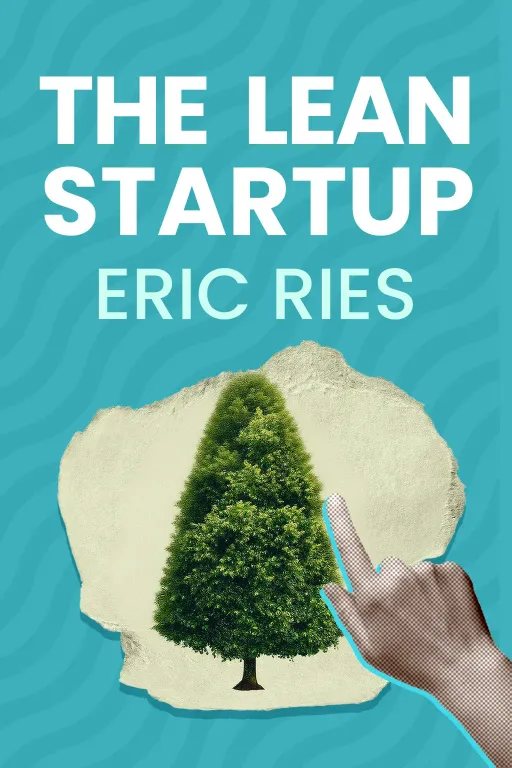
Nova: Exactly, Atlas. And we're diving into why today, with insights from two titans of the lean movement: "The Lean Startup" by Eric Ries, a book that truly revolutionized how we think about innovation and product development, and "Running Lean" by Ash Maurya, which gives us the practical blueprint for execution. These aren't just business books; they're manifestos for anyone building complex systems, especially in the fast-evolving world of AI Agents.
Atlas: I'm curious. For someone trying to integrate cutting-edge Agent tech into complex business systems, the idea of "imperfect" might sound… risky. How do these books help us navigate that, especially when the stakes are so high for performance and scalability?
Nova: That’s precisely what we'll unpack. The core of our podcast today is really an exploration of how Agent engineering projects can move beyond just shipping features to building enduring influence by embracing a continuous cycle of learning and adaptation. Today we'll dive deep into this from two perspectives. First, we'll explore the foundational shift from a product-centric to a continuous learning approach, then we'll discuss the tactical applications of experimentation and testing riskiest assumptions in Agent development.
The Foundational Shift: From Product Launch to Continuous Learning
SECTION
Nova: You know, Atlas, it’s a cold fact that many innovative Agent engineering projects struggle to find their footing in the market. We pour our hearts and minds into architecting these sophisticated systems, only to find they don't quite connect with user needs. The common trap is believing that true value creation comes from launching a perfectly finished product.
Atlas: I can definitely relate to that. The pressure to deliver a polished, comprehensive solution often feels immense, especially in competitive tech environments. But you’re implying that perfection can actually be a roadblock?
Nova: It can be. Eric Ries, in "The Lean Startup," introduced this game-changing concept called the Build-Measure-Learn feedback loop. He says instead of planning for months or even years to launch a 'complete' Agent, you build a minimum viable product—an Agent with just enough features to satisfy early adopters and provide feedback—then you measure how users interact with it, and then you learn from that data to decide what to build next.
Atlas: So basically, you're saying instead of a grand unveiling, you're doing a series of smaller, iterative reveals? That sounds like a continuous conversation with your users, rather than a monologue.
Nova: Exactly! Think of it like this: Imagine an Agent engineering team, let's call them "Team Everest." They spent a year meticulously crafting an AI-driven personal assistant Agent, packed with every feature they could dream of: scheduling, email drafting, task management, even mood detection. They launched it with a huge marketing push, expecting a deluge of enthusiastic users.
Atlas: And what happened? My guess is it wasn't the Everest of success they hoped for.
Nova: Precisely. Users found the Agent overwhelming. They only used a fraction of the features, and some of the core functionalities, which the team spent months perfecting, were barely touched because they didn't align with actual daily workflows. The team was frustrated, feeling like they'd wasted so much effort. The users were apathetic, quickly abandoning the complex tool. It was a massive emotional and resource drain.
Atlas: Wow, that’s kind of heartbreaking to put so much into something and miss the mark. But how does the Build-Measure-Learn loop help you avoid that kind of disappointment? What’s the actual "learn" part? Is it just about fixing bugs, or is there something deeper?
Nova: It's much deeper than bug fixing. The "learn" isn't just about what went wrong, but about. It's about scientifically testing your hypotheses about what users want and need, and then adapting your Agent solutions based on real-world data, not just assumptions. Team Everest, after their initial stumble, pivoted. They started with a much simpler Agent feature: smart email sorting. They built it, measured how users interacted with it, and learned that while users loved the sorting, they needed an Agent that could summarize long email threads. This learning, validated by actual usage, guided their next build.
Atlas: From an architect's perspective, this foundational shift sounds like it could really stabilize systems by making them more adaptable, rather than brittle. It’s like building in resilience through feedback loops, ensuring your Agent system can evolve with actual needs, not just theoretical ones.
Tactical Application: Experimentation and Testing Riskiest Assumptions
SECTION
Nova: That's a perfect segue, Atlas, because understanding to learn leads us directly to to learn it, which is where Ash Maurya's "Running Lean" truly shines. While Ries gives us the philosophy, Maurya provides the practical tools. He guides you through systematically testing your riskiest assumptions.
Atlas: Okay, so "riskiest assumptions" – that sounds like something every full-stack engineer and value creator needs to get a handle on. What exactly do you mean by a "riskiest assumption" in the context of Agent engineering? Everything feels critical when you're building a new system.
Nova: That’s a common feeling. A riskiest assumption is essentially a belief that, if proven wrong, would completely derail your Agent project. For example, you might assume "users will implicitly trust the Agent's recommendations without human oversight." Or "the Agent will seamlessly integrate into existing, complex enterprise workflows without any friction." If these are wrong, your Agent might be technically brilliant, but practically useless. Maurya introduces tools like the Lean Canvas, which helps you map out your business model and, crucially, identify these high-impact, high-uncertainty assumptions.
Atlas: So basically, instead of building a whole skyscraper and then realizing the foundation is on sand, you're testing the soil first with a small drill? That’s a powerful idea for any value creator. Can you give us an example of how an Agent team might do this in practice?
Nova: Absolutely. Let's take another hypothetical Agent team, "Team Catalyst." They're developing an Agent designed to automate customer service responses, specifically for complex technical queries. Their riskiest assumption is: "Customers will find the Agent's automated, yet empathetic, tone acceptable for resolving sensitive issues." Instead of building the entire sophisticated natural language generation model, they devise a tiny experiment.
Atlas: What kind of tiny experiment? Building empathy into an Agent sounds like a huge undertaking.
Nova: It doesn't have to be. For their experiment, Team Catalyst designs a few mock-up chat interfaces. Some show responses generated by a human, and some show the but attributed to their prototype Agent, with different tonal variations. They show these mock-ups to a small group of actual customers, asking them to rate the helpfulness and acceptability of the responses.
Atlas: That's fascinating! So they're testing the of the Agent's tone before investing heavily in the underlying AI?
Nova: Exactly. They quickly learned that customers were much more receptive to a direct, problem-solving tone than an overly empathetic one from an AI, especially for technical issues. This surprising insight saved them months of development time they might have spent fine-tuning a complex empathetic NLP model. It led to a crucial pivot in their Agent's design, focusing on clarity and efficiency, which customers actually preferred. It was an "aha!" moment that de-risked a huge part of their project.
Atlas: Wow, that’s incredibly insightful. It sounds like a systematic way to validate every step, which is critical for architects building scalable and stable Agent solutions. It's not just about "being agile," it's about a methodical approach to validating your entire premise.
Synthesis & Takeaways
SECTION
Nova: Precisely, Atlas. What both Ries and Maurya are really pushing us towards is this understanding that enduring influence for Agent systems comes from continuous adaptation and validated learning, not from achieving a mythical perfect launch. The true power lies in that rapid, disciplined feedback loop.
Atlas: It sounds like both Ries and Maurya are really pushing us to break down the boundaries between technology and business value. It's not just about coding; it's about constant alignment with human needs and market demand. For our listeners who are driven to be experts and create breakthrough solutions, this is a fundamental mind-shift. It allows you to transform cutting-edge technology into concrete, stable, and valuable results.
Nova: Absolutely. And this iterative, customer-centric approach makes your Agent solutions more resilient and valuable in the long run. It's about building beyond just features.
Atlas: So, for all our listeners, the full-stack engineers, architects, and value creators out there who are constantly pushing the boundaries of Agent technology, what's a tiny, actionable step they can take right now?
Nova: For your next Agent feature, define one key assumption about user behavior – perhaps how they'll interact with a new Agent capability or what problem they expect it to solve. Then, devise a tiny experiment to test that assumption before full development. It could be as simple as a quick survey, a mock-up, or a single-feature prototype.
Atlas: That's a brilliant, actionable step. It demystifies the whole process and makes it manageable. No need for a huge overhaul, just one focused experiment. I love that. It truly makes the abstract concept of "lean" tangible.
Nova: Absolutely, Atlas. This approach isn't just about avoiding costly failures; it's about accelerating learning, building empathy for your users, and ultimately, creating Agent solutions that truly resonate and deliver profound, lasting value. It's about architecting for enduring influence, not just for features. What an insightful deep dive today, Nova.
Atlas: Indeed. Thank you for joining us, and remember...
Nova: This is Aibrary. Congratulations on your growth!