The Flow State Formula: How to Optimize Performance Without Burning Out
Golden Hook & Introduction
SECTION
Nova: Okay, Atlas, quick game. I'll give you a common piece of productivity advice, and you tell me the hidden cost. Ready?
Atlas: Oh, I love this game. Lay it on me. I'm ready to expose the dark underbelly of well-meaning but ultimately destructive advice.
Nova: Alright, here's the classic: "Just push through it!"
Atlas: Oh, man. The hidden cost of "just push through it"? Burnout. Absolute, soul-crushing exhaustion. It's the fast track to resentment, poor quality work, and probably a serious coffee addiction.
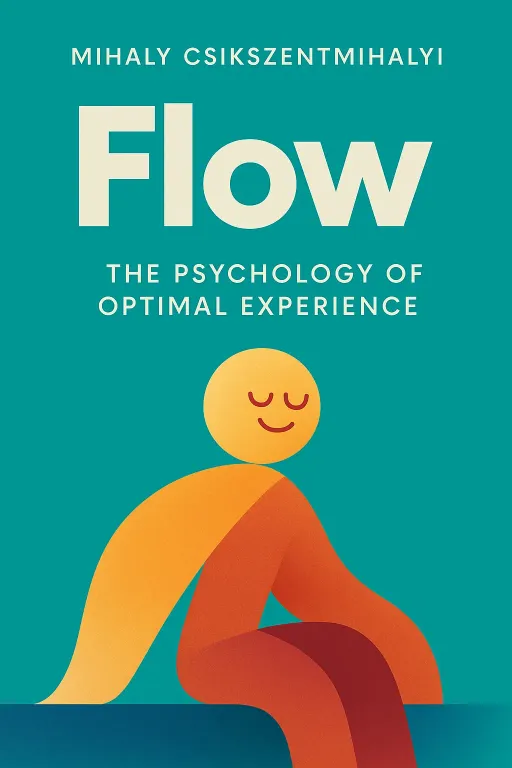
Nova: Exactly! And that's precisely what we're tackling today, but from a completely different angle. We're diving into "The Flow State Formula: How to Optimize Performance Without Burning Out." And the foundational work, the very bedrock of this idea, comes from the incredible Mihaly Csikszentmihalyi.
Atlas: Ah, Csikszentmihalyi! The name alone sounds like a deep dive into something profound.
Nova: It really does. He was this fascinating Hungarian-American psychologist who essentially coined the term "flow" and dedicated his entire life to studying happiness, creativity, and optimal experience. He wasn't just theorizing; he was meticulously observing artists, athletes, scientists, even everyday people, to understand and they felt their best and performed at their peak. His work is the reason we even have a vocabulary for this state of complete absorption.
Atlas: Right. And I imagine a lot of our listeners, especially those who are deep thinkers, always trying to improve, they've probably felt moments of this 'flow' but maybe couldn't quite label it or replicate it. It feels almost accidental sometimes.
Nova: That's the key, Atlas. It feels accidental, but Csikszentmihalyi showed us it's not. It's built on specific mechanics.
The Mechanics of Flow: Clear Goals, Immediate Feedback, Challenge-Skill Balance
SECTION
Nova: So, let's peel back the layers. What flow, beyond just being 'in the zone'? Csikszentmihalyi defines it as this state of complete absorption in an activity, where nothing else seems to matter. Time flies, self-consciousness disappears, and you're just utterly immersed. And he found three crucial conditions that consistently trigger it.
Atlas: Okay, so it's not just about trying really hard. It's about a specific kind of trying hard. What are these conditions?
Nova: First,. You know exactly what you need to do, moment by moment. Think of a chess player: each move has a clear objective. Or a surgeon: the goal at each step is precise. There's no ambiguity.
Atlas: Like, you don't just sit down to 'write a book,' you sit down to 'write the first paragraph of chapter three,' and you know exactly what that paragraph needs to achieve.
Nova: Exactly! The second condition is. You instantly know if you're doing well or if you need to adjust. A musician hears if they hit the right note. A basketball player sees if their shot goes in. This feedback loop guides your actions.
Atlas: That's a great way to put it. So, for someone working on a complex project, "immediate feedback" might be seeing if a piece of code compiles, or if a design element clicks into place, or if a sentence conveys the exact meaning you intended, rather than waiting for a monthly review.
Nova: Precisely. It's about those micro-confirmations that keep you engaged. But the third, and perhaps most crucial, is the. The task has to be difficult enough to stretch you, but not so difficult that it causes anxiety, and not so easy that it leads to boredom. It's that sweet spot where your skills are perfectly matched to the demands.
Atlas: That makes me wonder, so if it's too easy, you're bored. Too hard, you're frustrated. So the optimal point is right on that edge, where you're slightly out of your comfort zone, but not completely overwhelmed.
Nova: Absolutely. Imagine a concert pianist. If they're playing scales, it's boring. If you ask them to compose a symphony on the spot, it's overwhelming. But if they're performing a challenging piece they've practiced endlessly, where every note pushes their technical and interpretive limits, that's where flow happens. They're so absorbed, the instrument becomes an extension of themselves. They're not thinking about their fingers or the audience; they the music.
Atlas: Wow, that's such a vivid example. It's like the task demands everything you have, but you everything it demands. But how much of this is just innate talent, and how much is something we can actually cultivate? Because for a lot of our listeners, the idea of consistently finding that "sweet spot" feels like a luxury, not a daily practice.
Nova: That's a critical question, Atlas. Csikszentmihalyi would argue it's a skill. You can your environment and tasks to meet these conditions. It's not about waiting for inspiration; it's about setting the stage. And that brings us beautifully to our next point.
Engineering Flow: Triggers, Environment, and the Extreme Athlete Mindset
SECTION
Atlas: Okay, so we've got the theory. Clear goals, immediate feedback, challenge-skill balance. But how do we, the mere mortals of the modern world, actually these conditions? Because it sounds like you need to be a concert pianist or a chess grandmaster. How do we flow?
Nova: That's where Steven Kotler comes in, with his incredible book "The Rise of Superman." Kotler took Csikszentmihalyi's foundational work and looked at it through the lens of extreme athletes – surfers, climbers, skiers, base jumpers. These aren't people waiting for flow; they're actively their way into it.
Atlas: Oh, I like that. "Hacking" flow. So, what are they doing differently? What are the practical triggers?
Nova: Kotler identifies several triggers, but some of the most compelling are novelty, complexity, and a healthy dose of risk. Extreme athletes aren't just doing the same old thing; they're constantly pushing boundaries, seeking new routes, steeper slopes, bigger waves. This novelty and complexity force their brains into a state of intense focus.
Atlas: So, it's not just about having a challenging task; it's about having a challenging task, or a task with multiple layers of challenge. That makes sense, our brains crave new information.
Nova: Exactly. And the risk element is fascinating. Imagine a big-wave surfer facing a 50-foot wall of water. The stakes are incredibly high. That immediate threat, that potential for disaster, strips away all extraneous thoughts. There's no room for self-doubt or distraction. It forces total presence. In that moment, they are pure focus, pure action. That's flow.
Atlas: Whoa. That sounds intense. So, are you saying for those of us not free-soloing El Capitan, we need to introduce risk into our project management? Because that sounds like a recipe for disaster, not flow.
Nova: Not actual physical risk for most of us, no! But the of risk, or high stakes, can be engineered. Think about a tight deadline on a creative project, or presenting an idea that could make or break a new initiative. The pressure, the feeling that you perform, can trigger that same intense focus. It's about raising the stakes, making the outcome genuinely matter. It's about designing your work, and your environment, to be engaging, to demand your full attention.
Atlas: So, it's about finding ways to infuse our everyday tasks with that sense of novelty, complexity, and perhaps a perceived high stake, even if it's just the stake of delivering excellent work. It’s like, if you’re a writer, maybe it’s experimenting with a new narrative structure, or trying to convey a complex idea in a single, perfect sentence.
Nova: Precisely. It’s about being intentional. Instead of just grinding, you're asking: How can I make this task slightly more challenging, more novel, or more personally significant? How can I get clearer feedback? How can I reduce distractions that break my absorption?
Atlas: This really reframes the whole idea of performance, doesn't it? It moves it from just brute force effort to a more elegant, almost artistic, approach to engaging with your work.
Synthesis & Takeaways
SECTION
Nova: It absolutely does, Atlas. And that's the profound insight here: flow isn't some mystical, accidental gift bestowed upon a lucky few. It’s a skill. It's a state you can cultivate by understanding its mechanics, thanks to Csikszentmihalyi, and by actively engineering your environment and tasks, inspired by Kotler's extreme athletes. The cost of understanding flow is immense: burnout, inefficiency, wasted potential. The benefit of embracing it is a life where peak performance and deep satisfaction go hand in hand.
Atlas: That's actually really inspiring. So, for our listeners who are deep thinkers, always looking to optimize, always building knowledge, what's one tiny step they can take today to move closer to this flow state?
Nova: Here's your tiny step for today: Identify just one task you need to do. Now, adjust the challenge-skill balance for that task to be higher than your current ability. Not overwhelmingly so, but just enough to demand your full attention without causing anxiety. Maybe it's learning one new function in a software you use daily, or trying a slightly more complex technique in your craft. Just one small tweak.
Atlas: I love that. It’s not about overhauling your entire life overnight, but about making one deliberate choice to engage more deeply. It's a simple, actionable way to start that journey towards optimizing performance without burning out.
Nova: Exactly. Because achieving peak performance isn't just about effort; it's about entering that state of 'flow.' And once you understand its mechanics, you unlock your ultimate competitive edge.
Atlas: This is Aibrary. Congratulations on your growth!