Unlocking Influence: The Art of Data-Driven Storytelling
Golden Hook & Introduction
SECTION
Nova: Atlas, if I say "data storytelling," what's the first thing that pops into your head? Be honest.
Atlas: Oh, man. Immediately, I picture a PowerPoint deck with so many pie charts, the audience is actually in data, while the presenter is desperately trying to convince everyone that their incredibly complex spreadsheet holds the secret to eternal youth. It's usually buzzword bingo, isn't it?
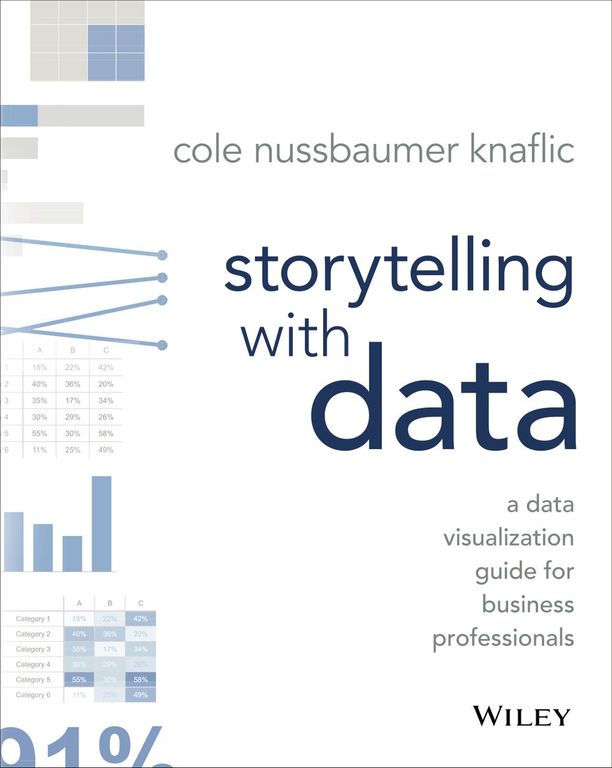
Nova: You're not wrong! And that’s exactly why we need to talk about it. Today, we’re diving into two absolute powerhouses that dismantle that misconception: "Storytelling with Data" by Cole Nussbaumer Knaflic and "Resonate" by Nancy Duarte.
Atlas: Knaflic, I know, spent years at Google, right? She must have seen more raw data than a supercomputer.
Nova: Exactly! And what she realized at Google wasn't that they lacked data, but that they often struggled to it effectively. Her book is a masterclass in making data clear and impactful. And then there's Nancy Duarte. She's basically the high priestess of presentations, having worked with Fortune 500 companies for decades, codifying the very structure of powerful, world-changing speeches and presentations.
Atlas: So, one tackles the raw material of data, and the other builds the persuasive structure around it. I’m curious how these two seemingly different approaches converge to create real influence.
From Raw Numbers to Resonant Narratives
SECTION
Nova: Well, let's start with Knaflic's foundational idea: data alone is not enough. It's like having all the finest ingredients in the world—saffron, truffles, wagyu beef—just sitting on your counter. You wouldn’t call that a gourmet meal, would you? It’s just…stuff. The narrative is the chef, the recipe, the plating. It transforms the raw into something digestible, enjoyable, and ultimately, meaningful.
Atlas: But isn't the point of data to be objective? To just present the facts, unvarnished? When you add a 'narrative,' doesn't that risk manipulating the facts, or at least biasing them?
Nova: That’s a brilliant question, and it gets to the heart of what Knaflic clarifies. She distinguishes between analysis and analysis. When you’re exploring, you’re sifting through the data, looking for insights. It’s messy, it’s objective. But when you’re, you’ve found your insight, and now your job is to make it clear to someone else. Think of it like a film director. They shoot hours of footage, but when they edit the final movie, they choose specific angles, cuts, and music to tell a specific story. They're not lying; they're your understanding.
Atlas: So, it’s about making conscious choices about what to highlight and what to downplay, not to deceive, but to ensure clarity and impact. Can you give an example of how that looks in practice? How do we make data resonate, then?
Nova: Absolutely. Knaflic gives a fantastic example of a company whose sales were declining. The initial presentation showed a standard line graph, red line plunging downwards. Informative, sure, but not compelling. Knaflic’s approach would be to first ask: what’s the here? Is it a new competitor? A product flaw? A seasonal dip? The story isn't just 'sales are down.' The story might be 'Our Q3 sales declined by 15% Competitor X launched their new feature, indicating a direct market response that we need to address immediately with a revised product roadmap.'
Atlas: Wow. That’s a huge shift. It’s about moving from "here's what happened" to "here's why it matters and what we need to do." It's not just a data point; it's a call to action baked into the explanation itself.
Nova: Exactly! And that’s where Nancy Duarte’s work on narrative structure overlaps so beautifully. She talks about the "Sparkline," which is essentially the visual representation of a story arc. Think of it like a movie plot: there’s a beginning, a rising action, a climax, and a resolution. For data, it’s moving from the current reality to the desired future, with the data insight as the turning point, the "hero's journey" for your audience.
The Art of Simplification: Driving Action Through Clarity
SECTION
Atlas: That makes sense for crafting the story, but sometimes the data itself is just… dense. We're often swimming in dashboards and complex analyses. How do you simplify without dumbing it down, especially when you're presenting to busy executives who just want the bottom line? That’s a real challenge for anyone trying to maintain a competitive edge.
Nova: That's a crucial point, Atlas, and it speaks directly to Duarte's emphasis on "what's at stake." It’s not about hiding complexity, but about revealing the that makes them sit up and say, "Aha! I need to act on that." Remember that "Tiny Step" from our content? Before your next presentation, identify the single most important insight you want to convey, then brainstorm three different ways to visually represent it, and choose the most impactful. It forces you to simplify upfront.
Atlas: So it's like a "data elevator pitch"? Get to the point, make it undeniable, and then have the backup ready if they ask for the deeper dive?
Nova: Precisely. Duarte argues that the should be the hero, not the presenter, and not even the data itself. It's about making journey of understanding easy. Instead of showing all eight market segments and their trends, maybe you only show the segment that represents the biggest growth opportunity or the most significant risk, because that's the actionable insight. The others are supporting characters, not the main event.
Atlas: But what if the "non-expert" still needs to understand the nuance? How do we simplify without losing credibility or, even worse, oversimplifying a truly complex problem that could have future ramifications? My analytical mind struggles with that balance.
Nova: That's where Knaflic's principle of "eliminating clutter" and "focusing attention" becomes vital. It’s about ruthless editing. It's not about showing you did, but showing with clarity. Think of a dense Excel dashboard with 50 metrics. Instead of hoping the audience finds the critical few, you design a visual that explicitly highlights those critical KPIs that drive decision-making. You're strategically guiding their eyes and their understanding, not burying them in detail.
Atlas: So, the deep question from our material: "How can you simplify your complex analyses into a story that a non-expert can immediately grasp and act upon?" It sounds like it’s about radical empathy for your audience, really understanding what they need to know, not just what you want to show.
Nova: Exactly, it’s about putting yourself in their shoes. What decision do they need to make? What action do they need to take? And what's the absolute clearest, most compelling path to get them there using your data?
Synthesis & Takeaways
SECTION
Nova: So, bringing it all together, it's this powerful blend: Knaflic gives us the clarity in visualization, the precision in choosing what to highlight. Duarte gives us the structural storytelling, the arc that moves people to action. The ultimate goal isn't just to inform; it's to influence.
Atlas: And for anyone in a strategic role, this isn't just about making prettier charts. This is about competitive advantage. This is about making your insights undeniable, making sure your analysis doesn't just sit there, but actually moves the needle.
Nova: It’s about transforming that "Tiny Step"—identifying your single most important insight and visualizing it powerfully—into a habit. And constantly asking that "Deep Question": how do I make this so simple a non-expert can grasp it and act on it?
Atlas: That’s a challenge I think many of our listeners face. So, what's the biggest mistake people make when they they're telling a data story, but it just falls flat?
Nova: They forget the 'story' part, Atlas. They present facts, figures, and charts, but they don't craft a journey. They want to be understood, but they don't actively that understanding. They hope the data will speak for itself, when in reality, it needs a voice.
Atlas: That’s a powerful distinction. It’s not about being right; it’s about being and. It's about turning insights into influence, every single time.
Nova: And that's a skill worth mastering. So, next time you're faced with a mountain of data, ask yourself: what’s the story I’m trying to tell? And how can I make it impossible to ignore?
Atlas: Go forth and conquer those spreadsheets!
Nova: This is Aibrary. Congratulations on your growth!