The Silent Killer: How to Build a High-Performing Team from Day One
10 minGolden Hook & Introduction
SECTION
Nova: Most teams fail not because they lack talent, but because of what they say. The biggest threats aren't the loud disagreements, but the quiet, simmering resentments and unspoken fears.
Atlas: Oh man, that hits home. It's like the air in the room gets thick with unsaid things, and suddenly, you're not moving forward anymore. You just it, even if you can't point to it.
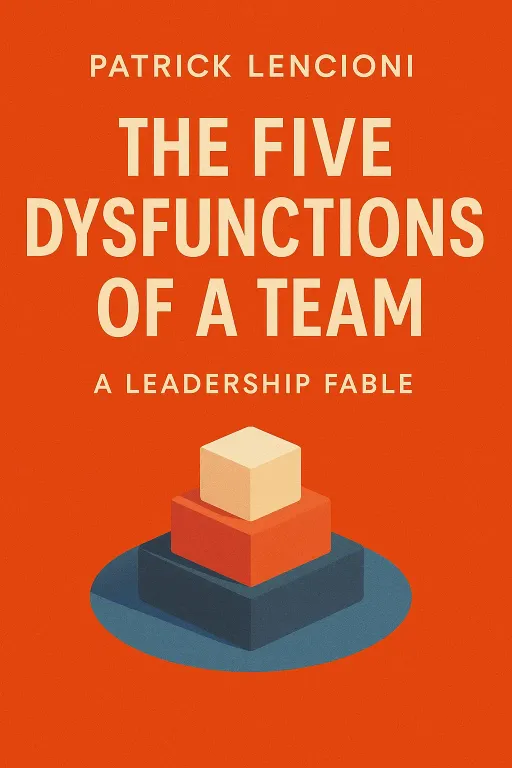
Nova: Exactly! It’s the invisible weight. And today, we're dissecting two foundational texts that brilliantly illuminate this silent killer and offer a powerful antidote: Patrick Lencioni's and Kim Scott's.
Atlas: Both are absolute classics for anyone trying to build anything worthwhile. I mean, Lencioni’s book alone reshaped how so many people think about team health.
Nova: Absolutely. And what's fascinating is Lencioni, before becoming this renowned management guru, actually wrote a novel,. It really shows his unique approach to conveying complex business ideas, not through dry theory, but through relatable, narrative storytelling. He makes these abstract concepts feel incredibly human.
Atlas: That makes sense. It’s about people, after all, not just processes. But for a lot of founders, especially in the early days, you're just trying to get things done. You hire smart people, you expect them to deliver. Why is this "silent killer" such a big deal when everyone's just focused on execution?
Nova: Well, that's precisely where the "blind spot" lies. It's the unspoken issues that erode trust and commitment, making collaboration feel like a constant uphill battle. And that naturally leads us to our first deep dive: the silent erosion of trust.
The Silent Erosion: Unspoken Issues and the Foundation of Trust
SECTION
Nova: So, Lencioni argues that the root dysfunction in any team is an. It's not about being naive or overly friendly, it's about the unwillingness of team members to be vulnerable with each other. They're afraid to admit mistakes, show weaknesses, or ask for help.
Atlas: That makes sense, but why is that so hard? I mean, shouldn’t we all want to appear competent, especially in a high-stakes startup environment? You want to project confidence.
Nova: You would think so, right? But that desire to appear competent, to protect your image, actually creates a barrier. When there's no trust, people fear conflict. They bottle up their opinions, avoid difficult conversations, and silently agree to decisions they don't believe in.
Atlas: Okay, so, you’re saying that avoiding conflict isn't actually being "nice," it's being detrimental? I always thought a harmonious team was one without arguments.
Nova: Quite the opposite. A harmonious team isn't one without conflict; it's one with conflict. Without trust, that conflict becomes personal and destructive. With trust, it becomes an honest debate of ideas. Imagine a small tech startup, let's call them 'InnovateX.' They're building a groundbreaking new app. There's a junior engineer, Sarah, who spots a critical flaw in the core algorithm during a late-night coding session. She knows it could cause a major bug down the line.
Atlas: Uh oh. I can feel this coming.
Nova: Exactly. But Sarah is new, she's intimidated by the senior architect, Mark, who designed that part of the system. She's afraid of looking like she's challenging his authority, or worse, looking incompetent herself, especially since she's still learning the ropes. So, she stays silent. She tells herself Mark will catch it, or it’s probably not that big of a deal.
Atlas: Oh, I've seen that play out. The fear of speaking up, especially to someone more senior. So, what happens?
Nova: The flaw goes unaddressed. The app launches. And three months later, during a crucial funding round presentation, that exact bug crashes the app during a live demo. Investors walk away. The team is devastated. The cause: Sarah's fear of vulnerability and Mark's lack of creating a safe space for her to speak up. The process: silence, passive agreement, and a breakdown in psychological safety. The outcome: product failure, loss of funding, and a deeply fractured team, all because of an unspoken issue.
Atlas: Wow. That's kind of heartbreaking, actually. So it's not just about getting the work done; it's about creating an environment where people feel safe enough to get it wrong, or to point out when something wrong.
Nova: Precisely. And that absence of trust, that fear of conflict, it cascades. Lencioni outlines it: no trust leads to a fear of conflict. No conflict means no genuine commitment to decisions because people haven't had their say. No commitment leads to an avoidance of accountability, because who's going to hold someone accountable for something they didn't really buy into? And all of that culminates in an inattention to results, because fundamentally, the team isn't truly rowing in the same direction.
Radical Clarity: Building Trust Through Direct and Caring Communication
SECTION
Nova: So, if trust is the bedrock, and unspoken issues are the silent eroders, how do we actually build that trust and cultivate productive conflict? This is where Kim Scott's offers a powerful, actionable roadmap.
Atlas: Radical Candor. That phrase alone sounds a bit intimidating for a founder. It implies being really direct, which can sometimes be mistaken for being harsh. How do you challenge directly without crushing someone's spirit, especially when you need everyone motivated and working together?
Nova: That's a brilliant question, and it's exactly what Scott addresses. She breaks it down into two simple dimensions: and. Radical Candor lives in the sweet spot where you do both.
Atlas: Okay, so, "Caring Personally" and "Challenging Directly." It almost sounds like a contradiction. How do they work together?
Nova: They're not contradictory at all; they're the twin pillars. "Caring Personally" means you actually give a damn about the person, not just their output. You understand their aspirations, their struggles, their personal life. "Challenging Directly" means you have the courage to tell them when their work isn't good enough, or when they're off track.
Atlas: So, it’s not just being "nice." It’s actually investing in them as a person. But how does that manifest? Can you give an example?
Nova: Absolutely. Let's go back to our startup scenario. Imagine another founder, Alex, has a brilliant but consistently late product manager, David. David is a creative genius, but his deadlines are always missed, impacting the entire development cycle. Alex, initially, uses what Scott calls "Ruinous Empathy." He likes David, they're friends, so Alex avoids giving him tough feedback, making excuses for him. "Oh, David's just creative, he works differently."
Atlas: I've seen that. You don't want to hurt feelings, especially when everyone's working so hard.
Nova: Exactly. But David's delays continue, and the team starts to resent it. The product suffers. That's ruinous empathy – you care, but you don't challenge, and it's ultimately ruinous to both David's career growth and the team's success. Now, if Alex were to practice Radical Candor, he would first "Care Personally." He might know David is going through a tough personal time, or has a passion project outside of work that's consuming his energy.
Atlas: Okay, so he understands the context. Then what?
Nova: Then, Alex "Challenges Directly." He sits David down, expresses his concern for David's well-being, but makes it clear that the missed deadlines are unacceptable for the team's success. He provides specific examples of how the delays are impacting others and offers support to help David prioritize or delegate. He might say, "David, I value your vision, but these delays are impacting the whole team. What can we do to get you back on track?"
Atlas: So, it's not just "You're late, fix it." It's "I see you, I care about you, and this is still a problem we need to solve together." That’s a completely different conversation.
Nova: Precisely. The outcome is transformative. David feels heard and valued, not just criticized. He understands the impact of his actions and feels empowered to find solutions, perhaps by asking for help or reorganizing his workload. He improves, the team benefits, and their trust strengthens. It's about being clear, kind, and direct.
Atlas: That’s a perfect example. For founders listening, especially those who might be conflict-averse, what's a first step they can take to start building this kind of radically candid culture from day one? It sounds like a big shift.
Nova: It can feel like a big shift, but it starts small. Scott suggests starting by for feedback first. Model the behavior. Say to your team, "I want to hear your honest feedback on my performance, my decisions. Tell me what I could do better." When you show vulnerability, when you show you can take constructive criticism, you create the psychological safety for others to do the same.
Synthesis & Takeaways
SECTION
Nova: So, what we've learned today is that the "silent killer" of unspoken issues, as Lencioni describes, is best illuminated and addressed through the radical clarity of Kim Scott's approach. Trust isn't built by avoiding disagreement or being "nice"; it's built by having the right kind of disagreement, delivered with care and directness.
Atlas: That makes so much sense. It circles back to the deep question posed in the content we started with: "What is one unspoken assumption or fear within your team that, if addressed, could unlock a new level of trust and performance?" It's about proactively digging into those hidden dynamics.
Nova: Exactly. Building a high-performing team from day one isn't about avoiding conflict or striving for constant harmony. It's about consciously designing for psychological safety, fostering an environment where vulnerability is a strength, and direct, caring communication is the norm. It’s about understanding that the biggest breakthroughs often come after the toughest, most honest conversations.
Atlas: That's a powerful thought. So, for everyone listening, take a moment to reflect on your own team. What's that one unspoken thing, that one fear or assumption, that if brought into the light, could fundamentally change how you work together?
Nova: And remember, the journey to a high-performing team begins not with grand gestures, but with the courage to speak up and the willingness to listen.
Atlas: This is Aibrary. Congratulations on your growth!